St. Bede the Venerable: Monk, Historian and Doctor of the Church
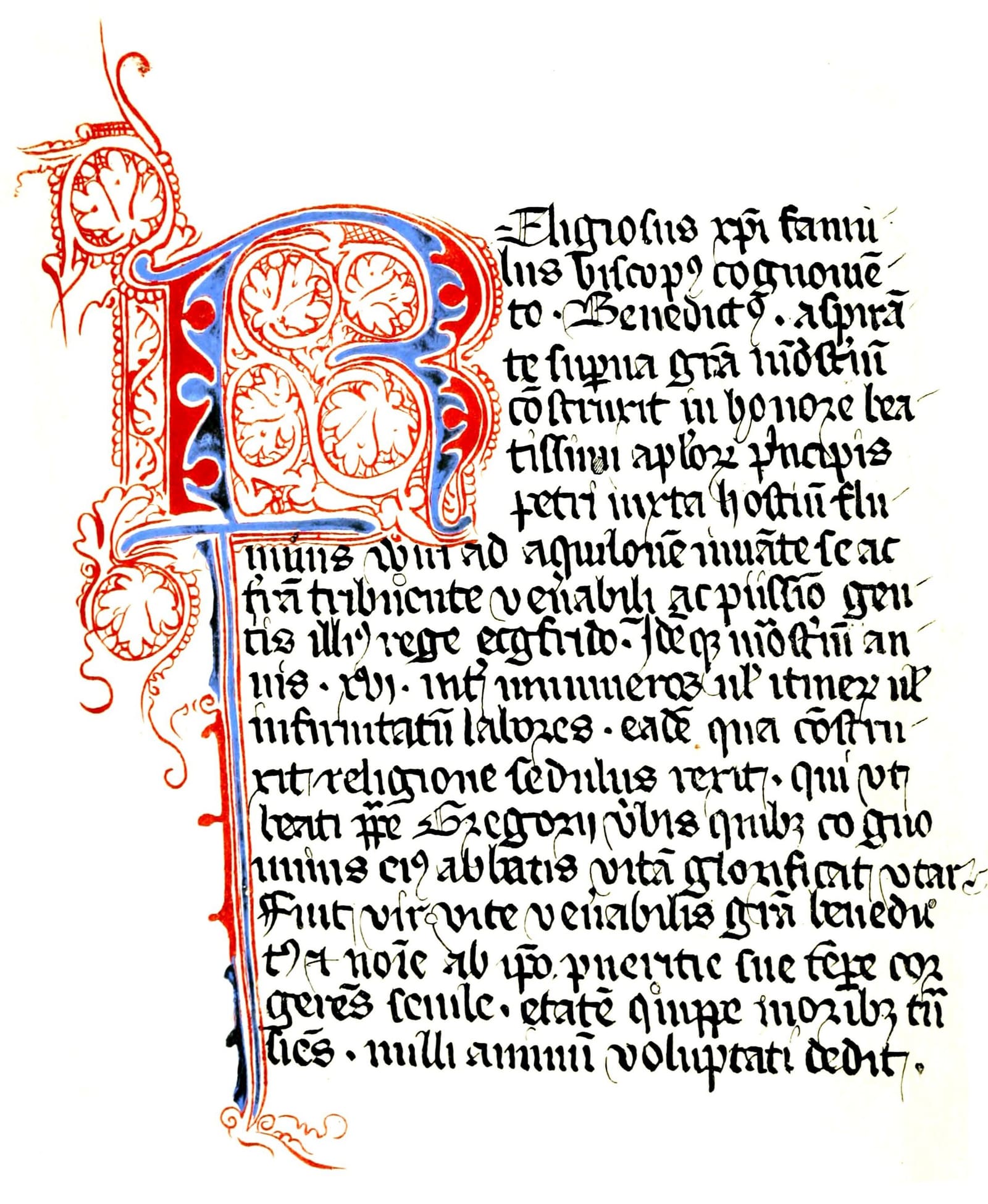
Quick answer
St. Bede (about 673–735) was an English Benedictine monk at the twin monastery of Wearmouth-Jarrow in Northumbria. He hardly ever traveled, yet he became the most learned man of his age, writing on Scripture, science, time and history. His Ecclesiastical History of the English People is our main source for the early English Church, and he helped spread the use of AD dating. He is the only English Doctor of the Church. His feast is May 25.
Key takeaways
- He was given to the monastery at age seven and lived there all his life.
- He wrote commentaries on most of the books of the Bible.
- His Ecclesiastical History, finished in 731, tells the story of how England became Christian.
- He died while finishing a translation of the Gospel of John into English.
St. Bede almost never left his monastery. Yet from his desk in the far north of England, he wrote books read across Europe and gave the English people their history.
A Life in the Monastery
Bede was born around 673 near the monastery of Wearmouth, in Northumbria, in northeast England. At seven, his family entrusted him to the abbot, St. Benedict Biscop. He later moved to the sister monastery at Jarrow, where he spent the rest of his life. He was ordained a deacon at nineteen and a priest at thirty.
He wrote that he devoted himself to studying Scripture, keeping the monastic discipline and singing daily in church, and that his delight was always to learn, to teach or to write.
A Great Scholar
The monastery had one of the best libraries in Europe, with books Benedict Biscop had brought from Rome. Bede used it fully. He wrote:
- Commentaries on most books of the Bible, drawn from the Fathers.
- Works on time and the calendar, including how to calculate the date of Easter.
- Lives of saints, including St. Cuthbert.
- Hymns, poems and textbooks for his students.
The Ecclesiastical History
His most famous work, the Ecclesiastical History of the English People, finished in 731, tells the story of Britain from Roman times, the mission of St. Augustine of Canterbury sent by Pope St. Gregory the Great in 597, the work of Irish monks like St. Columba and St. Aidan, and the growth of the English Church. Bede carefully named his sources, and historians still rely on him.
By using the system of dating years from the birth of Christ, anno Domini, throughout the book, Bede helped make it the standard in Europe.
His Death
A young monk named Cuthbert described Bede’s last days in a moving letter. In the spring of 735 Bede was ill but kept teaching and dictating a translation of the Gospel of John into English. On May 25, the eve of the Ascension, he finished the last sentence, asked to be placed facing the spot where he used to pray, and died singing the Glory Be.
He was declared a Doctor of the Church in 1899.
A Prayer for Students and Teachers (Original Prayer)
St. Bede, you delighted to learn, to teach and to write. Bless students, teachers and all who seek the truth. Help me to love God’s word, and to end my days, as you did, giving Him glory. Amen.
Continue Reading
Read about St. Columba, St. Boniface, another English monk, or St. Anselm.
Frequently asked questions
When is the feast of St. Bede the Venerable?
May 25.
Why is he called "the Venerable"?
It was a title of honor given to him soon after his death, in recognition of his holiness and learning.
Did Bede invent AD dating?
No. The system was devised by Dionysius Exiguus in the sixth century, but Bede's use of it in his History made it widespread in Europe.
Sources
- St. Bede, Ecclesiastical History of the English People
- Cuthbert of Jarrow, Letter on the Death of Bede
- Pope Leo XIII, Declaration as Doctor of the Church (1899)