St. Anselm of Canterbury: Faith Seeking Understanding
Quick answer
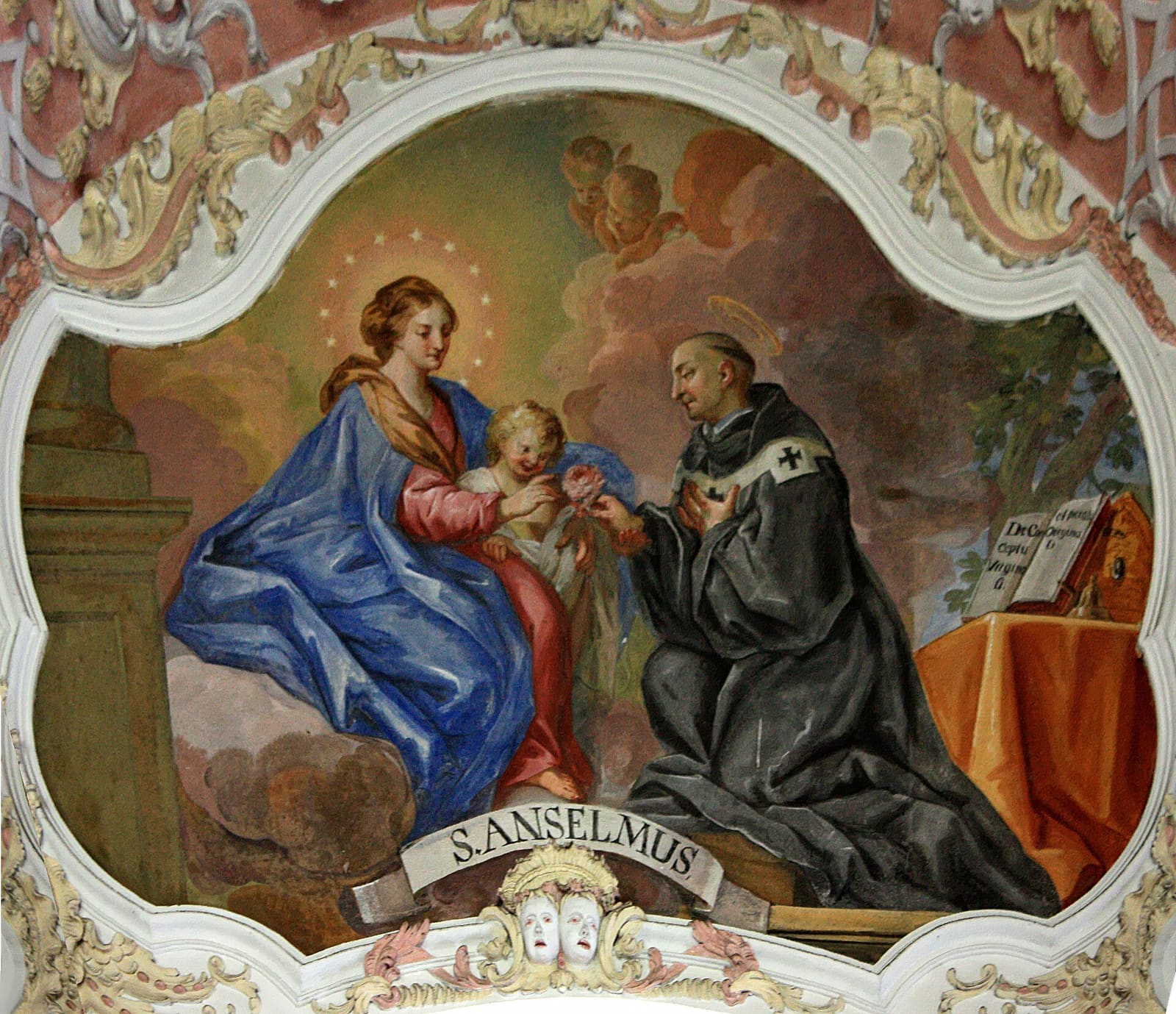
St. Anselm (1033–1109) was born in Aosta, Italy, became a Benedictine monk and abbot at Bec in Normandy, and was made Archbishop of Canterbury in 1093. A gentle teacher and deep thinker, he described theology as "faith seeking understanding" and wrote famous works on the existence of God and why God became man. He was twice exiled for defending the Church's freedom from royal control. He is a Doctor of the Church. His feast is April 21.
Key takeaways
- He left home after quarrels with his father and entered the abbey of Bec in 1060.
- His Proslogion contains his famous argument for God as "that than which nothing greater can be conceived."
- In Why God Became Man he explained the Incarnation and Redemption.
- As archbishop he resisted two English kings who tried to control the Church.
St. Anselm wanted nothing more than to be a monk, to pray and to think about God. God gave him that, and then made him archbishop of Canterbury in one of the most turbulent periods of English history.
From Aosta to Bec
Anselm was born in 1033 in Aosta, in the Alps of northern Italy. His mother was devout, his father harsh. After his mother’s death, Anselm quarreled with his father and left home, wandering for several years through Burgundy and France.
He was drawn to the Benedictine abbey of Bec, in Normandy, by its famous teacher, Lanfranc. He became a monk there in 1060, later prior, and in 1078 abbot. He was a gentle and patient teacher who won hearts with kindness.
Faith Seeking Understanding
At Bec Anselm wrote his first great works. In the Proslogion he wrote a prayer that begins with a famous plea: I do not seek to understand so that I may believe, but I believe so that I may understand. He called theology fides quaerens intellectum, “faith seeking understanding.” The Catechism quotes it (CCC 158).
In the same work he offered his famous argument that God is “that than which nothing greater can be conceived,” and that such a being must exist. Philosophers still debate it today.
Archbishop of Canterbury
In 1093 King William II of England, called Rufus, named Anselm archbishop of Canterbury. Anselm was so reluctant that the bishops had to force the pastoral staff into his closed hand. He soon clashed with the king, who seized church lands and tried to control the bishops. Anselm went into exile in 1097.
In exile he finished Why God Became Man (Cur Deus Homo), which explains that Christ, true God and true man, freely offered His life to make satisfaction for sin and restore our friendship with God.
Under King Henry I, Anselm was again exiled over who had the right to invest bishops. The dispute was settled by a compromise in 1107. He presided at a council in 1102 that condemned the sale of human beings in England.
His Prayers
Anselm also wrote beautiful prayers to Christ, to Mary and to the saints, full of tenderness and repentance. He died on April 21, 1109, and was declared a Doctor of the Church in 1720.
A Prayer Inspired by St. Anselm (Original Prayer)
Lord, I believe; help me to understand. Teach my heart where and how to seek You, where and how to find You. Let me seek You by desiring You, and find You by loving You. Amen.
Continue Reading
Read about St. Thomas Aquinas, St. Augustine, or St. Thomas Becket, a later archbishop of Canterbury.
Frequently asked questions
When is the feast of St. Anselm?
April 21, the day he died in 1109.
What does "faith seeking understanding" mean?
It means that the believer, out of love, wants to understand more deeply what he believes. Faith comes first, and reason helps us grasp it more fully. The Catechism uses the phrase (CCC 158).
Was St. Anselm against slavery?
Yes. At the Council of Westminster in 1102, which he led, the sale of human beings in England was condemned.
Sources
- St. Anselm, Proslogion; Cur Deus Homo; Prayers and Meditations
- Eadmer, Life of St. Anselm
- Catechism of the Catholic Church, no. 158
- Pope Benedict XVI, General Audience on St. Anselm (September 23, 2009)