St. Boniface: Apostle of Germany
Quick answer
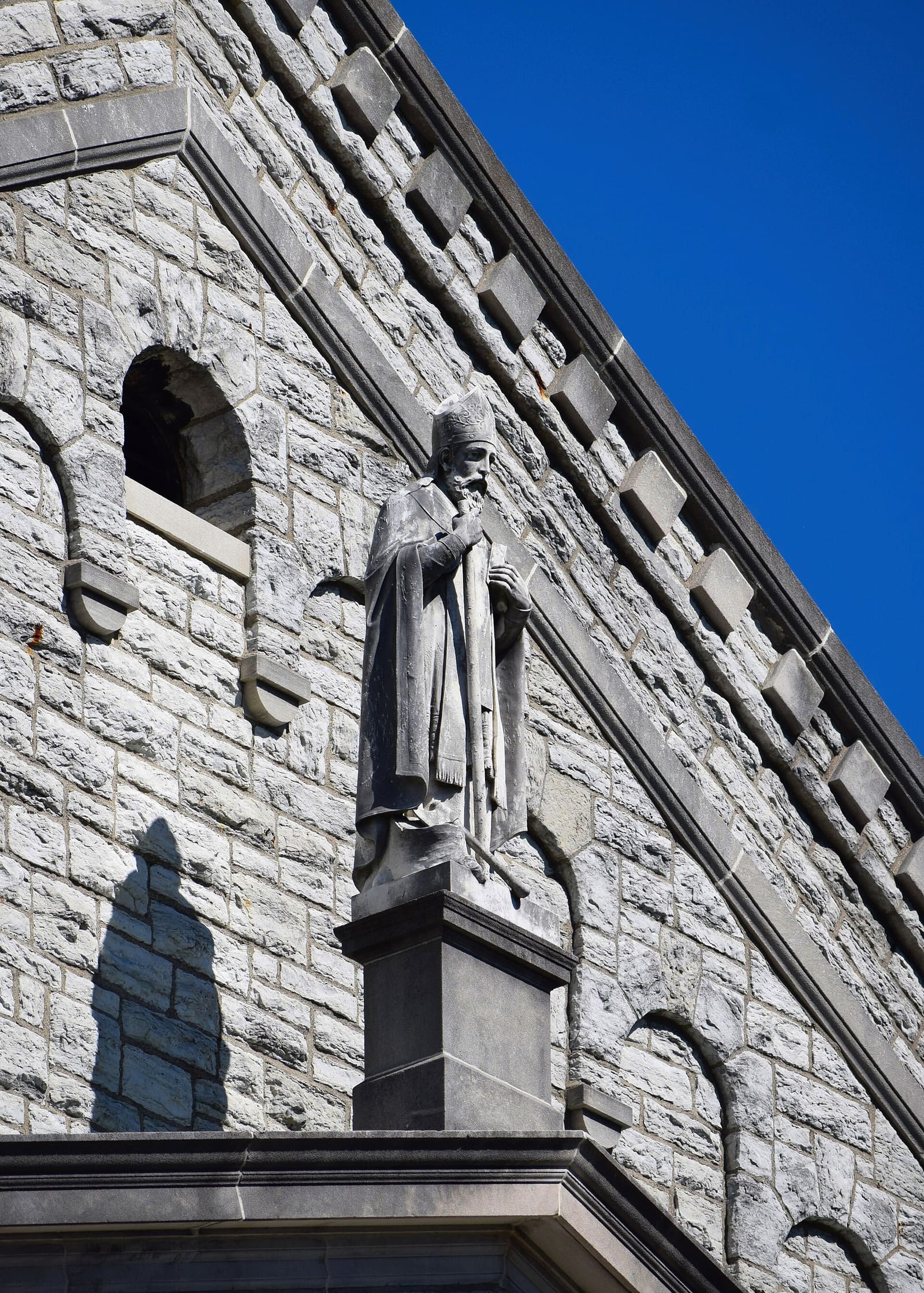
St. Boniface (about 675–754), born Wynfrith in Wessex, England, was a Benedictine monk who left a respected life to preach to the pagan peoples of Germany. Sent by Pope Gregory II, he founded monasteries and dioceses, felled the sacred oak of Thor at Geismar, and reformed the Frankish Church. In his late seventies he returned to Frisia as a missionary and was killed with his companions. He is the patron of Germany. His feast is June 5.
Key takeaways
- He was a successful teacher at a monastery in England before leaving for the missions.
- Pope Gregory II gave him the name Boniface and sent him to Germany in 719.
- He cut down the Oak of Thor at Geismar, and no harm came to him.
- He founded the abbey of Fulda, where he is buried.
St. Boniface could have stayed comfortable in an English monastery. Instead he spent nearly forty years among the forests and tribes of Germany, and at nearly eighty went out once more to preach and died a martyr.
Wynfrith of Wessex
Boniface was born Wynfrith around 675 in Wessex, in southwest England. He became a Benedictine monk at Nursling, near Southampton, and was a respected teacher and writer. He could have become abbot. But he felt called to bring the Gospel to the Germanic peoples on the continent, the cousins of the English.
Sent by the Pope
His first mission to Frisia, in the present-day Netherlands, in 716 failed. In 719 he went to Rome, where Pope Gregory II gave him the name Boniface and a commission to preach in Germany. He worked in Thuringia, Hesse and Bavaria. In 722 the pope made him a bishop, and later an archbishop.
The Oak of Thor
At Geismar, in Hesse, there was a giant oak sacred to the thunder god Thor. In 723 Boniface took an axe and began to cut it down, while the crowd waited for Thor to strike him. The tree fell, and nothing happened. Boniface used the wood to build a chapel dedicated to St. Peter. Many people were baptized.
Building the Church
Boniface was a great organizer. He founded dioceses and monasteries, including the abbey of Fulda in 744. He invited English monks and nuns to help him, among them St. Lioba, St. Thecla and St. Walburga. He held councils that reformed the clergy of the Frankish kingdom and strengthened its ties with Rome.
Martyrdom in Frisia
In old age Boniface resigned his see and returned to Frisia, where he had begun. On June 5, 754, at Dokkum, while waiting to confirm new Christians, he and about fifty companions were attacked by a band of armed pagans. He told his companions not to resist, and held up a book of the Gospels over his head. He was killed. His body was carried to Fulda, where it rests today.
A Prayer for Courage in Mission (Original Prayer)
St. Boniface, you left everything to bring Christ to others. Give me courage to speak of my faith, perseverance when I see little fruit, and peace when I meet opposition. Amen.
Continue Reading
Read about St. Bede, St. Francis Xavier, or St. Patrick.
Frequently asked questions
When is the feast of St. Boniface?
June 5, the day he was martyred in 754.
Did St. Boniface invent the Christmas tree?
A later legend links him to the evergreen, saying he pointed to a young fir growing from the roots of the felled oak as a sign of Christ. The custom of the Christmas tree actually developed many centuries later in Germany.
What is St. Boniface the patron saint of?
Germany, brewers and tailors, and the Netherlands, where he died.
Sources
- Willibald, Life of St. Boniface (eighth century)
- Letters of St. Boniface
- Pope Benedict XVI, General Audience on St. Boniface (March 11, 2009)