St. Patrick of Ireland: His True Story, Feast Day and Breastplate Prayer
Quick answer
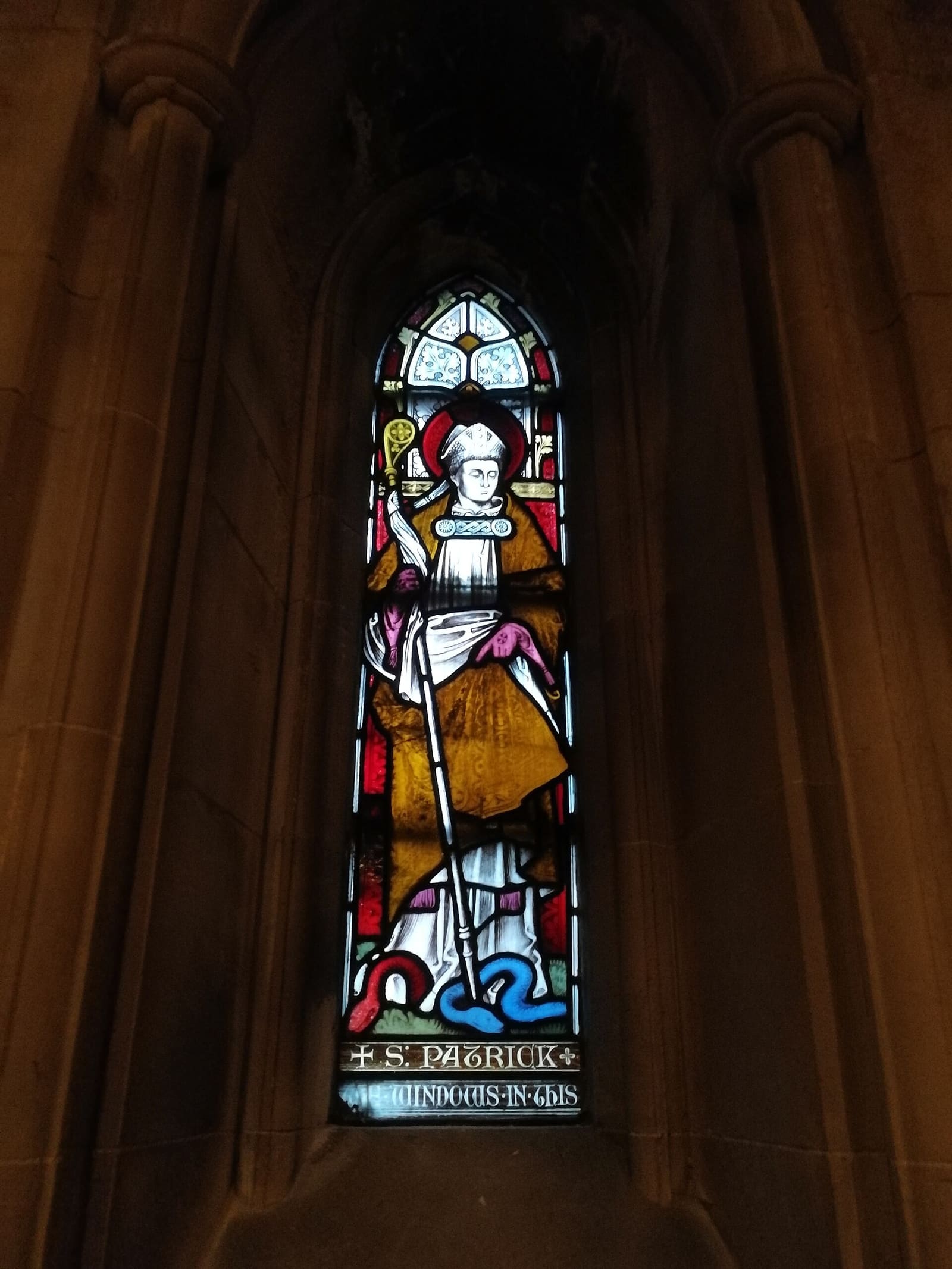
St. Patrick was a fifth-century missionary bishop and the patron saint of Ireland. Born in Roman Britain, he was kidnapped at about sixteen and enslaved in Ireland. After escaping, he became a priest and returned to preach the Gospel to the people who had enslaved him. His feast is March 17.
Key takeaways
- Patrick was born in Roman Britain, the son of a deacon named Calpornius, and was not Irish by birth.
- Irish raiders captured him at about sixteen, and he worked as a slave herding animals for six years.
- His own writings, the Confession and the Letter to Coroticus, are our most reliable sources.
- The stories of the shamrock and the snakes are later legends.
Every March 17, the world wears green. The real St. Patrick, however, was a former slave who forgave his captors, and went back to serve them. His story is far better than the parade.
Kidnapped at Sixteen
Patrick was born in Roman Britain in the fifth century, at a place he calls Bannavem Taburniae, which has never been identified with certainty. His father, Calpornius, was a deacon, and his grandfather was a priest. By his own account he did not take his faith seriously as a boy.
When he was about sixteen, Irish raiders seized him and many others and carried him across the sea. For six years he worked as a slave, tending animals in all weather. In that loneliness, he began to pray. He wrote that he prayed up to a hundred times in a day, and as many again at night.
Escape and Calling
A voice in a dream told him that a ship was ready. He walked a great distance to the coast, found a ship, and eventually made his way home. His family begged him never to leave them again.
Then came another dream. A man named Victoricus brought him letters, one of them headed “The Voice of the Irish,” and he seemed to hear the people of Ireland calling him to walk among them once more. He studied for the priesthood and was later made a bishop.
The Mission to Ireland
Tradition says that Patrick returned around the year 432. He traveled across the country baptizing, ordaining priests and encouraging men and women to consecrate themselves to God. He faced real danger, and he says he expected daily to be killed or enslaved again.
He wrote only two works that survive. In the Confession he humbly tells the story of his life and thanks God. In the Letter to the Soldiers of Coroticus he fiercely condemns a British chieftain whose men had killed and enslaved newly baptized Christians. He is one of the earliest Christian voices to speak so plainly against the slave trade.
Patrick is traditionally said to have died on March 17, around 461, though some scholars favor a later date.
Fact and Legend
Much of what people “know” about Patrick came centuries later.
- The shamrock as a teaching tool for the Trinity is first recorded long after his death.
- The snakes never lived in Ireland in his day.
- St. Patrick’s Breastplate, the great prayer below, is attributed to him by tradition, but scholars generally date it later.
None of this takes anything away from him. A man who went back to serve the people who had enslaved him needs no embellishment.
From St. Patrick’s Breastplate (Traditional Prayer)
Christ with me, Christ before me, Christ behind me, Christ in me, Christ beneath me, Christ above me, Christ on my right, Christ on my left, Christ when I lie down, Christ when I sit down, Christ when I arise, Christ in the heart of everyone who thinks of me, Christ in the mouth of everyone who speaks of me, Christ in every eye that sees me, Christ in every ear that hears me.
A Prayer to St. Patrick (Original Prayer)
St. Patrick, you forgave those who wronged you and returned to bring them the Gospel. Pray for all who have been hurt, that their wounds may be healed. Teach me to forgive and to serve. Amen.
Continue Reading
Learn why Catholics pray to the saints or see how another young convert changed the Church in the life of St. Augustine of Hippo.
Frequently asked questions
When is St. Patrick's Day?
March 17, the traditional date of his death. When it falls during Holy Week the liturgical celebration is moved.
Was St. Patrick Irish?
No. He was born in Roman Britain, though the exact place is uncertain. He first came to Ireland as a captive.
Did St. Patrick drive the snakes out of Ireland?
That is a legend. Ireland has had no native snakes since the last ice age. The story may be a symbol for his overcoming of paganism.
Did St. Patrick really use the shamrock to teach the Trinity?
The story appears centuries after his lifetime, so it cannot be confirmed. It remains a lovely way to explain one God in three Persons.
Sources
- St. Patrick, Confession
- St. Patrick, Letter to the Soldiers of Coroticus
- Catholic Encyclopedia (1911), St. Patrick