St. Joseph: Husband of Mary, Foster Father of Jesus, Feast Day and Prayer
Quick answer
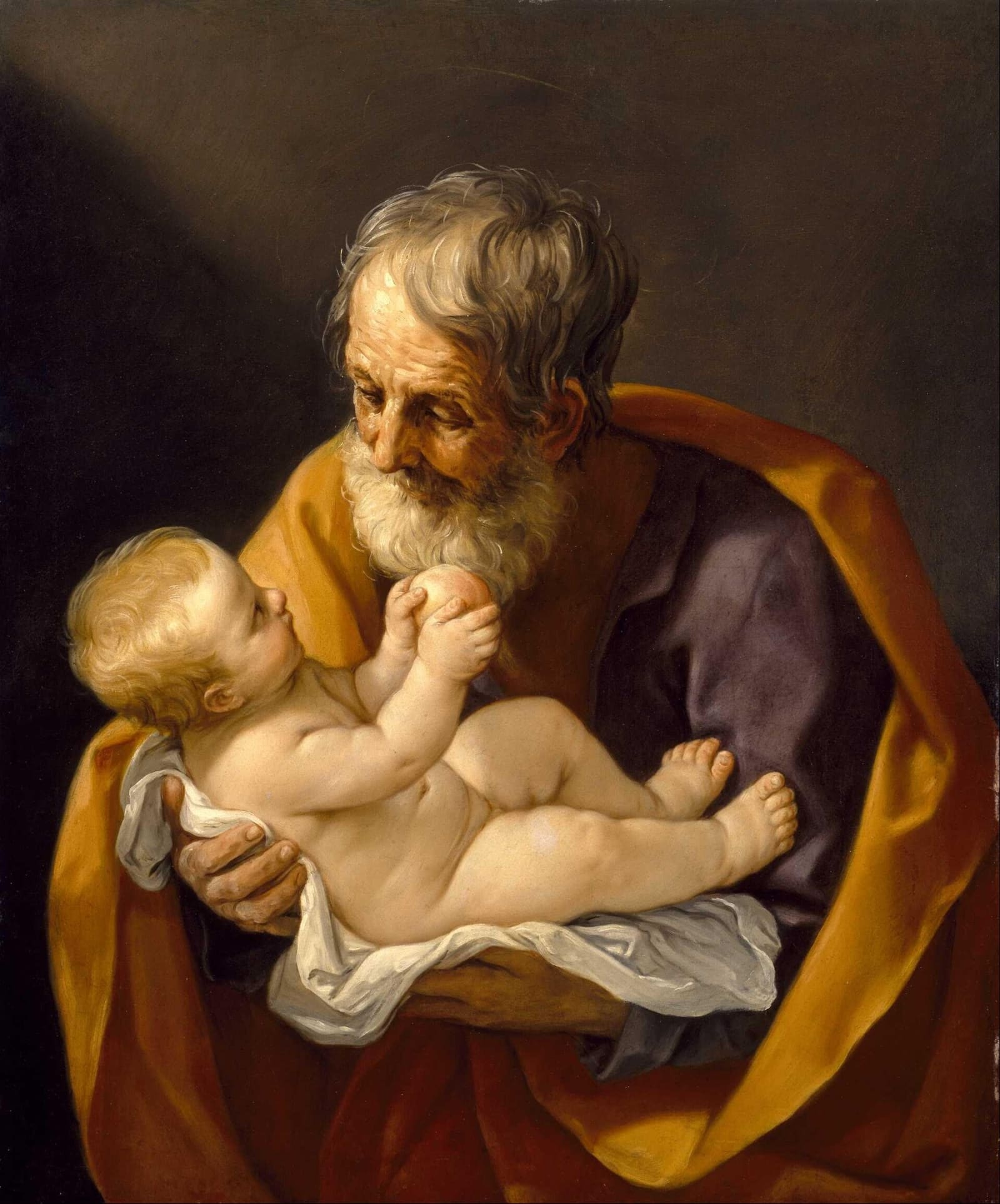
St. Joseph was the husband of the Blessed Virgin Mary and the foster father of Jesus. The Gospels of Matthew and Luke are our only reliable sources for his life, and they present him as a just man who obeyed God without hesitation. Blessed Pius IX named him Patron of the Universal Church in 1870. His solemnity is March 19, and St. Joseph the Worker is honored on May 1.
Key takeaways
- The Gospels call Joseph a just man, a descendant of David, and a craftsman, usually understood to be a carpenter.
- Four times in St. Matthew's Gospel, God guides him in a dream, and each time he obeys at once.
- Scripture does not record a single word spoken by him.
- Blessed Pius IX declared him Patron of the Universal Church on December 8, 1870.
- His main feast is the Solemnity of March 19. The Memorial of St. Joseph the Worker falls on May 1.
St. Joseph never speaks in the Bible. Not one of his words is recorded. Yet God entrusted to this quiet man the two people He loved most on earth: His Son and the Blessed Virgin Mary.
What the Gospels Tell Us
Our only reliable information about St. Joseph comes from the first chapters of St. Matthew and St. Luke. They tell us:
- He was a descendant of King David (Matthew 1:20; Luke 1:27).
- He lived in Nazareth, though Bethlehem was his ancestral city (Luke 2:4).
- He worked as a tekton, a Greek word for a craftsman. Tradition has always understood this to mean a carpenter (Matthew 13:55).
- He was “a just man” (Matthew 1:19). In the Bible, this is high praise. It means a person who lives faithfully according to God’s will.
Joseph’s Dreams
When Joseph learned that Mary was expecting a child, he decided to send her away quietly, to spare her public shame. Then an angel told him in a dream to take Mary as his wife, because the child was conceived of the Holy Spirit (Matthew 1:18-25).
God spoke to him in dreams three more times. He was told to flee to Egypt to escape Herod, then when it was safe to return, and finally to settle in Galilee (Matthew 2:13-23). Each time, the Gospel tells us that he rose and did as he was told.
Father to the Son of God
Joseph was the legal father of Jesus and raised Him as a son. He named Him, as a father would (Matthew 1:25). He brought the Child to the Temple. When Jesus was twelve and stayed behind in Jerusalem, Joseph and Mary searched for Him in great distress (Luke 2:41-48).
The Gospel then says that Jesus “was subject to them” (Luke 2:51). The Son of God obeyed Joseph, and learned a trade at his side. The Catechism sees these hidden years in Nazareth as part of the mystery of our salvation (CCC 532).
What the Legends Add
Early apocryphal writings fill in details that the Gospels leave out. They say that Joseph was very old when he married Mary, that he had children from an earlier marriage, and that he was chosen when his staff miraculously blossomed.
The Church did not accept those books as Scripture, and these stories should not be treated as history. It is enough to know what the Gospels tell us and what the Church teaches: Joseph was the true husband of Mary, and Mary remained ever-virgin (CCC 499-500).
How the Church Has Honored Him
Devotion to St. Joseph grew slowly and then flourished. Some important moments:
| Year | Event |
|---|---|
| 1870 | Blessed Pius IX declares him Patron of the Universal Church |
| 1889 | Leo XIII publishes Quamquam Pluries, the first encyclical on St. Joseph |
| 1955 | Pius XII establishes the feast of St. Joseph the Worker |
| 1962 | St. John XXIII adds his name to the Roman Canon of the Mass |
| 1989 | St. John Paul II writes Redemptoris Custos |
| 2013 | His name is added to the other main Eucharistic Prayers |
| 2020 | Pope Francis writes Patris Corde and proclaims a Year of St. Joseph |
Patron of a Happy Death
Although Scripture does not describe it, Christians have long believed that Joseph died with Jesus and Mary at his side. For this reason he is invoked as the patron of a good death (see CCC 1014). There is no better way to imagine leaving this world.
Go to Joseph
In the Book of Genesis, when the people of Egypt cried out for bread, Pharaoh told them, “Go to Joseph” (Genesis 41:55). The Church has long applied these words to St. Joseph, the guardian of the One who is the Bread of Life.
For a fuller selection of traditional devotions, see our page of prayers to St. Joseph, or pray the short Jesus, Mary and Joseph prayer throughout the day.
A Prayer to St. Joseph for Our Families (Original Prayer)
St. Joseph, just and faithful man, you protected Jesus and Mary with your whole life. Protect my family now. Teach fathers to be gentle and strong. Bless the work of our hands. Be near us in the hour of our death, as Jesus and Mary were near to you. Amen.
Continue Reading
Read about why Catholics ask the saints to pray for them and what the Catholic Church believes about Mary.
Frequently asked questions
When is the feast day of St. Joseph?
The Solemnity of St. Joseph, Spouse of the Blessed Virgin Mary, is March 19. The Memorial of St. Joseph the Worker is May 1, which Pope Pius XII established in 1955.
What is St. Joseph the patron saint of?
He is the Patron of the Universal Church. He is also popularly regarded as patron of fathers, workers, carpenters and families, and of a happy death, since tradition holds that he died in the presence of Jesus and Mary.
Was St. Joseph an old man when he married Mary?
The Gospels do not say. The idea that he was an elderly widower comes from apocryphal writings that the Church did not accept as Scripture. Those stories are not reliable, and artists and writers have portrayed him at different ages.
Did St. Joseph and Mary have other children?
The Church teaches that Mary remained ever-virgin, and that the people the Gospels call "brothers" of Jesus were close relatives, as that word could mean at the time (CCC 499-500).
How did St. Joseph die?
Scripture does not record his death. He last appears when Jesus is twelve (Luke 2:41-51), and because he is absent from the accounts of Jesus' public ministry and the Crucifixion, it is generally believed that he had already died.
Sources
- Matthew 1:16-25; 2:13-23; 13:55; Luke 1:27; 2:1-51; 3:23
- Catechism of the Catholic Church 437, 499-500, 532, 1014
- Leo XIII, Encyclical Quamquam Pluries (1889)
- St. John Paul II, Apostolic Exhortation Redemptoris Custos (1989)
- Pope Francis, Apostolic Letter Patris Corde (2020)
- Catholic Encyclopedia (1910), St. Joseph