St. Paul the Apostle: From Persecutor to Apostle of the Nations
Quick answer
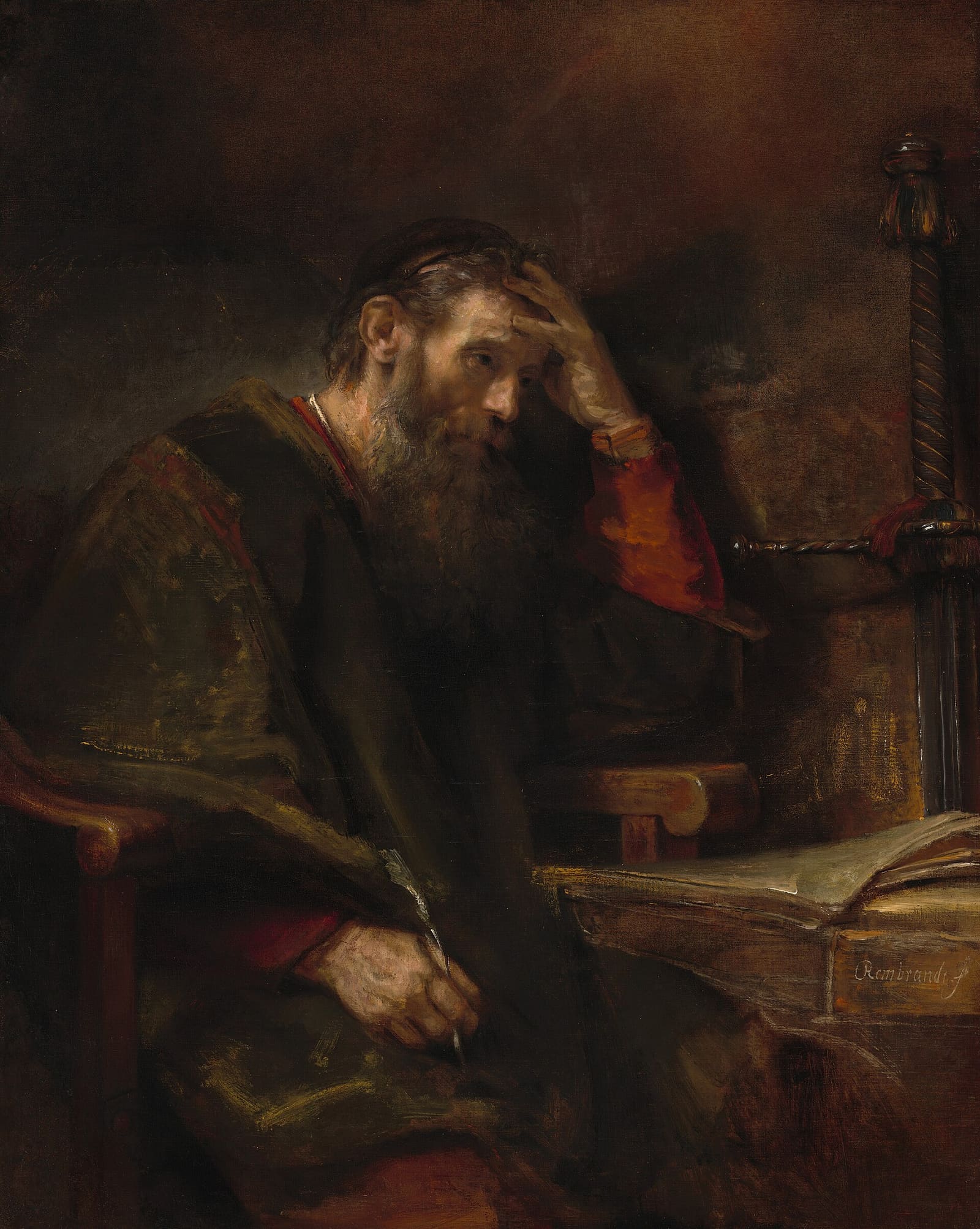
St. Paul, born Saul in Tarsus, was a devout Pharisee who persecuted the first Christians until the risen Christ appeared to him on the road to Damascus. He became the Apostle to the Gentiles, founded churches across the Roman world and wrote letters that make up much of the New Testament. He was martyred in Rome around 67. The Church celebrates him with St. Peter on June 29 and recalls his conversion on January 25.
Key takeaways
- He was a Jew from Tarsus, a Roman citizen, and trained as a Pharisee in Jerusalem.
- The risen Jesus appeared to him on the road to Damascus (Acts 9).
- He made at least three great missionary journeys and wrote thirteen letters traditionally attributed to him.
- Tradition holds that he was beheaded in Rome under Emperor Nero.
No one would have chosen Saul of Tarsus to spread the Gospel. He had stood by approving as St. Stephen was stoned. Yet Christ chose him, and he became the greatest missionary the Church has ever known.
Saul of Tarsus
Saul was born in Tarsus, in present-day Turkey, to a Jewish family of the tribe of Benjamin. He was a Roman citizen by birth. He studied in Jerusalem under the respected teacher Gamaliel and became a zealous Pharisee (Acts 22:3). Convinced that the followers of Jesus were a danger to his people’s faith, he hunted them down.
The Road to Damascus
As Saul traveled to Damascus to arrest Christians, a light from heaven flashed around him.
And falling on the ground, he heard a voice saying to him: Saul, Saul, why persecutest thou me? (Acts 9:4, Douay-Rheims)
Blinded, he was led into the city. After three days a disciple named Ananias laid hands on him. His sight returned and he was baptized. He spent time in Arabia and Damascus, then went to Jerusalem to meet St. Peter.
The Apostle to the Gentiles
With Barnabas, Silas, Timothy, Luke and others, Paul traveled thousands of miles by foot and by sea, preaching first in synagogues and then to Gentiles. He founded churches in Galatia, Philippi, Thessalonica, Corinth, Ephesus and elsewhere. He was beaten, stoned, shipwrecked and imprisoned (2 Corinthians 11:24-27). At the Council of Jerusalem (Acts 15), he and Peter agreed that Gentile converts did not need to follow the full Mosaic law.
His Letters
Paul kept caring for his churches by letter. Thirteen New Testament letters bear his name, including Romans, 1 and 2 Corinthians, Galatians, Ephesians and Philippians. In them we find the great hymn to love (1 Corinthians 13), the earliest written account of the Last Supper (1 Corinthians 11:23-26), and teaching on grace, faith, the Church as the Body of Christ and the resurrection.
Martyrdom in Rome
Arrested in Jerusalem, Paul appealed to Caesar and was taken to Rome. Acts ends with him there under house arrest, still preaching. Tradition holds that he was beheaded under Nero, around 67, on the road to Ostia. Near the end he wrote: “I have fought a good fight, I have finished my course, I have kept the faith” (2 Timothy 4:7).
A Prayer to St. Paul (Original Prayer)
St. Paul, Christ met you on the road and changed your life. Pray for those who are far from God, and for me. Give me your zeal to share the Gospel and your trust that God’s grace is enough. Amen.
Continue Reading
Read about St. Peter, St. Luke, Paul’s companion, St. Barnabas and St. Timothy.
Frequently asked questions
When is the feast of St. Paul?
June 29, the Solemnity of Sts. Peter and Paul. The Conversion of St. Paul is celebrated on January 25.
Where is St. Paul buried?
In the Basilica of St. Paul Outside the Walls in Rome.
Did Saul change his name to Paul at his conversion?
Not exactly. Saul was his Hebrew name and Paul his Roman one. Acts begins to call him Paul when his mission to the Gentiles begins (Acts 13:9).
Sources
- The Acts of the Apostles, chapters 7–28 (Douay-Rheims)
- The Letters of St. Paul, especially Galatians, 1 and 2 Corinthians and Philippians
- Pope Benedict XVI, General Audiences on St. Paul (2008–2009)