St. Barnabas: The Son of Encouragement
Quick answer
St. Barnabas was a Levite from Cyprus whose given name was Joseph. The apostles called him Barnabas, "son of encouragement." He sold his land and gave the money to the Church, vouched for Saul after his conversion, led the Church at Antioch, and went with Paul on the first missionary journey. Though not one of the Twelve, he is honored as an apostle. Tradition says he was martyred in Cyprus. His feast is June 11.
Key takeaways
- He was one of the first to give his property to the Jerusalem community (Acts 4:36-37).
- He introduced the newly converted Saul to the apostles (Acts 9:27).
- At Antioch, where believers were first called Christians, he brought Paul to help him.
- He later took his cousin Mark on mission after disagreeing with Paul.
Some saints are great preachers. St. Barnabas was a great encourager. Without him, the Church might have lost St. Paul.
A Generous Beginning
Barnabas was a Levite from Cyprus named Joseph. In the first days of the Church in Jerusalem, when believers shared everything, he sold a field and laid the money at the apostles’ feet (Acts 4:36-37). The apostles gave him the name Barnabas, “son of encouragement.”
Standing Up for Saul
After Saul’s conversion on the road to Damascus, he came to Jerusalem. The disciples were afraid of him. He had been their persecutor. Barnabas took him by the hand, brought him to the apostles, and told them how Saul had met the Lord and preached boldly (Acts 9:26-27). His word was enough.
Antioch
When the Gospel began to spread among Gentiles in Antioch, the Jerusalem Church sent Barnabas to see what was happening.
Who, when he was come, and had seen the grace of God, rejoiced: and he exhorted them all with purpose of heart to continue in the Lord. For he was a good man, and full of the Holy Ghost and of faith. (Acts 11:23-24, Douay-Rheims)
He went to Tarsus to find Saul and brought him to Antioch. For a year they taught there together. It was in Antioch that the disciples were first called Christians (Acts 11:26).
The First Missionary Journey
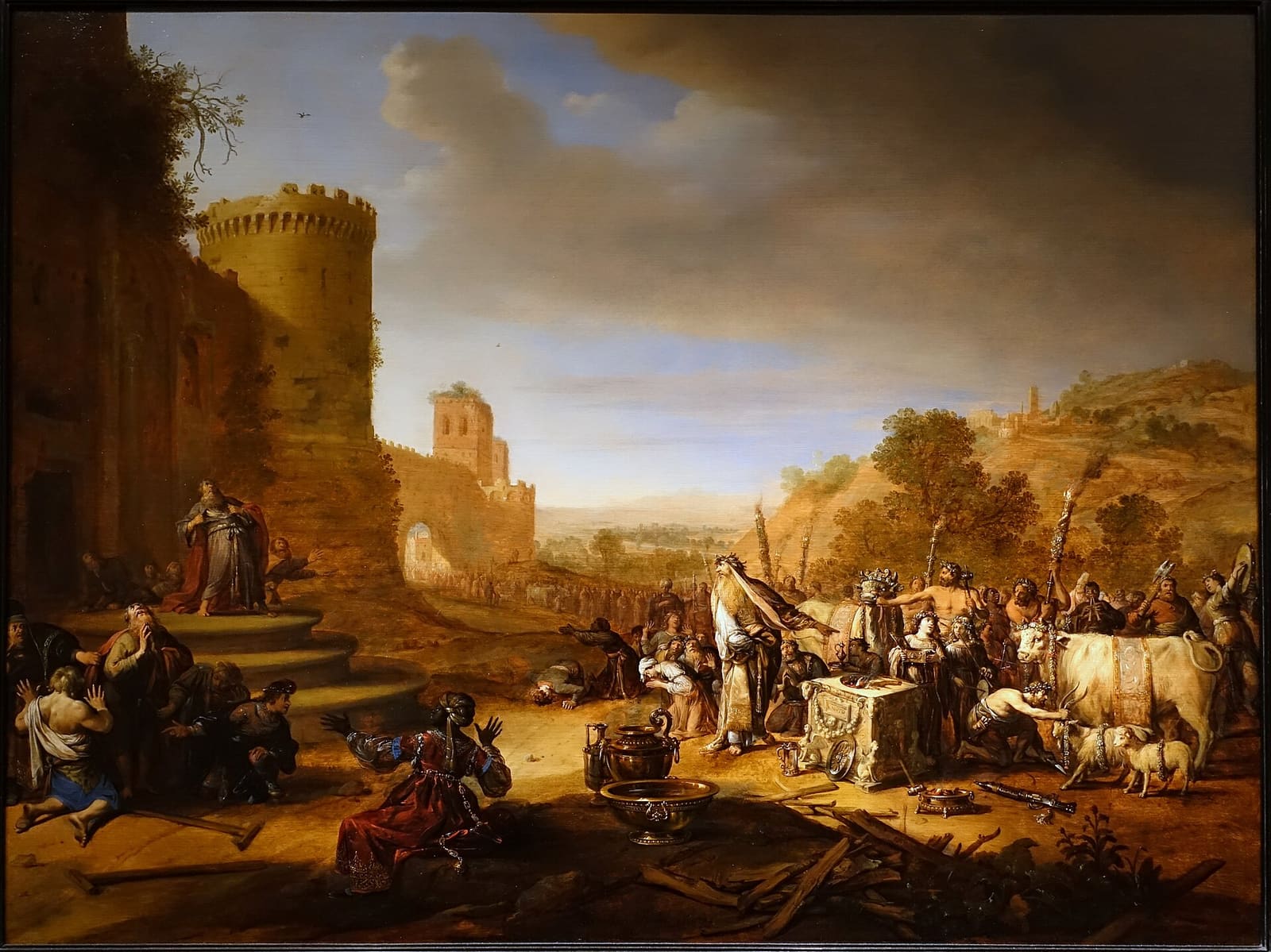
While the Church in Antioch was praying, the Holy Spirit said, “Separate me Saul and Barnabas, for the work whereunto I have taken them” (Acts 13:2). They sailed to Cyprus and then preached in the cities of Asia Minor. At Lystra, the people thought they were gods. Barnabas and Paul tore their garments and begged them to turn to the living God (Acts 14).
They went together to the Council of Jerusalem to defend the welcome of Gentiles without requiring circumcision (Acts 15).
A Second Chance for Mark
When Paul planned a second journey, Barnabas wanted to take his cousin John Mark, who had left them on the first. Paul refused, and they parted ways. Barnabas took Mark to Cyprus (Acts 15:36-39). Years later Paul spoke warmly of Mark (2 Timothy 4:11). Barnabas’s patience had borne fruit.
Tradition says Barnabas was stoned to death at Salamis, in Cyprus.
A Prayer to Be an Encourager (Original Prayer)
St. Barnabas, you saw the good in others and lifted them up. Help me encourage those who are struggling, give second chances, and rejoice when I see God’s grace at work. Amen.
Continue Reading
Read about St. Paul, St. Mark, or St. Timothy.
Frequently asked questions
When is the feast of St. Barnabas?
June 11.
Was Barnabas one of the twelve apostles?
No, but Acts calls him an apostle (Acts 14:14), and the Church honors him as one because he was sent by the Holy Spirit on mission.
What does Barnabas mean?
Acts says it means "son of consolation" or "son of encouragement" (Acts 4:36).
Sources
- Acts of the Apostles 4:36-37; 9:27; 11:19-30; 13–15 (Douay-Rheims)
- Pope Benedict XVI, General Audience on Sts. Barnabas, Silas and Apollos (January 31, 2007)