St. Peter the Apostle: Life, Denial, Martyrdom and Feast Day
Quick answer
St. Peter, first named Simon, was a Galilean fisherman who became the leader of the Apostles and the first pope. He denied Jesus three times, was forgiven, and preached the Gospel from Jerusalem to Rome, where he died as a martyr under Nero. The Solemnity of Sts. Peter and Paul is June 29.
Key takeaways
- Jesus gave Simon the name Peter, meaning rock, and promised him the keys of the Kingdom (Matthew 16:18-19).
- Peter denied Jesus three times and was restored by the Risen Lord (John 21:15-17).
- He preached on Pentecost and led the first Christian community.
- Ancient tradition holds that he was crucified in Rome under Nero, and his tomb lies beneath St. Peter's Basilica.
The Gospels do not hide St. Peter’s faults. He spoke before he thought, sank when he doubted, and denied his Lord at the worst possible moment. Jesus chose him anyway.
A Fisherman from Galilee
Simon was a fisherman from Bethsaida who worked out of Capernaum with his brother Andrew. He was a married man, since Jesus healed his mother-in-law (Mark 1:30-31). When Jesus called him, he left his nets and followed (Matthew 4:18-20).
“You Are Peter”
Peter is named first in every list of the Apostles. Near Caesarea Philippi, Jesus asked His disciples who they said He was. Simon answered that He was the Christ, the Son of the living God. Jesus then gave him a new name:
Thou art Peter; and upon this rock I will build my church. (Matthew 16:18, Douay-Rheims)
He also promised Peter the keys of the Kingdom. The Catechism sees in this a unique authority entrusted to him (CCC 553).
Failure and Forgiveness
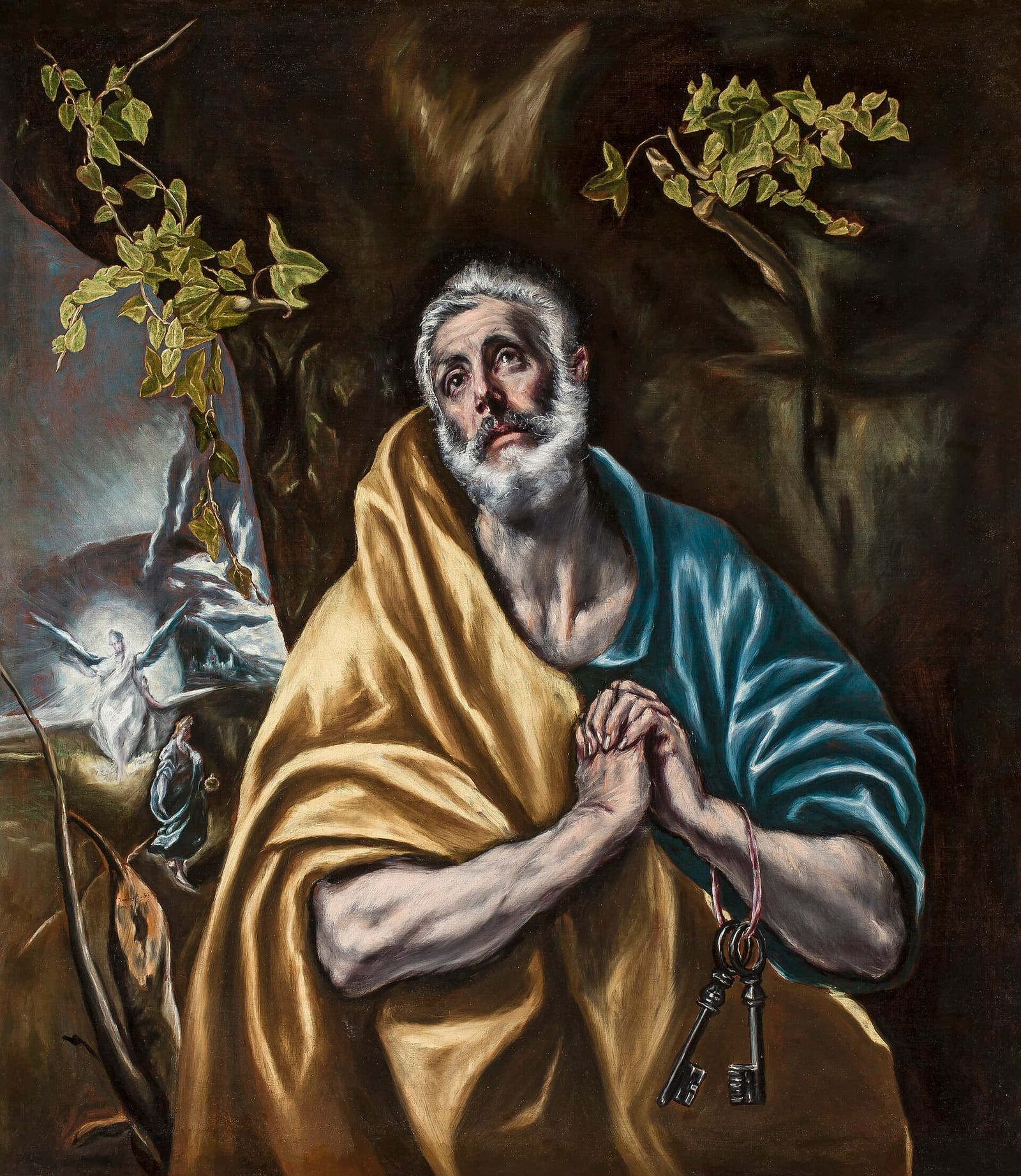
Peter was with Jesus on the Mount of the Transfiguration. He stepped out on the water, then began to sink (Matthew 14:28-31). At the Last Supper he swore he would never abandon Jesus. A few hours later, frightened, he denied three times that he knew Him, and he went out and wept bitterly (Matthew 26:75).
After the Resurrection, by the Sea of Galilee, Jesus asked him three times, “Lovest thou me?” Each time He entrusted Peter with the care of His sheep (John 21:15-17). One denial was healed for each.
Leader of the Early Church
At Pentecost, Peter stood up and preached, and about three thousand people were baptized (Acts 2). He healed the sick and was imprisoned and freed by an angel (Acts 12). When he baptized the Roman centurion Cornelius, the Church opened its doors fully to the Gentiles (Acts 10).
Martyrdom in Rome
Peter eventually came to Rome. Jesus had foretold that he would die for Him (John 21:18-19). During the persecution under the emperor Nero, around the years 64 to 67, he was put to death. Ancient tradition says that he was crucified head downward, at his own request.
His tomb is venerated beneath the high altar of St. Peter’s Basilica. Excavations in the twentieth century uncovered a shrine there, and in 1968 Pope St. Paul VI announced that relics of the Apostle had been identified.
A Prayer to St. Peter (Original Prayer)
St. Peter, you fell and were forgiven. Pray for all who have failed the Lord. Help me to say with you, “Lord, You know that I love You.” Pray for our Holy Father and for the whole Church. Amen.
Continue Reading
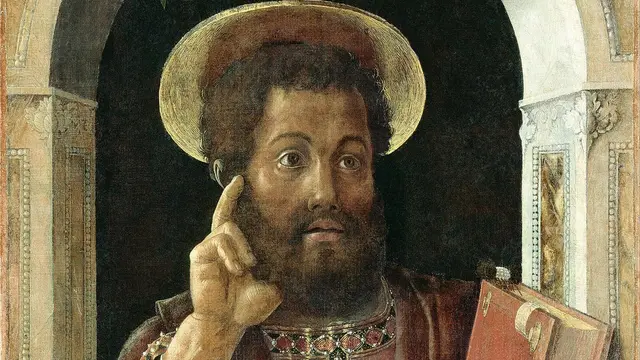
Read our guide to the popes, or the life of St. Mark, whose Gospel is said to preserve Peter’s preaching.
Frequently asked questions
When is the feast of St. Peter?
The Solemnity of Sts. Peter and Paul is June 29. The Chair of St. Peter is celebrated on February 22.
Was St. Peter really in Rome?
Yes, according to the unanimous witness of the early Church. St. Clement of Rome and St. Ignatius of Antioch both point to it, and excavations beneath St. Peter's Basilica uncovered an ancient shrine honored as his grave.
Was St. Peter crucified upside down?
This is an ancient tradition recorded by Origen and repeated by Eusebius. It is said that Peter thought himself unworthy to die as his Lord had died.
Was St. Peter married?
Yes. The Gospels mention his mother-in-law, whom Jesus healed (Mark 1:30-31).
Sources
- Matthew 4:18-20; 14:28-31; 16:13-19; 26:69-75; Mark 1:30-31; Luke 22:32; John 21:15-19; Acts 2; 10; 12
- Eusebius, Ecclesiastical History, Book 3
- Catechism of the Catholic Church 552-553, 641, 880-881