St. Isidore of Seville: Bishop, Scholar and Doctor of the Church
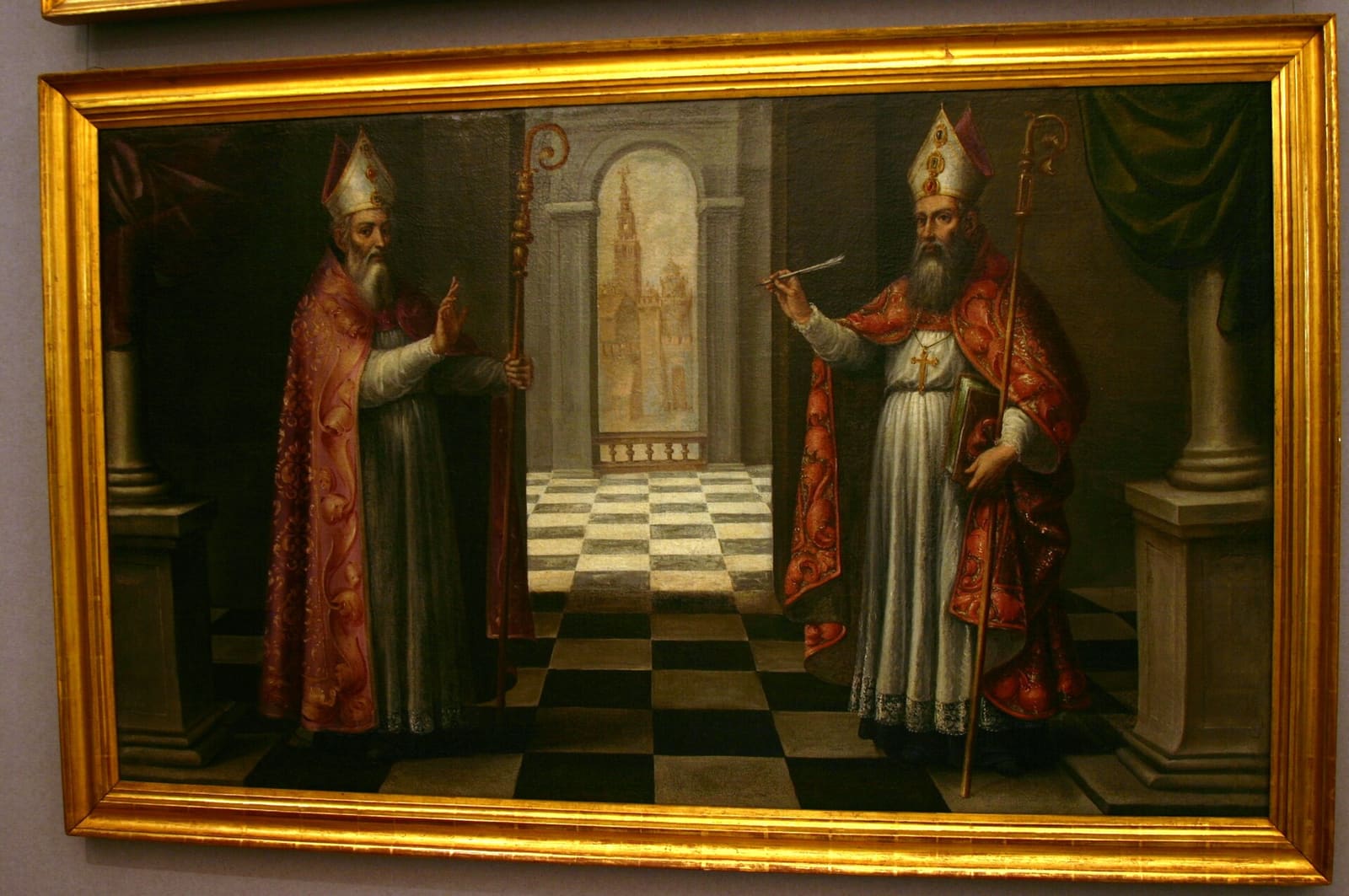
Quick answer
St. Isidore of Seville (about 560–636) was archbishop of Seville in Spain for over thirty years. He helped bring the Visigothic people from Arianism into the Catholic faith, presided over important Church councils, founded schools, and wrote the Etymologies, an encyclopedia of all the knowledge of his time. He is a Doctor of the Church. His feast is April 4.
Key takeaways
- He came from a family of saints, including his brothers Leander and Fulgentius and his sister Florentina.
- He succeeded his brother Leander as archbishop of Seville around 600.
- His Etymologies preserved classical learning for the Middle Ages.
- He presided over the Fourth Council of Toledo in 633.
As the Roman world crumbled, St. Isidore of Seville gathered up what it had known and handed it on. For centuries, educated Europeans learned much of what they knew from his books.
A Family of Saints
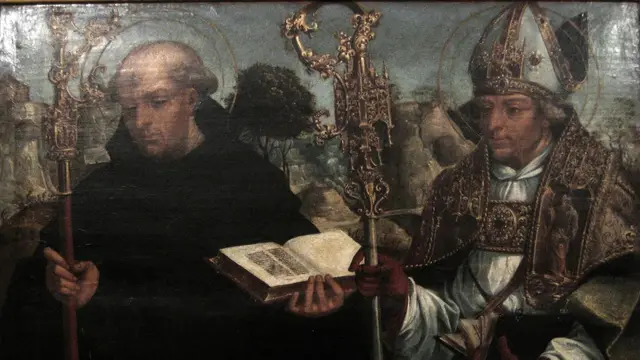
Isidore was born around 560, probably in Cartagena, Spain, into a family that gave the Church four saints: St. Leander, his older brother and archbishop of Seville; St. Fulgentius, bishop of Écija; St. Florentina, a nun; and Isidore himself. After their parents’ early deaths, Leander raised Isidore and gave him a strict education. Isidore later admitted he found it hard at first.
Archbishop of Seville
Spain was ruled by the Visigoths, a Germanic people who had embraced Arianism, the heresy denying that Christ is fully God. Leander helped bring King Reccared and his people into the Catholic Church in 589. Around 600 Isidore succeeded his brother as archbishop of Seville and served for over thirty years.
He presided over councils that organized the Church in Spain. At the Fourth Council of Toledo in 633, the bishops decreed that every diocese should have a school attached to the cathedral, and they unified the liturgy across Spain.
The Etymologies
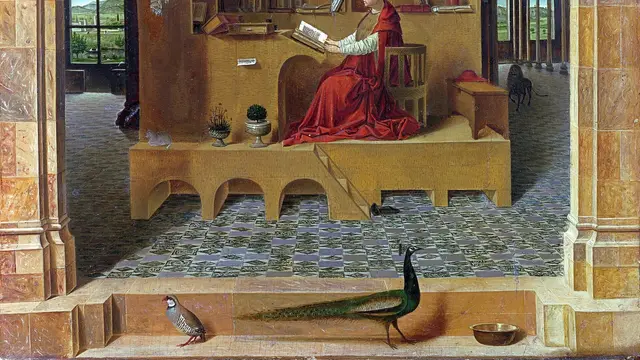
Isidore’s most famous work is the Etymologies, a huge encyclopedia in twenty books. It covers grammar, mathematics, medicine, law, the Church, the Bible, animals, geography, buildings, ships, food and clothing. Isidore explained each subject by the origin of its words, as he understood them. Some of his explanations make us smile today, but the work preserved a great deal of classical learning and was copied in monasteries across Europe for a thousand years.
He also wrote on Scripture, history, theology and the liturgy, and a rule for monks.
His Death
As he felt death approaching in 636, Isidore asked to be carried to church. He publicly asked forgiveness of everyone, gave away what he had to the poor, received the sacraments and died a few days later.
He was declared a Doctor of the Church in 1722.
A Prayer Before Using the Internet (Original Prayer)
St. Isidore, you gathered knowledge to serve God. Help me use technology wisely, seek what is true and good, and turn away from what harms my soul. Amen.
Continue Reading
Read about St. Bede, another great scholar, St. Jerome, or St. Gregory the Great and the popes.
Frequently asked questions
When is the feast of St. Isidore of Seville?
April 4, the day he died in 636.
Is St. Isidore the patron saint of the internet?
He has been widely proposed as patron of the internet and computer users because his Etymologies tried to gather all knowledge in one place. The Holy See has not officially named a patron of the internet.
Is he the same as St. Isidore the Farmer?
No. St. Isidore the Farmer (feast May 15) was a twelfth-century laborer from Madrid, patron of farmers.
Sources
- St. Isidore of Seville, Etymologiae; De Ecclesiasticis Officiis
- St. Braulio of Saragossa, Renotatio Isidori
- Pope Benedict XVI, General Audience on St. Isidore of Seville (June 18, 2008)