St. Cecilia: Virgin, Martyr and Patron Saint of Music
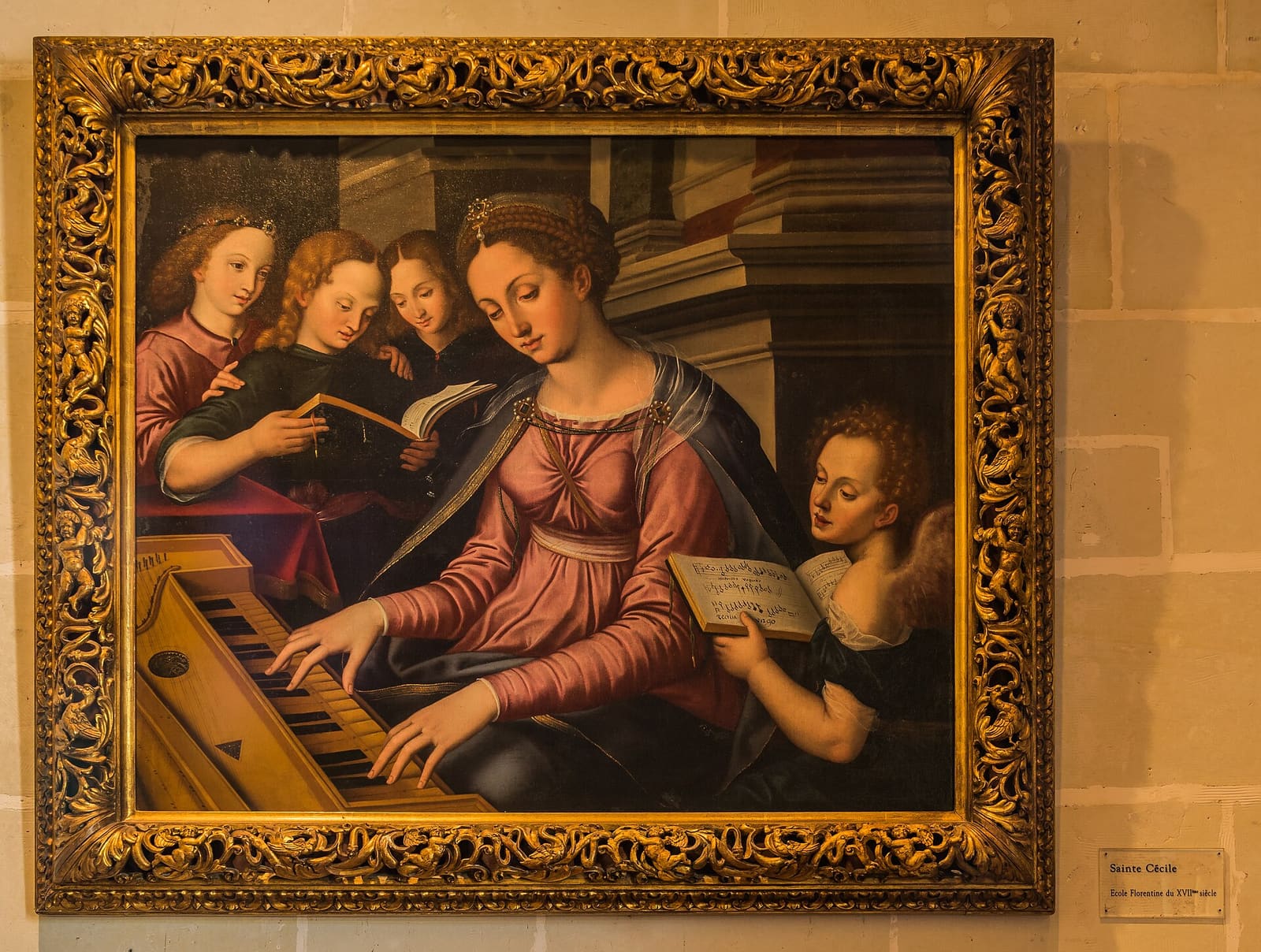
Quick answer
St. Cecilia was a Roman martyr, probably of the third century, whose name is said in the Roman Canon of the Mass. According to her traditional story, she was a noble Christian woman who converted her husband Valerian and his brother Tiburtius, and was martyred for her faith. She is the patron saint of musicians and church music. Her feast is November 22.
Key takeaways
- She is one of seven women martyrs named in the Roman Canon (Eucharistic Prayer I).
- Her church in the Trastevere neighborhood of Rome has stood since at least the fifth century.
- The story says she sang to God in her heart on her wedding day, so she became the patron of music.
- In 1599 her body was found and sculptor Stefano Maderno carved the famous statue of her lying in death.
Every time a choir sings at Mass, St. Cecilia is a patron watching over them. She is one of the most loved martyrs of the early Church in Rome.
What We Know
Cecilia lived in Rome, probably in the third century. Her memory was honored from very early times. A church bearing her name stood in the Trastevere neighborhood by the fifth century, traditionally built over her house. Her name was placed in the Roman Canon, the ancient Eucharistic Prayer still used at Mass.
Her Traditional Story
Her fuller story comes from a fifth-century account. It tells that Cecilia was a young Christian of a noble family who had promised her virginity to God. Her parents arranged her marriage to a pagan named Valerian. On her wedding day, the story says, while the musicians played, Cecilia sang to the Lord in her heart.
That night she told Valerian that an angel guarded her. Valerian said he would believe if he could see the angel. Cecilia sent him to Pope Urban, who instructed and baptized him. When Valerian returned, he saw the angel beside her. His brother Tiburtius was also converted.
The brothers were arrested for burying the bodies of martyrs and were executed. Cecilia was then condemned. The account says that an attempt to suffocate her in the steam of her bath failed, and that an executioner struck her neck three times but could not sever her head. She lived three days, encouraging the poor and giving away what she owned, and asked that her house become a church.
The Statue
In 1599, during restoration of the basilica, her tomb was opened, and her body was reported to be incorrupt, lying on its side. The sculptor Stefano Maderno carved a marble statue of her as she was found, with her face turned away and her fingers seemingly showing one and three, a sign of faith in one God in three Persons. The statue still lies beneath the altar of her church.
Patron of Music
Because of the line about her singing to God in her heart, Cecilia became the patron of music and musicians. Composers such as Handel and Purcell wrote odes for her feast, and many choirs and music schools bear her name.
A Prayer for Church Musicians (Original Prayer)
St. Cecilia, you sang to God in your heart. Pray for organists, choirs, cantors and all who make music for the Lord. May our singing lift hearts to heaven, and may our lives be a song of praise. Amen.
Continue Reading
Read about St. Agnes, St. Agatha and St. Anastasia, three other women martyrs named in the Roman Canon.
Frequently asked questions
When is the feast of St. Cecilia?
November 22.
Why is St. Cecilia the patron saint of music?
Her traditional story says that during her wedding, as the instruments played, she sang to God in her heart. Over time she came to be pictured with an organ or other instrument.
Is St. Cecilia mentioned at Mass?
Yes. Her name appears in the Roman Canon, along with Felicity, Perpetua, Agatha, Lucy, Agnes and Anastasia.
Sources
- Roman Missal, Eucharistic Prayer I (Roman Canon)
- Passio Sanctae Caeciliae (fifth century)
- Basilica of Santa Cecilia in Trastevere, Rome