St. Agnes of Rome: Young Martyr and Patron of Purity
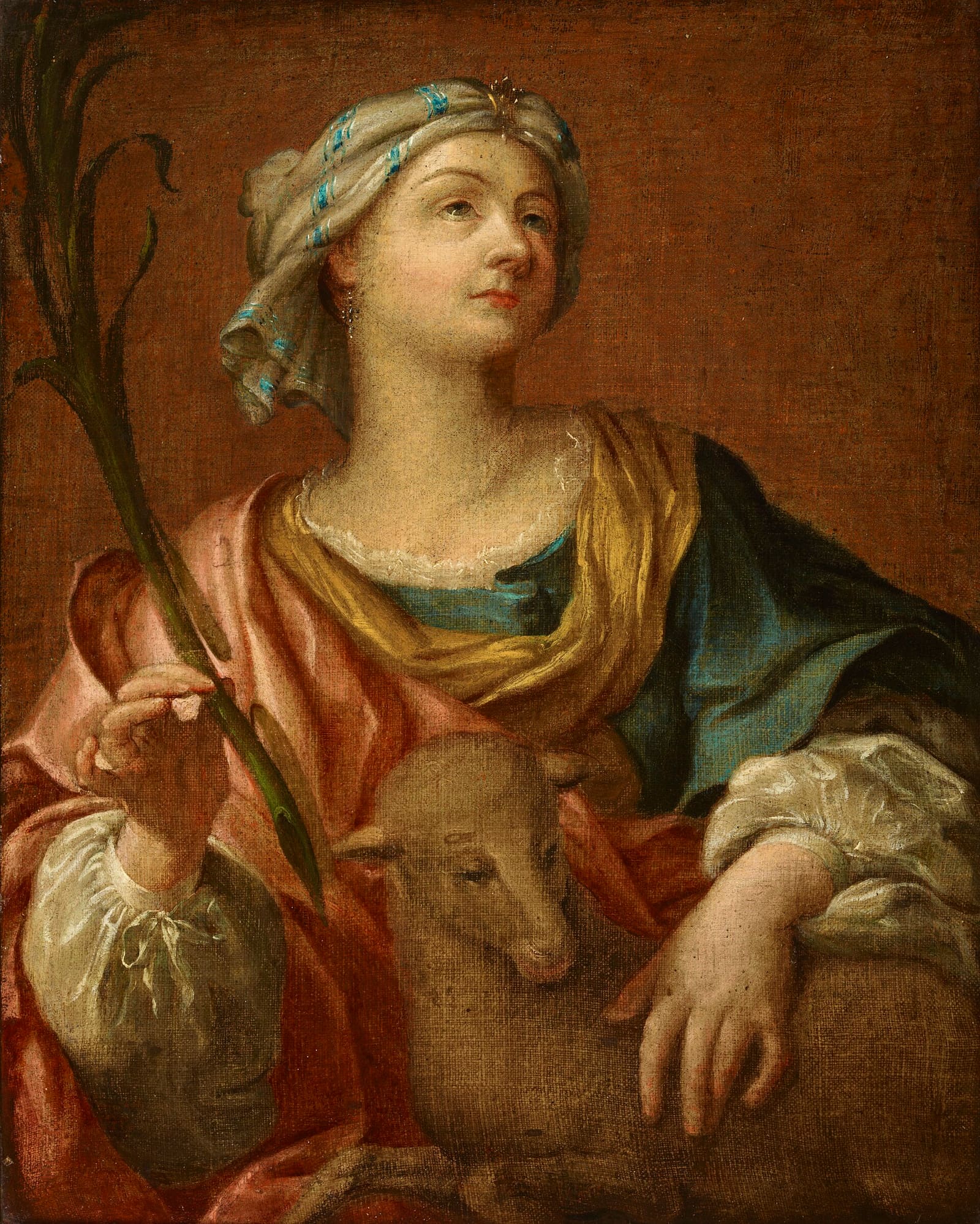
Quick answer
St. Agnes was a young Roman girl martyred around 304, probably during the persecution of Diocletian. St. Ambrose, writing a few decades later, praised her courage at the age of about twelve. She is named in the Roman Canon. Each year on her feast, January 21, two lambs are blessed in her basilica, and their wool is used to weave the pallium worn by archbishops.
Key takeaways
- She was only twelve or thirteen when she was martyred.
- St. Ambrose and Pope St. Damasus both wrote about her in the fourth century.
- Her name is close to the Latin agnus, "lamb," and she is shown holding a lamb.
- Her relics are in the Basilica of Sant'Agnese fuori le Mura in Rome.
St. Agnes was barely old enough to be called a young woman when she died. Yet her courage so impressed the early Church that her name has been said at Mass for over fifteen hundred years.
A Girl of Rome
Agnes lived in Rome at the beginning of the fourth century, probably during the last and most violent persecution, under Emperor Diocletian. She was about twelve or thirteen years old and had consecrated her life to Christ.
The earliest witnesses are close to her time. St. Ambrose, around 377, wrote that she was too young to be a witness in court, yet bore witness to the faith, and that her age was not yet ready for suffering, but she was ready for victory. Pope St. Damasus placed an inscription at her tomb.
Her Story
According to tradition, many young men wished to marry Agnes because of her beauty, but she refused, saying that she already belonged to Christ. When she was denounced as a Christian, she was threatened, then dragged to a place of shame. Tradition says God protected her there. She was then put to death, probably by the sword, and buried on the Via Nomentana, outside the city walls.
The Lambs of St. Agnes
Her name sounds like the Latin word agnus, “lamb,” and comes from the Greek word for “pure.” She is usually shown with a lamb in her arms.
Each year on January 21, two lambs raised by Trappist monks are blessed in the Basilica of Sant’Agnese fuori le Mura. They are later given to Benedictine sisters, who shear them and weave the wool into pallia, the white woolen bands the pope gives to new metropolitan archbishops on the feast of Sts. Peter and Paul. It is a beautiful sign of the Good Shepherd carrying His lambs.
Her Church
Emperor Constantine’s daughter Constantina built a basilica over her tomb in the fourth century. The present church dates from the seventh century and still holds her relics. Her name is also in the Roman Canon.
What She Teaches
Agnes reminds us that holiness has no minimum age. Young people are capable of deep love for Christ, and their faith deserves respect and encouragement.
A Prayer to St. Agnes (Original Prayer)
St. Agnes, you gave your young life to Christ. Pray for children and young people today, especially those who are in danger or have been hurt. Keep them pure, safe and close to Jesus. Amen.
Continue Reading
Read about St. Maria Goretti, St. Cecilia, or St. Agatha.
Frequently asked questions
When is the feast of St. Agnes?
January 21.
What is St. Agnes the patron saint of?
Young girls, chastity, engaged couples, and victims of sexual abuse.
What is the pallium and how is it connected to St. Agnes?
The pallium is a band of white wool worn by the pope and metropolitan archbishops. Lambs blessed on the feast of St. Agnes provide the wool for it.
Sources
- St. Ambrose of Milan, De Virginibus I.2
- Pope St. Damasus I, inscription at the tomb of St. Agnes
- Roman Missal, Memorial of St. Agnes, January 21