St. Sebastian: Soldier, Martyr and Patron of Athletes
Quick answer
St. Sebastian was a Christian martyr in Rome, probably under the persecution of Emperor Diocletian around 288–304. He was buried on the Appian Way, where the Basilica of St. Sebastian now stands. According to his traditional story, he was an officer in the imperial guard, shot with arrows and left for dead, nursed back to health by a widow named Irene, and then beaten to death. His feast is January 20.
Key takeaways
- His burial on the Appian Way is recorded in the earliest Roman lists of martyrs.
- The fuller story of his life comes from a later account, the Passio Sebastiani.
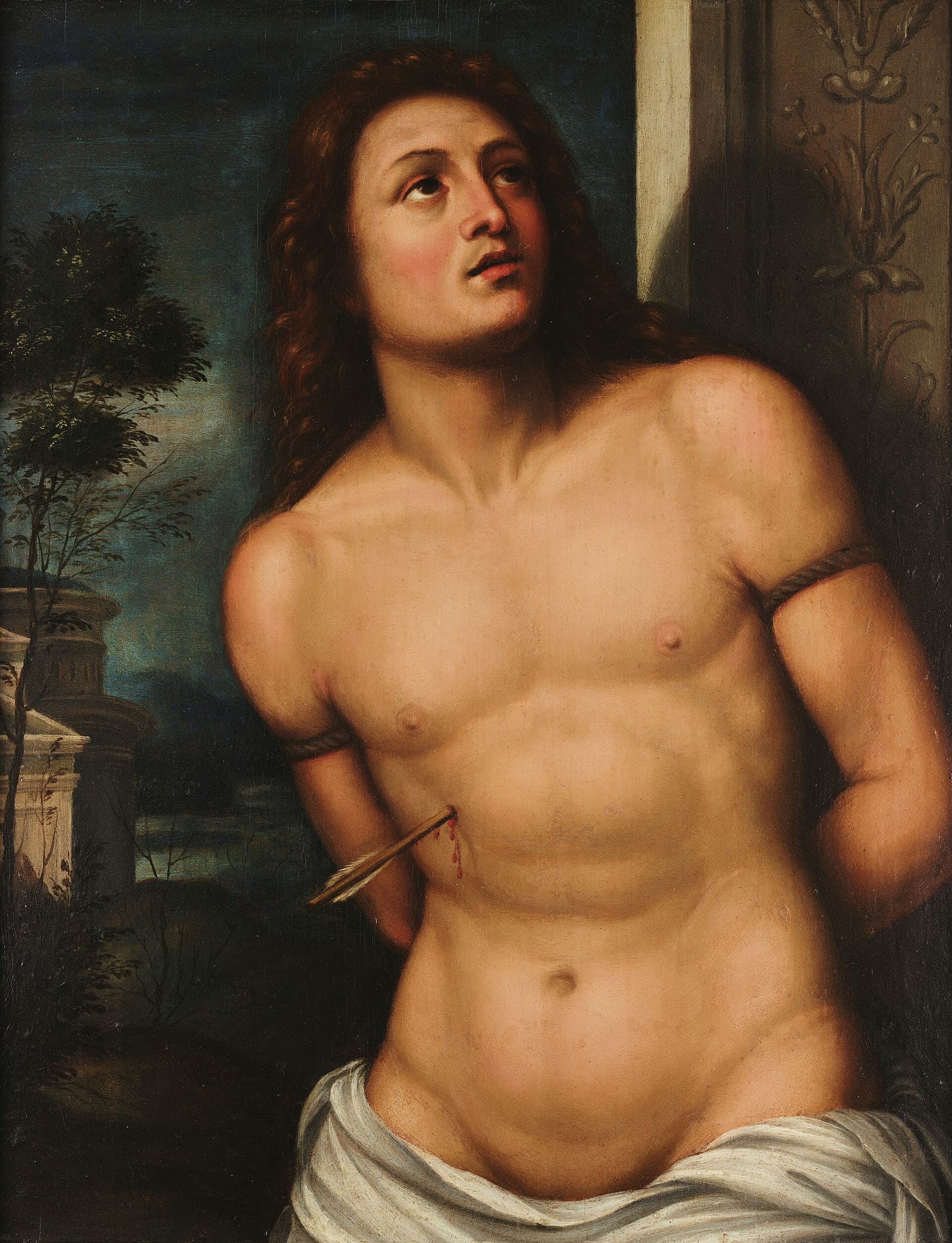
- Art often shows him pierced with arrows, the first attempt to kill him.
- He is a patron of soldiers, athletes and those suffering from plague.
Few saints have been painted more often than St. Sebastian, bound to a tree and pierced with arrows. Behind the famous image is a young man who refused to stop being a Christian.
What We Know for Certain
Sebastian was a martyr in Rome during the great persecutions at the end of the third or beginning of the fourth century. The Roman calendar of 354 already lists his burial on January 20 in the catacombs on the Appian Way. A basilica was built there, and it still bears his name. St. Ambrose of Milan mentions him in the fourth century, suggesting that he came from Milan.
The Traditional Story
A fifth-century account, the Passio Sebastiani, tells his story in more detail. Historians treat it carefully, but it has shaped Christian memory for over a thousand years.
Sebastian, it says, was an officer of the imperial guard under Emperor Diocletian. He kept his faith hidden so that he could encourage Christians in prison, including the twin brothers Marcus and Marcellian. When his faith was discovered, the emperor ordered him tied to a stake and shot with arrows.
He was left for dead. But a Christian widow, St. Irene, came to bury him and found him alive. She nursed him back to health. Sebastian then went before the emperor and rebuked him for his cruelty to Christians. This time he was beaten to death, and his body thrown into a sewer. Christians recovered it and buried him on the Appian Way.
Patron of Soldiers, Athletes and the Sick
Because he was a soldier, Sebastian became a patron of soldiers and police. His endurance made him a patron of athletes. In the Middle Ages, when plague struck, people prayed to him, because arrows were a symbol of sudden disease. Many towns built churches in his honor in thanksgiving for being spared.
What He Teaches
St. Paul wrote that every athlete trains hard for a perishable crown, but we run for one that does not perish (1 Corinthians 9:25). Sebastian ran that race to the end.
A Prayer to St. Sebastian (Original Prayer)
St. Sebastian, you were strong in body and stronger in faith. Pray for soldiers, athletes and all who suffer. Give me endurance in trials and courage to stand up for Christ. Amen.
Continue Reading
Read about St. Agnes, another young Roman martyr, St. George, or St. Stephen, the first martyr.
Frequently asked questions
When is the feast of St. Sebastian?
January 20.
Why is St. Sebastian a patron of athletes?
Because of his physical endurance and strength in suffering, and because St. Paul compared the Christian life to an athletic contest. Sports teams and athletes often ask his prayers.
Did St. Sebastian die from the arrows?
According to tradition, no. He survived, recovered, confronted the emperor about the persecution of Christians, and was then beaten to death.
Sources
- Depositio Martyrum (Roman calendar of 354)
- Passio Sebastiani (fifth century)
- Roman Martyrology, January 20