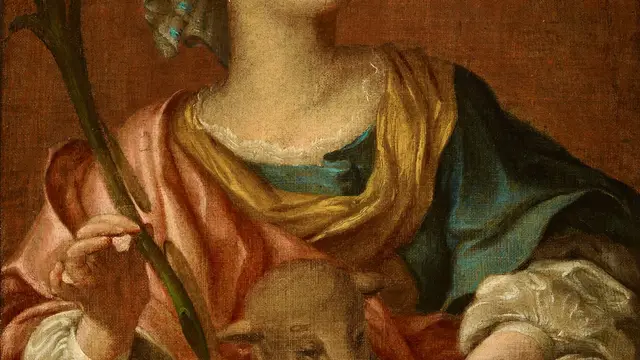
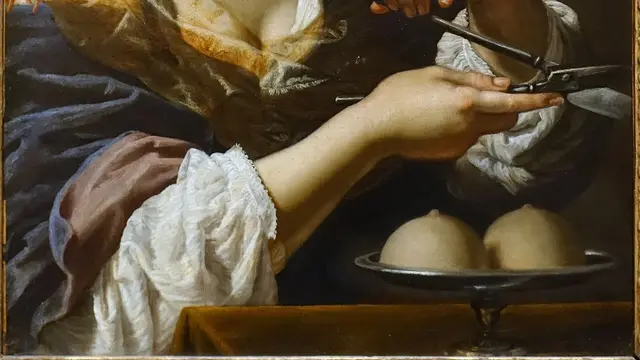
St. Eugenia of Rome: Virgin and Martyr
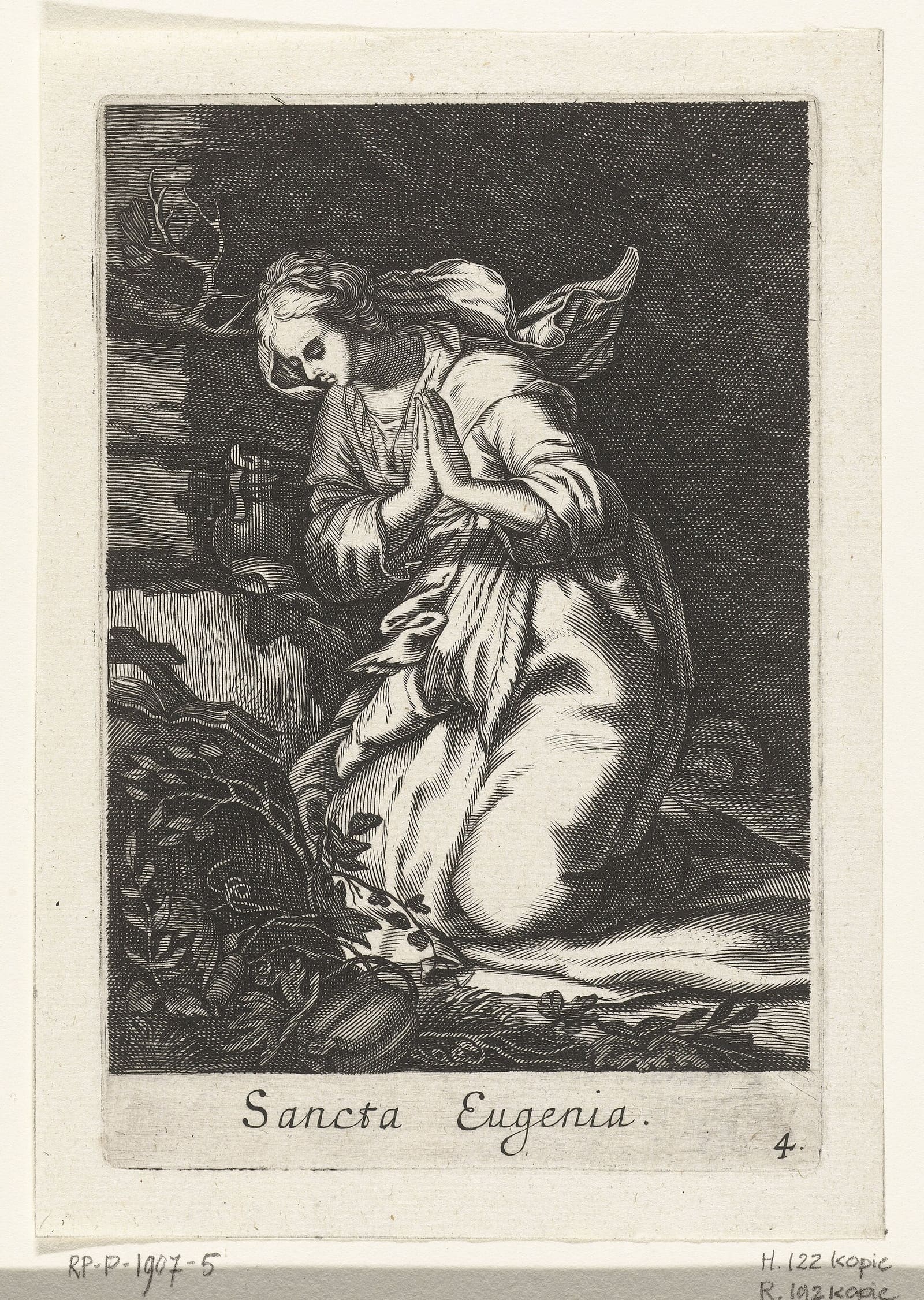
Quick answer
St. Eugenia was a Christian martyr of Rome, probably of the third century, buried in the cemetery of Apronianus on the Via Latina. Her cult was well established by the sixth century. A later legend says she was the daughter of a Roman official in Alexandria who disguised herself as a man to live in a monastery, was falsely accused, revealed her identity, and later died a martyr in Rome. Her feast in the Roman Martyrology is December 25.
Key takeaways
- Her tomb on the Via Latina was venerated in the early Church.
- Her legend, the Acts of St. Eugenia, was written around the fifth century.
- The legend says she lived disguised as a monk and even became an abbot.
- She is honored as a virgin and martyr.
Many of the early martyrs are known to us only by a name and a tomb. St. Eugenia is one of them. Around that simple fact, the early Church wove a remarkable story.
What History Tells Us
Eugenia was a Christian woman who died for her faith in Rome, probably in the third century. She was buried in a cemetery on the Via Latina, one of the roads leading out of the city, where Christians came to venerate her tomb. By the sixth century her feast was widely kept, and she appears in early calendars and in the mosaics of Ravenna among the procession of virgin martyrs.
The Legend
A fifth-century account, the Acts of St. Eugenia, tells a story full of adventure. Historians regard it as legendary, but it was hugely popular in the Middle Ages.
It says that Eugenia was the daughter of Philip, a Roman official in Alexandria, Egypt. Well educated, she read the letters of St. Paul and was drawn to Christianity. With two servants, Protus and Hyacinth, she left home and, disguised as a young man, entered a monastery. She lived there so holily that she was eventually chosen abbot.
A wealthy woman, rebuffed by the young “monk,” falsely accused Eugenia of a grave crime. Brought to trial before her own father, Eugenia revealed who she was, proving her innocence. Her family, the story says, then became Christian.
Later, the legend continues, Eugenia went to Rome, where she encouraged other women to consecrate themselves to Christ. During a persecution she was arrested and, after surviving several tortures, was put to death.
Why Remember Her?
Eugenia’s story shows how the early Christians admired consecrated virginity, the courage to follow Christ against family expectations, and patience under false accusation. Even when the details are uncertain, the martyr was real, and her witness is part of the great cloud of witnesses (Hebrews 12:1).
A Prayer Under False Accusation (Original Prayer)
St. Eugenia, you bore false accusation with patience. Pray for all who are unjustly accused. Give me courage to follow Christ, and trust that God will bring the truth to light. Amen.
Continue Reading
Read about St. Anastasia, St. Agnes, or why Catholics pray to saints.
Frequently asked questions
When is the feast of St. Eugenia?
December 25 in the Roman Martyrology. The Eastern Churches honor her on December 24.
Is the story of St. Eugenia true?
Historians accept that she was a real martyr buried on the Via Latina. The detailed story of her life is a later legend, meant to inspire, and should be read as such.
Where are her relics?
Her relics were later moved from the Via Latina into the city. Tradition places them in the Basilica of the Twelve Apostles in Rome.
Sources
- Roman Martyrology, December 25
- Acts of St. Eugenia (fifth century)
- Butler's Lives of the Saints, December 25