St. Catherine Labouré and the Miraculous Medal
Quick answer
St. Catherine Labouré (1806–1876) was a French farm girl who became a Daughter of Charity. In 1830, as a novice in the convent on the Rue du Bac in Paris, she saw the Virgin Mary several times. Mary asked her to have a medal struck showing her standing on a globe with rays of light from her hands and the prayer, "O Mary, conceived without sin, pray for us who have recourse to thee." The medal spread so quickly and was linked with so many graces that people called it the Miraculous Medal. Her feast is November 28.
Key takeaways
- She lost her mother at nine and took Our Lady as her mother.
- On the night of July 18–19, 1830, she spoke with the Virgin Mary in the convent chapel.
- On November 27, 1830, Mary showed her the design of the medal.
- She kept her secret for 46 years, working quietly in a home for elderly men.
Millions of people around the world wear a small oval medal of Our Lady. It began with a young sister in Paris who saw the Virgin Mary and then said nothing about it for almost half a century.
A Farm Girl from Burgundy
Zoé Labouré was born on May 2, 1806, in Fain-lès-Moutiers, in Burgundy, France, the ninth of eleven children. When she was nine her mother died. Zoé climbed onto a chair, took down a statue of the Virgin, kissed it and said that from now on Mary would be her mother.
She ran her father’s household for years. In 1830, at twenty-four, she finally entered the Daughters of Charity of St. Vincent de Paul, taking the name Catherine.
The Night of July 18, 1830
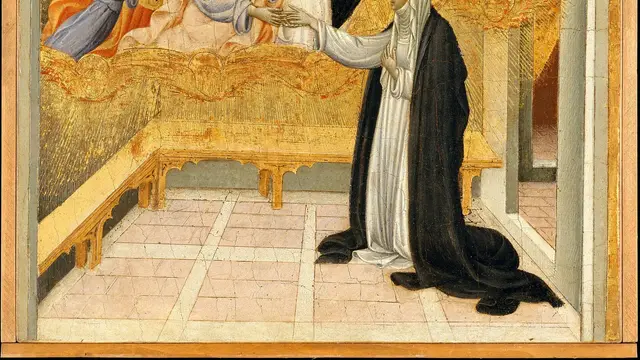
On the eve of the feast of St. Vincent de Paul, Catherine, a novice in the motherhouse on the Rue du Bac in Paris, was awakened by a child who led her to the chapel. There the Blessed Virgin came and sat in the director’s chair. Catherine knelt with her hands on Mary’s lap and they spoke for a long time. Mary told her of troubles coming to France and invited everyone to come to the foot of the altar, where graces would be poured out.
The Medal
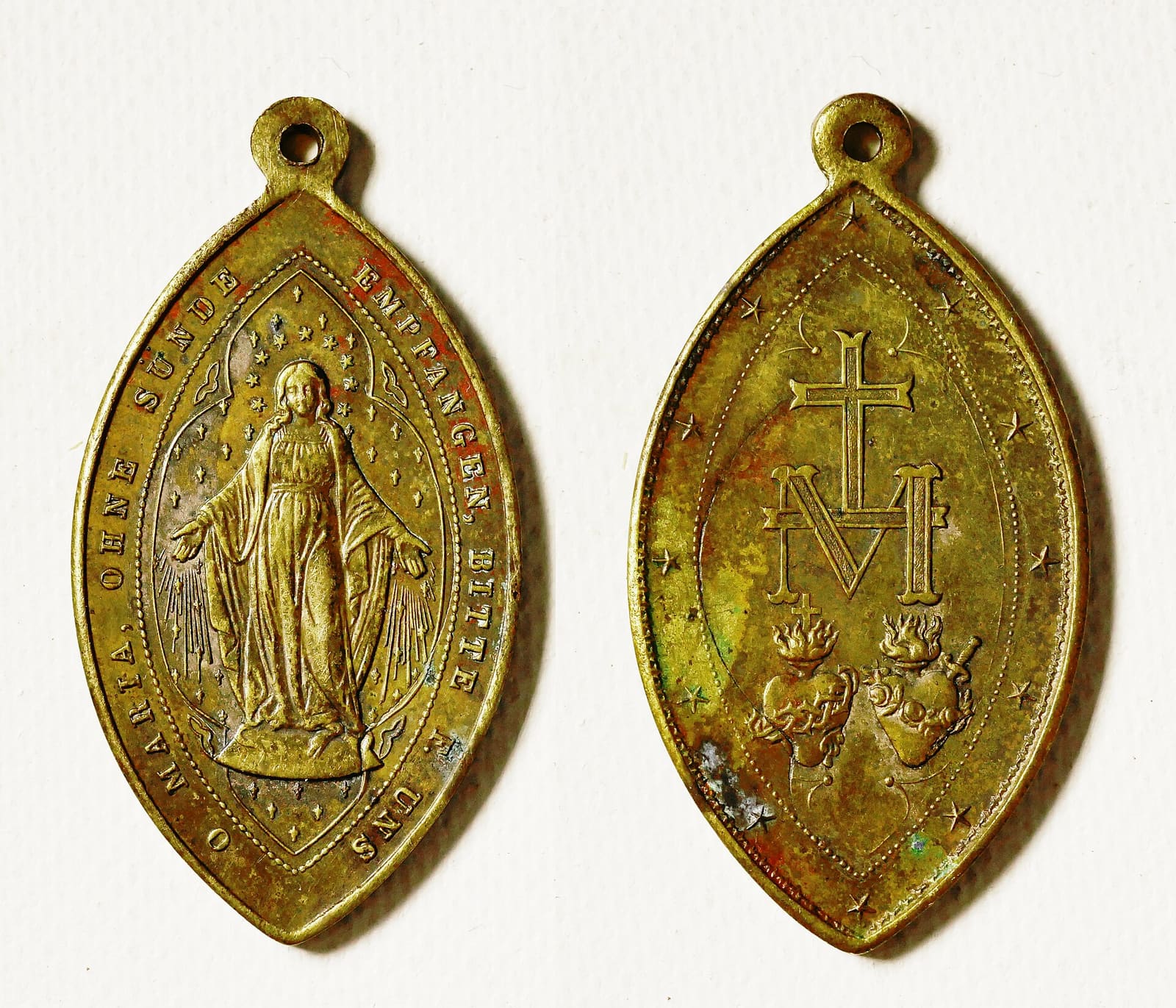
On November 27, 1830, during evening prayer, Catherine saw Mary standing on a globe, with rays of light streaming from rings on her fingers. Around her were the words: O Mary, conceived without sin, pray for us who have recourse to thee. Then the image turned, and Catherine saw a large M with a cross, two hearts, one crowned with thorns and one pierced with a sword, and twelve stars.
Mary asked her to have a medal made in this design, promising great graces to those who wore it with confidence.
Catherine told only her confessor, Fr. Jean-Marie Aladel. After two years of caution, the archbishop of Paris approved the medal in 1832. It spread with astonishing speed. During a cholera epidemic and in many conversions, so many graces were reported that people called it the Miraculous Medal.
Forty-Six Years of Silence
Catherine spent the rest of her life caring for elderly men at a hospice in Enghien, outside Paris, tending the door, the poultry and the laundry. Almost no one knew she was the sister who had seen Our Lady. Only shortly before her death did she reveal it to her superior. She died on December 31, 1876. Her body lies in the chapel at the Rue du Bac. She was canonized in 1947.
The Miraculous Medal Prayer
O Mary, conceived without sin, pray for us who have recourse to thee.
Continue Reading
Read about the Feast of the Immaculate Conception, St. Bernadette of Lourdes, or St. Vincent de Paul, who founded Catherine’s community.
Frequently asked questions
When is the feast of St. Catherine Labouré?
November 28. The feast of Our Lady of the Miraculous Medal is November 27.
What does the back of the Miraculous Medal show?
A large letter M with a cross above it, the Hearts of Jesus and Mary below, and twelve stars around the edge.
Is the Miraculous Medal a good-luck charm?
No. It is a sacramental, a sign of trust in Mary's prayers. Its power comes from God's grace and the faith of the one who wears it, not from the object itself.
Sources
- Chapel of Our Lady of the Miraculous Medal, Rue du Bac, Paris
- Catechism of the Catholic Church, nos. 1667–1676 (sacramentals)
- Pope Pius XII, Canonization of St. Catherine Labouré (July 27, 1947)