St. Bartholomew the Apostle: An Israelite Without Guile
Quick answer
St. Bartholomew was one of the twelve apostles. He is usually identified with Nathanael of Cana, whom Philip brought to Jesus and whom Jesus praised as "an Israelite indeed, in whom there is no guile." Tradition says he preached in India and Armenia and was martyred, according to one account by being flayed alive. His feast is August 24.
Key takeaways
- He is listed among the Twelve in all three Synoptic Gospels and Acts, usually beside Philip.
- In John's Gospel, Philip brings Nathanael to Jesus (John 1:45-51).
- Nathanael first doubted that anything good could come from Nazareth.
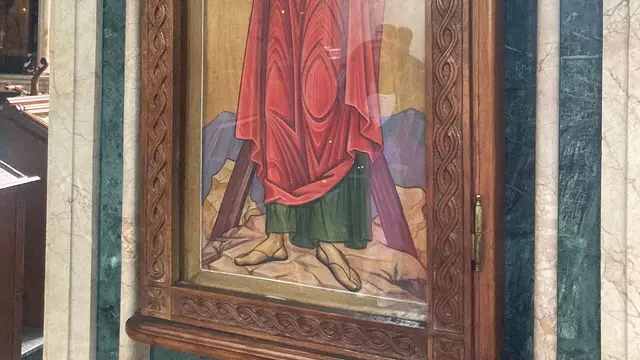
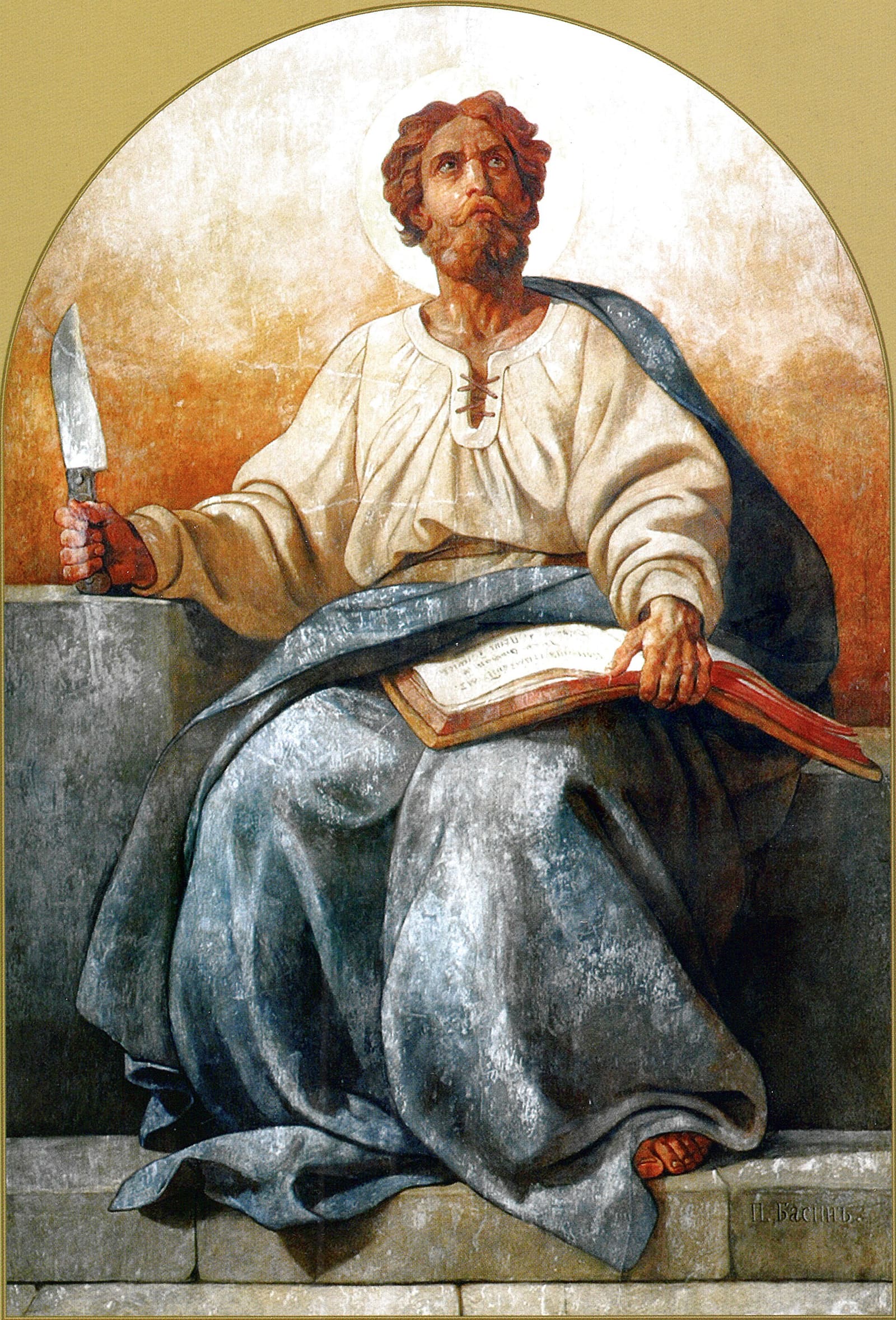
- Art shows him holding a knife, a sign of his traditional martyrdom.
We know very little about St. Bartholomew. But the one scene the Gospel gives us is unforgettable: a skeptic who meets Jesus and in a moment becomes a believer.
Bartholomew and Nathanael
In the lists of the Twelve in Matthew, Mark and Luke, Bartholomew is always named next to Philip. The name probably means “son of Tolmai,” a family name. John’s Gospel never mentions a Bartholomew, but it tells of Nathanael, from Cana in Galilee, whom Philip brought to Jesus. Since the ninth century, Christians have generally understood them to be the same man.
“Can Any Thing of Good Come from Nazareth?”
After Jesus called Philip, Philip found Nathanael and told him they had found the one Moses and the prophets wrote about, Jesus of Nazareth. Nathanael was not impressed. Nazareth was a small, unremarkable village.
And Nathanael said to him: Can any thing of good come from Nazareth? Philip saith to him: Come and see. (John 1:46, Douay-Rheims)
As Nathanael approached, Jesus said of him, “Behold an Israelite indeed, in whom there is no guile.” Surprised, Nathanael asked how He knew him. Jesus said He had seen him under the fig tree before Philip called him. Nathanael answered, “Rabbi, thou art the Son of God, thou art the King of Israel” (John 1:47-49).
Jesus promised that he would see greater things: heaven opened and the angels of God ascending and descending on the Son of Man.
Nathanael appears once more, after the Resurrection, among the disciples fishing on the Sea of Tiberias when the risen Jesus appeared to them (John 21:2).
Mission and Martyrdom
Early tradition, recorded by Eusebius, says that when the scholar Pantaenus visited India in the second century, he found Christians who had a Gospel of Matthew in Hebrew left by Bartholomew. Other traditions place his mission in Armenia, where he is honored as one of the founders of the Armenian Church.
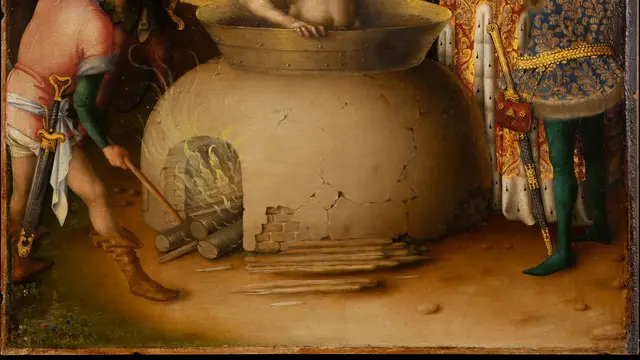
He is said to have been martyred at Albanopolis in Armenia. According to one account, he was flayed alive and then beheaded. Michelangelo painted him in the Last Judgment in the Sistine Chapel, holding a knife and his own skin.
What He Teaches
Bartholomew shows that honest doubts can lead to faith if we accept the invitation to “come and see.” Jesus praised his sincerity. The Lord values a heart without deceit.
A Prayer for an Honest Heart (Original Prayer)
St. Bartholomew, Jesus praised you as a man without guile. Give me an honest heart, help me come and see when I doubt, and lead me to confess that Jesus is the Son of God. Amen.
Continue Reading
Read about St. Thomas the Apostle, St. Andrew, or St. Peter.
Frequently asked questions
When is the feast of St. Bartholomew?
August 24.
Are Bartholomew and Nathanael the same person?
Most scholars and the Church's tradition think so. Bartholomew may be a family name meaning "son of Tolmai," and he is always paired with Philip, who brought Nathanael to Jesus.
Where are his relics?
Many are venerated in the Basilica of St. Bartholomew on the Tiber Island in Rome.
Sources
- Gospels of Matthew 10:3; Mark 3:18; Luke 6:14; John 1:45-51; 21:2 (Douay-Rheims)
- Eusebius, Church History V.10
- Pope Benedict XVI, General Audience on St. Bartholomew (October 4, 2006)