The Jesuits in the United States: A History from 1634 to Today
Quick answer
Jesuits have worked in what is now the United States since the 1600s. English Jesuits arrived in Maryland in 1634, French Jesuits explored the Great Lakes and the Mississippi, and Spanish Jesuits founded missions in the Southwest. After the suppression of 1773, former Jesuit John Carroll founded Georgetown, and the American Jesuits were restored in 1805, nine years before the worldwide restoration. Immigrant Jesuits from Europe then built colleges, parishes and missions across the country.
Key takeaways
- English Jesuits came to Maryland with the first settlers in 1634.
- French Jesuits such as Jacques Marquette and the North American Martyrs worked in New France.
- Spanish Jesuits like Eusebio Kino founded missions in Arizona.
- John Carroll, a former Jesuit, founded Georgetown in 1789 and became the first U.S. bishop.
- The Society was restored in the U.S. in 1805 and grew rapidly with European immigrants.
The Jesuits are woven into American history. They prayed with the first English Catholic settlers, mapped the Mississippi, founded the country’s oldest Catholic university, and built schools in nearly every major city. For almost three decades, the American Jesuits told that story in Company magazine and in their online newsletter, JesuitUSA News. Here is the history in brief.
The First Missions (1560s–1700s)
The earliest Jesuits in what is now the United States were Spanish. In 1566 Fr. Pedro Martínez was killed on the coast of Florida, and in 1571 Fr. Juan Bautista de Segura and his companions were martyred near the Chesapeake Bay in Virginia.
The lasting English presence began in 1634, when the ships Ark and Dove brought Lord Baltimore’s settlers to Maryland. On March 25 of that year, Fr. Andrew White, SJ, celebrated the first Mass in the English colonies on St. Clement’s Island. For more than a century, Maryland’s Jesuits served scattered Catholic families from their farms and manor chapels.
In the north, French Jesuits labored in New France. St. Isaac Jogues and his companions, the North American Martyrs, died in the 1640s in present-day New York and Ontario. In 1673 Fr. Jacques Marquette explored the Mississippi River with Louis Jolliet. In Maine, Jesuits worked among the Abenaki and Passamaquoddy peoples from the 1600s, and Jesuits still serve the Passamaquoddy today.
In the Southwest, Fr. Eusebio Kino founded missions in what is now Arizona, including San Xavier del Bac, beginning in 1691.
Suppression and a Bishop for America (1773–1805)
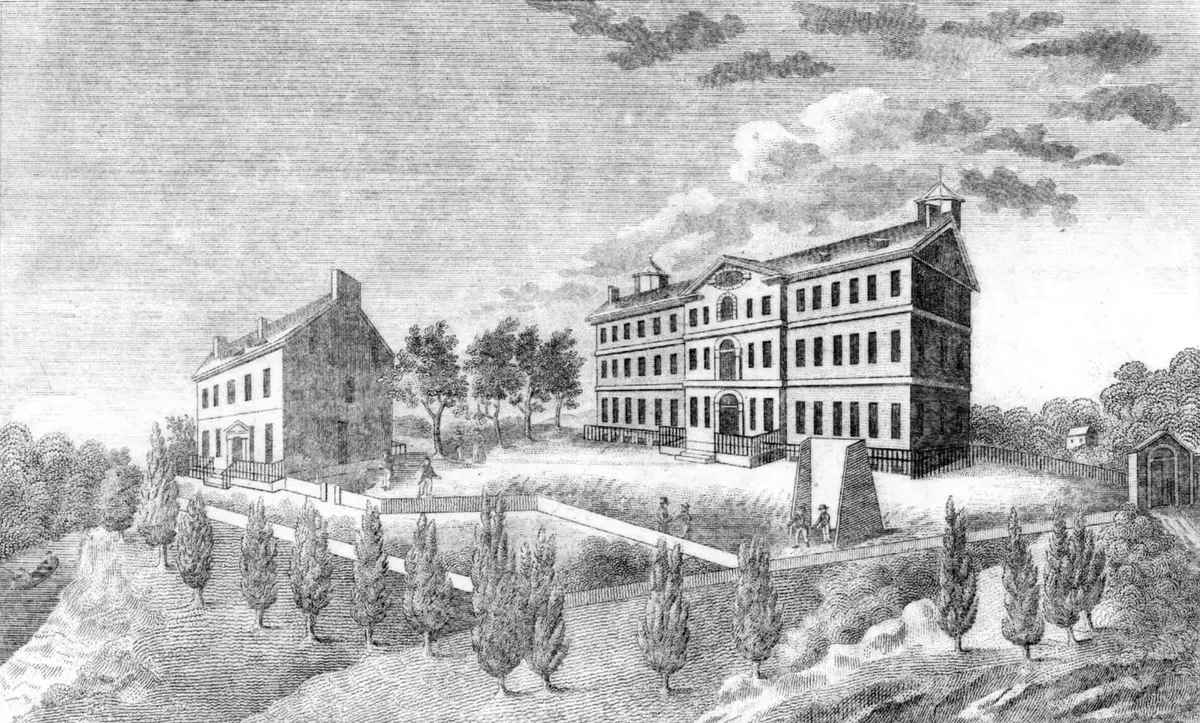
When Pope Clement XIV suppressed the Society in 1773, the Maryland Jesuits became diocesan priests but kept working together. One of them, John Carroll, became the first Catholic bishop in the United States in 1789. That same year he founded Georgetown, the first Catholic college in the country.
Carroll longed for the Jesuits’ return. In 1805, with papal permission, the former Maryland Jesuits joined the Society that had survived in Russia. The American Jesuits thus came back nine years before Pope Pius VII restored the order worldwide in 1814. JesuitUSA News reported in 2005 that Jesuits across the country marked the 200th anniversary of that restoration.
The Immigrant Church (1800s)
As millions of Catholic immigrants arrived, Jesuits from Europe came with them. German Jesuits built parishes and schools in the Midwest and Buffalo. Belgian Jesuits founded the Missouri mission, from which Fr. Pierre-Jean De Smet traveled thousands of miles among the native peoples of the plains and the Rockies. Italian Jesuits went west, founding missions in the Rockies and colleges such as Santa Clara and Gonzaga. French Jesuits worked in New Orleans and Alabama.
There was hostility too. In 1854, in Ellsworth, Maine, an anti-Catholic mob tarred and feathered Fr. John Bapst, SJ. He survived, later became the first president of Boston College, and is remembered by a high school that bears his name.
Schools, Parishes and Preachers (1850s–1950s)
The 19th and 20th centuries were the great age of building. Jesuits founded colleges in Boston, New York, Philadelphia, Chicago, St. Louis, Milwaukee, Omaha, Denver, Los Angeles, San Francisco and many other cities. Teams of Jesuit mission preachers traveled from parish to parish, and Jesuits staffed retreat houses, labor schools and radio programs. Fr. John Corridan, the “waterfront priest,” fought corruption on the New York docks.
American Jesuits also went to the missions: to Alaska, where Fr. Bernard Hubbard became the “Glacier Priest,” and to Jamaica, the Philippines, India, Micronesia and Iraq.
After Vatican II
The years after the Second Vatican Council brought fewer vocations but new works: Nativity schools and Cristo Rey high schools for poor children, the Jesuit Volunteer Corps, the Jesuit Refugee Service, and ministries to prisoners, immigrants and people with AIDS. The murder of six Jesuits in El Salvador in 1989 shook American Jesuit schools and inspired the yearly Ignatian Family Teach-In for Justice.
When Hurricane Katrina struck New Orleans in 2005, JesuitUSA News reported that Jesuits were evacuated to the novitiate at Grand Coteau, while a Jesuit nurse practitioner stayed with evacuees in the Superdome.
The Jesuits in America Today
Mergers have combined the old provinces into a few large ones, working together in the Jesuit Conference of Canada and the United States. Jesuits still run 27 colleges and universities, around 60 high schools, parishes, retreat houses and social ministries, increasingly with lay colleagues who share the Ignatian vision.
A Prayer for the Church in America (Original Prayer)
Lord God, You sent missionaries to these shores to bring the light of Your Son. Bless all who teach, preach and serve in His name. Raise up generous vocations to the priesthood and religious life, and make us one people, faithful and free, for the greater glory of God. Amen.
Continue Reading
Read who the Jesuits are, the life of St. Isaac Jogues, or the story of Jesuit education.
Frequently asked questions
When did the Jesuits come to America?
Spanish Jesuits briefly reached Florida and Virginia in the 1560s and 1570s, where several were martyred. The lasting English Jesuit presence began on March 25, 1634, when Fr. Andrew White, SJ, celebrated Mass on St. Clement's Island, Maryland.
What was the first Jesuit university in the United States?
Georgetown, founded in 1789 by John Carroll, a former Jesuit. It is the oldest Catholic university in the country.
How are the U.S. Jesuits organized today?
After a series of mergers, the Jesuits of the United States belong to a handful of large provinces (East, Central and Southern, Midwest and West) that work together with Canada in the Jesuit Conference of Canada and the United States.
Sources
- Gilbert J. Garraghan, SJ, The Jesuits of the Middle United States (1938)
- Raymond A. Schroth, SJ, The American Jesuits: A History (NYU Press, 2007)
- Jesuit Conference of Canada and the United States
- Company magazine and JesuitUSA News (1983–2010)