The Bollandists: The Jesuits Who Study the Lives of the Saints
Quick answer
The Bollandists are a society of Jesuit scholars based in Brussels who study the lives of the saints using critical historical methods. The project began with Fr. Heribert Rosweyde (died 1629) and was launched by Fr. Jean Bolland, whose first volumes of the Acta Sanctorum appeared in 1643. Arranged by feast day, the Acta Sanctorum grew to 68 folio volumes by 1940. The Bollandists also publish the journal Analecta Bollandiana (since 1882) and reference works, and remain the world's leading center of hagiography.
Key takeaways
- The project began with Heribert Rosweyde and was founded by Jean Bolland in the 1630s.
- The first volumes of the Acta Sanctorum (January) appeared in 1643.
- The Acta Sanctorum is arranged by feast day and reached 68 volumes by 1940.
- The Bollandists pioneered critical methods for separating historical fact from legend.
- They still work in Brussels and publish the journal Analecta Bollandiana.
“This is the room where we work,” said Fr. Robert Godding, SJ, opening the door from a five-tiered library into a vaulted room lined with old books and computer cables. “We call it our scriptorium, as though we were monks. But we are not monks, of course.” Fr. Godding was then the director of the Society of Bollandists in Brussels, and Company magazine had come to visit one of the most remarkable scholarly projects in history: nearly four centuries of research on the lives of the saints.
A Dream in Antwerp
The idea began with Fr. Heribert Rosweyde, a Jesuit teacher in Antwerp in the early 1600s. Medieval collections of saints’ lives were full of charming but unreliable legends. Rosweyde dreamed of going back to the oldest manuscripts in the libraries of the Low Countries and publishing the lives of the saints as accurately as possible. In 1606 he published a plan for eighteen volumes and appealed to scholars for help. Teaching duties kept him busy, and he died in 1629 without finishing.
Jean Bolland
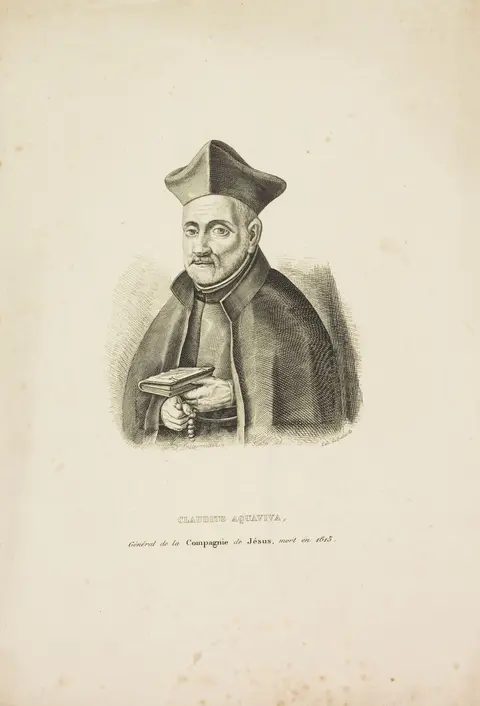
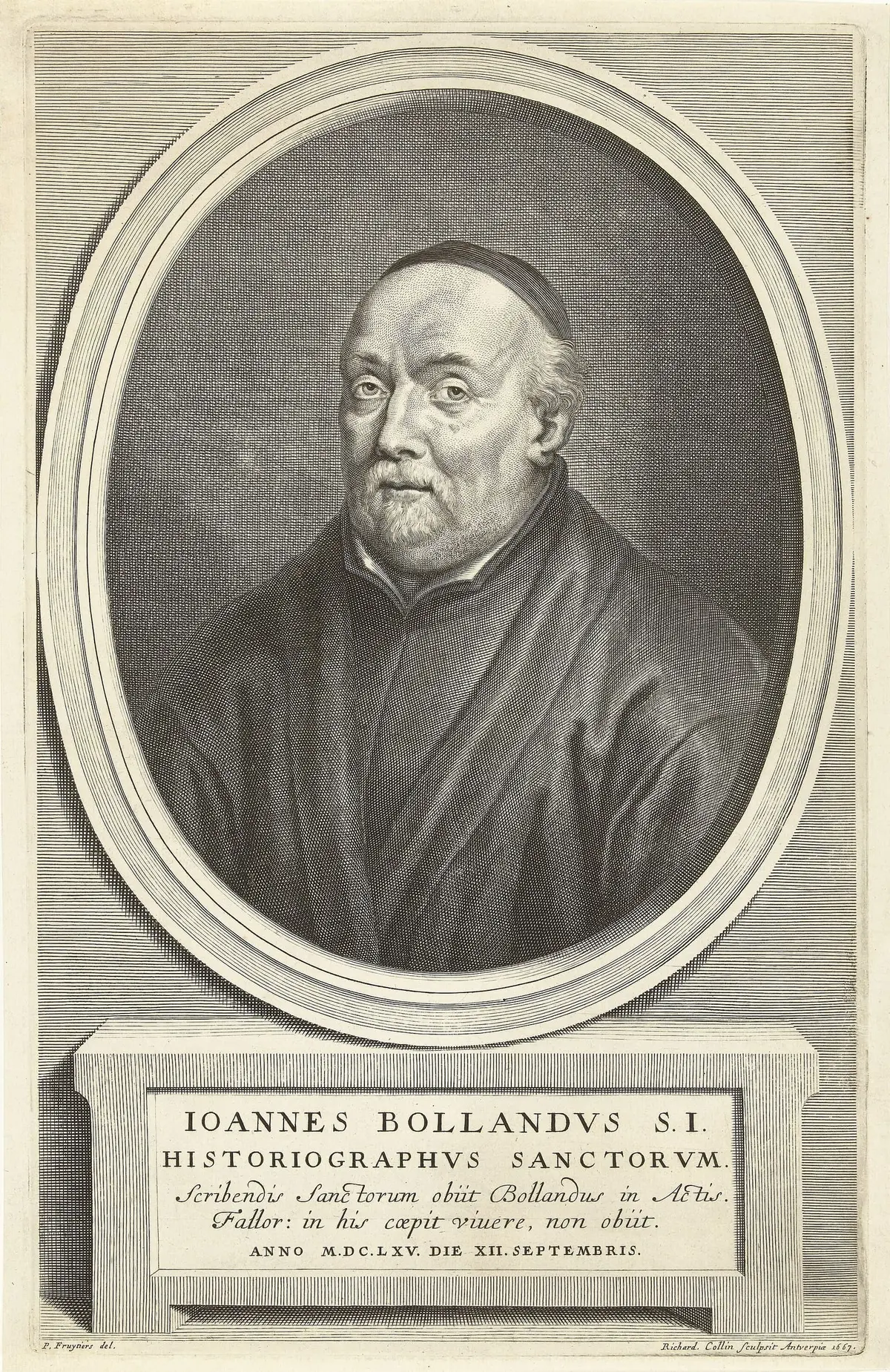
His superiors asked a young Jesuit, Fr. Jean Bolland (1596–1665), to look at Rosweyde’s papers. Impressed, Bolland offered to take on the work himself. He later confessed that if he had understood the immensity of the task, he would never have said yes. From his name came the Bollandists.
Bolland widened the project to include every saint, even those known only from a mention in an ancient calendar or local history. He organized it by the calendar: all the saints of January 1, then January 2, and so on. In 1635 his former pupil Godefroid Henskens joined him. When Henskens showed him the first drafts for February, they were so much more thorough that Bolland stopped the presses and revised his own work.
The Acta Sanctorum
The two volumes for January of the Acta Sanctorum (“Acts of the Saints”) appeared in 1643. February followed in 1658. Henskens and Daniel van Papenbroeck traveled through Germany, Italy and France copying manuscripts. Papenbroeck’s critical spirit occasionally got the Bollandists into trouble, as when he questioned the legend that the Carmelite order went back to the prophet Elijah.
The work continued through the Suppression of the Jesuits in 1773, was interrupted by the French Revolution, and was revived in 1837. The last volume of the main series, for early November, appeared in 1925, with a final volume of commentary on the Roman Martyrology in 1940. In all, 68 folio volumes.
Science at the Service of Faith
The Bollandists developed the critical methods of hagiography, the scientific study of the saints: dating manuscripts, comparing versions, distinguishing eyewitness accounts from later embellishments. The Bollandist Fr. Hippolyte Delehaye explained these methods for the general reader in The Legends of the Saints (1905).
Since 1882 they have published the journal Analecta Bollandiana, as well as the great catalogs of saints’ lives in Latin, Greek and Eastern languages, used by every scholar of the subject.
Why It Matters
Some fear that historical criticism threatens devotion. The Bollandists show the opposite. The Catechism teaches that by canonizing saints, “the Church recognizes the power of the Spirit of holiness within her” and proposes them “as models and intercessors” (CCC 828). The real lives of the saints, with their struggles and their grace, are more inspiring than legend. Truth honors them.
Today a small team of Jesuits and lay scholars continues the work at the Collège Saint-Michel in Brussels, with one of the finest hagiographical libraries in the world.
Prayer to All the Saints (Original Prayer)
All you holy men and women, friends of God and our friends, you walked the same roads we walk and found Christ along the way. Pray for us, that we may follow your example in truth, and one day share your joy in heaven. Amen.
Continue Reading
Read about the Jesuit saints and blesseds, browse the lives of the saints, or read about All Saints’ Day.
Frequently asked questions
What is the Acta Sanctorum?
The "Acts of the Saints," a vast collection of the lives and documents of saints arranged by feast day, from January 1 onward, with critical commentaries. It was published by the Bollandists from 1643 to 1940.
Why do the Bollandists question legends about saints?
Because truth honors the saints. By distinguishing reliable sources from later legends, they help the Church present the saints as they really were, which strengthens rather than weakens devotion.
Sources
- "Heritage of Scholarship," Company magazine (Summer 2002)
- Société des Bollandistes, Brussels
- Hippolyte Delehaye, SJ, The Legends of the Saints (1905)