Fr. Bernard Hubbard, the Glacier Priest of Alaska
Quick answer
Fr. Bernard R. Hubbard, SJ (1888–1962), was a California Jesuit known nationwide as "the Glacier Priest." Officially a member of the geology department at Santa Clara University, he led expeditions to Alaska nearly every year from 1927, exploring the Aniakchak volcano and other wild places, and spent a year among the Inupiat of King Island in the Bering Sea. His photographs, films, books, radio broadcasts and lectures made him famous, and his collection is now a priceless record of Alaska Native life in the 1930s.
Key takeaways
- Hubbard was born in California in 1888 and became a Jesuit in 1908.
- He earned the name "Glacier Priest" climbing the Tyrolean Alps during his studies in Austria.
- From 1927 he led yearly expeditions to Alaska, including the Aniakchak crater.
- He documented the Inupiat of King Island in photographs and film.
- In the 1930s he was among the best-known and best-paid lecturers in the country.
In 1937 the Literary Digest described him as half the year the highest-paid lecturer in the world, and the other half a wanderer among treacherous craters and glaciers. Millions of Americans knew him by a single nickname: the Glacier Priest. He was Fr. Bernard Hubbard, a Jesuit from Santa Clara University who brought Alaska into America’s living rooms.
A California Boy
Bernard Hubbard was born in 1888 and grew up in California, hiking and photographing the Santa Cruz Mountains and the Pacific coast. His parents, converts to the Catholic faith, encouraged him to study at Santa Clara and to enter the Jesuits, which he did in 1908.
The Glacier Priest Is Born
During his theology studies in Innsbruck, Austria, in the 1920s, Hubbard spent every free weekend climbing and studying the glaciers of the Tyrolean Alps. His classmates nicknamed him “the Glacier Priest,” and the name stuck.
Into Alaska
After ordination he returned to Santa Clara, where he was listed in the geology department, though he spent much of his time in the field. From 1927 until shortly before his death he led expeditions to Alaska almost every year, often with Santa Clara students and athletes as his team.
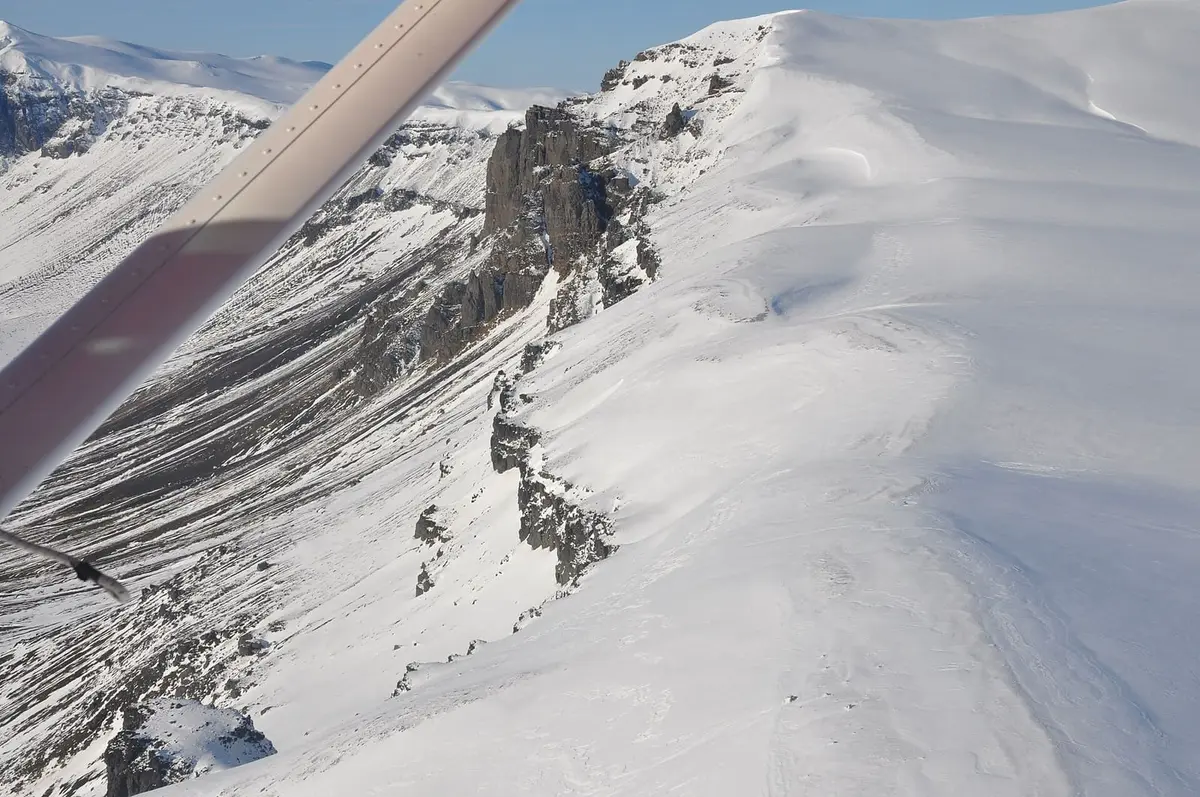
His most famous trip was to the Aniakchak crater on the Alaska Peninsula, one of the largest volcanic craters in the world. He explored it before and after its violent eruption of May 1931, and celebrated Mass with his team inside the crater. He also explored the “Valley of Ten Thousand Smokes” and many glaciers, traveling by dog sled with his famous malamutes.
A Year on King Island
Hubbard spent a winter on King Island, a tiny, treeless rock in the Bering Sea between Alaska and Siberia. Its Inupiat people lived in houses built on stilts on the cliffs and hunted walrus and seal from skin boats. Hubbard photographed and filmed their hunting, dances, feasts and church life. These thousands of photographs and hundreds of thousands of feet of film are now priceless records of Alaska Native culture in the 1930s, a way of life that changed greatly after the islanders moved to the mainland in the 1950s and ’60s.
America’s Favorite Explorer
Hubbard’s adventures were featured in National Geographic and serialized in the Saturday Evening Post. He wrote books including Mush, You Malamutes! and Cradle of the Storms, gave radio broadcasts on NBC and lectured across the country. His exhibit at the 1940 Golden Gate International Exposition in San Francisco drew millions of visitors. The money he earned went to support the Jesuit missions in Alaska.
During World War II, his knowledge of Alaska made him valuable to the military, and he served as a chaplain there. He died in 1962.
Faith and Adventure
Hubbard lived the Jesuit conviction that God can be found in all things, including smoking volcanoes and frozen seas. The Psalms praise the God whose works these are: “Fire and hail, snow and frost, stormy wind fulfilling his command!” (Psalm 148:8). Read about other Jesuit scientists such as the Jesuit astronomers and the “Father of Hurricanes.”
Canticle of Creation (Daniel 3:64–70)
Bless the Lord, all rain and dew; praise and exalt him above all forever. Bless the Lord, all you winds; praise and exalt him above all forever. Bless the Lord, fire and heat; praise and exalt him above all forever. Bless the Lord, frost and chill, ice and snow; praise and exalt him above all forever.
Continue Reading
Read about the Jesuits in the United States, Fr. Benito Viñes, or Father Eusebio Kino, another Jesuit explorer.
Frequently asked questions
Why was Bernard Hubbard called the Glacier Priest?
While studying theology in Innsbruck, Austria, in the 1920s, he spent his weekends exploring the glaciers of the Tyrolean Alps. The nickname followed him to Alaska.
Where are Fr. Hubbard's photographs today?
Most of his photographs and films are preserved in the archives of Santa Clara University in California.
Did Hubbard serve as a priest in Alaska?
Yes. He celebrated Mass on his expeditions, worked closely with the Jesuit missions in Alaska, and served as a chaplain during World War II in Alaska.
Sources
- "The Glacier Priest," Company magazine (Spring 2001)
- Bernard R. Hubbard, SJ, Mush, You Malamutes! (1932) and Cradle of the Storms (1935)
- Santa Clara University Archives, Bernard Hubbard Collection