St. John of the Cross: Poet of the Dark Night
Quick answer
St. John of the Cross (1542–1591) was a Spanish Carmelite friar who joined St. Teresa of Ávila in reforming the Carmelite order. Imprisoned by his own brothers for nine months, he composed some of the greatest poems in the Spanish language. His books, including The Ascent of Mount Carmel and The Dark Night, describe the soul's path to union with God. His feast is December 14.
Key takeaways
- He grew up in poverty after his father's early death.
- St. Teresa of Ávila recruited him to bring her reform to the Carmelite friars.
- In 1577 friars who opposed the reform imprisoned him in Toledo, where he wrote his poetry.
- The "dark night" describes how God purifies the soul through dryness and trial.
Anyone who has felt that God has gone quiet, that prayer has become dry and empty, has a friend in St. John of the Cross. He knew that darkness, and he found God in it.
Childhood in Poverty
Juan de Yepes was born in 1542 in Fontiveros, Spain. His father died when he was young, and his mother struggled to feed her three sons. John worked in a hospital as a boy and studied at a Jesuit school. In 1563 he entered the Carmelites, and after studies at Salamanca he was ordained a priest in 1567.
Meeting St. Teresa
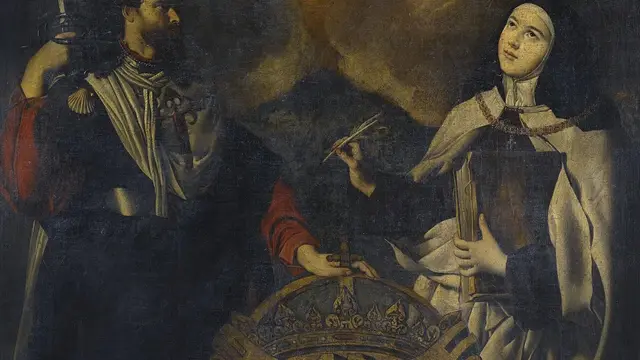
John was thinking of leaving to join the stricter Carthusians when he met St. Teresa of Ávila, then 52. She persuaded him to help her bring her reform to the friars. In 1568 he joined the first house of the Discalced Carmelite friars, at Duruelo, and took the name John of the Cross.
Prison in Toledo
The reform caused bitter conflict within the order. In December 1577 friars who opposed it seized John and locked him in a tiny cell in their monastery in Toledo. For nine months he was kept in near darkness, given little food and publicly whipped.
In that prison he composed poetry of extraordinary beauty, including much of the Spiritual Canticle. In August 1578 he escaped by night, lowering himself from a window on strips of cloth.
The Dark Night
John’s poems and the commentaries he wrote on them describe the soul’s journey to union with God. He taught that we must let go of everything that is not God, even good things, so that God can fill us completely.
He called this the dark night. In the dark night of the senses, the pleasures of prayer dry up. In the deeper dark night of the spirit, God Himself seems absent. John taught that this is not punishment. God is purifying and drawing the soul, like a log that blackens before it bursts into flame.
One of his sayings is often quoted: in the evening of life, we will be judged on love (compare CCC 1022).
His Last Years
He served as a superior and spiritual director. Near the end of his life he was again treated harshly and stripped of his offices. He died at Úbeda on December 14, 1591, at 49. He was canonized in 1726 and named a Doctor of the Church in 1926.
A Prayer in Times of Dryness (Original Prayer)
Lord, when I cannot feel You, help me trust that You are near. Free me from everything that keeps me from You. Through the dark night, lead me to the light of Your love. St. John of the Cross, pray for me. Amen.
Continue Reading
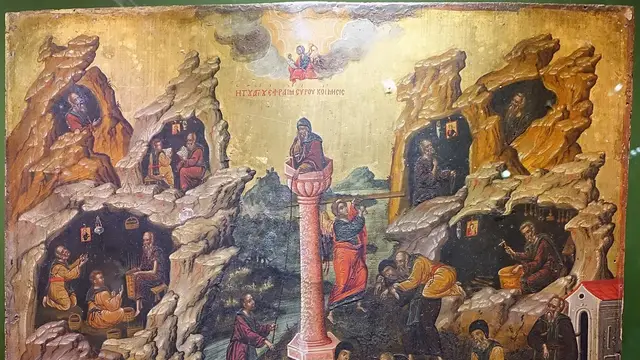
Read about St. Teresa of Ávila, St. Thérèse of Lisieux, or the Desert Fathers.
Frequently asked questions
When is the feast of St. John of the Cross?
December 14.
What is the dark night of the soul?
In John's teaching, a period when the consolations of prayer disappear and God seems absent. He taught that God is at work in this darkness, freeing the soul from attachments and drawing it closer to Himself.
Is St. John of the Cross a Doctor of the Church?
Yes. Pope Pius XI declared him a Doctor of the Church in 1926.
Sources
- St. John of the Cross, The Ascent of Mount Carmel, The Dark Night, The Spiritual Canticle, The Living Flame of Love
- Pope St. John Paul II, Apostolic Letter Maestro en la fe (1990)
- Catechism of the Catholic Church, no. 1022