St. Ephrem the Syrian: Deacon, Poet and Harp of the Holy Spirit
Quick answer
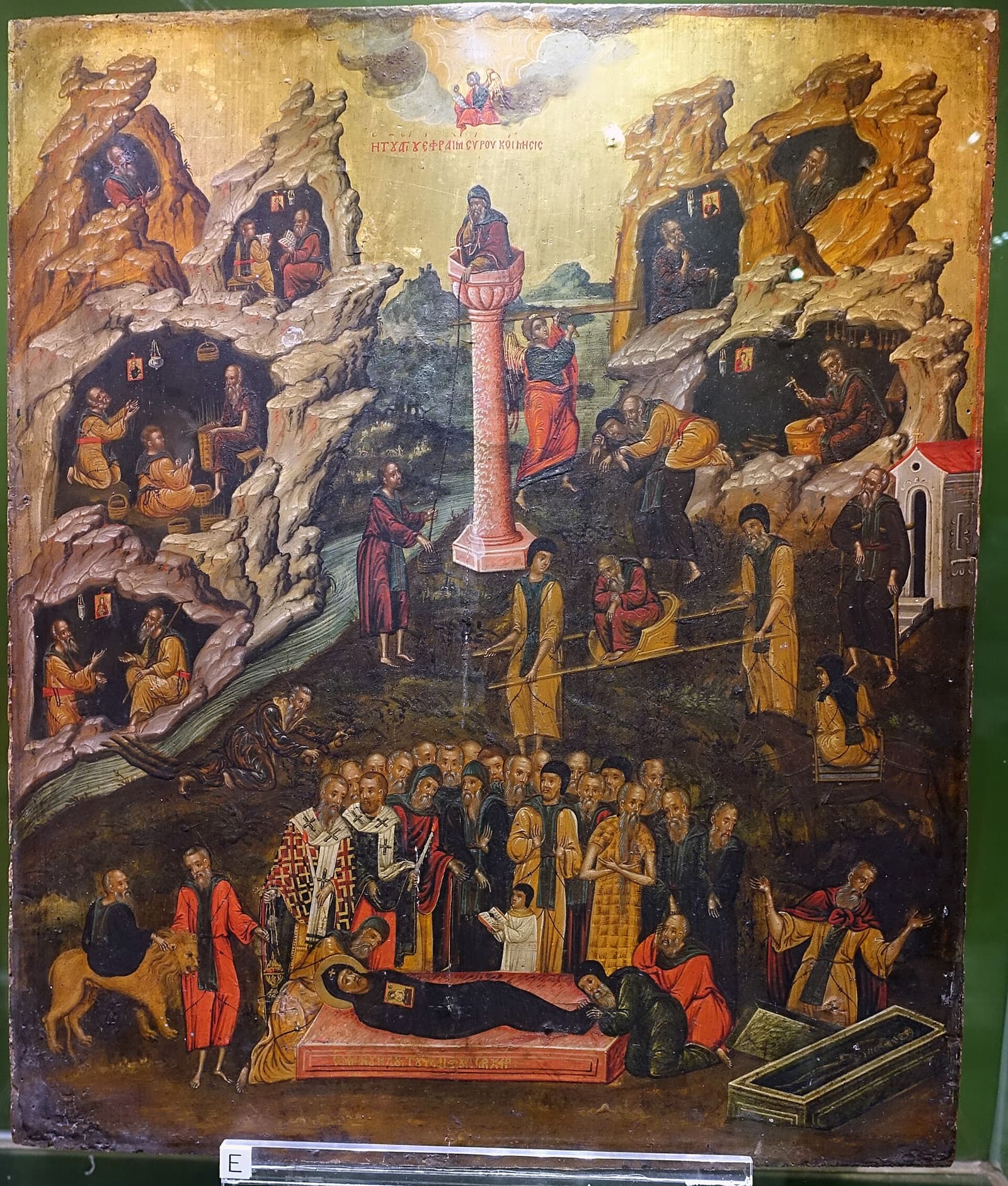
St. Ephrem (about 306–373) was a deacon of the Syriac-speaking Church in Mesopotamia. He taught the faith in poetry, writing hundreds of hymns sung by choirs of women in his church. He wrote with great tenderness about Christ, the sacraments and the Virgin Mary. After the Persians took his city of Nisibis, he moved to Edessa, where he died serving victims of famine. He is a Doctor of the Church. His feast is June 9.
Key takeaways
- He lived in Nisibis, in present-day Turkey near the Syrian border, and later in Edessa.
- He remained a deacon and never became a priest.
- His hymns explained the faith against the errors of his day.
- Pope Benedict XV declared him a Doctor of the Church in 1920.
St. Ephrem taught the faith in song. He believed that beauty could open hearts to the truth, and his hymns are still sung in the Churches of the East today.
A Deacon of Nisibis
Ephrem was born around 306 in or near Nisibis, a city on the border between the Roman and Persian empires, today Nusaybin in Turkey. He was baptized as a young man and became a deacon under Bishop James of Nisibis. Though he was a great teacher, he never became a priest. He also served as a teacher in the school of Nisibis.
Teaching Through Song
In Ephrem’s time, heretical groups spread their ideas through catchy songs. Ephrem answered with hymns of his own. He wrote hundreds of them, called madrashe, setting the truths of the faith to popular melodies. He trained choirs of women to sing them in church. The hymns covered the Nativity, the Passion, the Resurrection, faith, paradise, the Church and the sacraments.
His style is full of images: Christ as the medicine of life, the pearl, the fire and the bread. He loved paradox, the Creator becoming a child, the Ancient of Days nursing at His mother’s breast.
A Singer of Mary
Ephrem wrote with great tenderness about the Virgin Mary. He praised her purity, her humility, and her role as the Mother of God, comparing her to a new Eve. His hymns are among the earliest witnesses to the honor Christians gave Mary.
Edessa
In 363, after the Romans lost a war, Nisibis was handed over to Persia. Ephrem and many Christians moved to Edessa (today Şanlıurfa, Turkey). There he lived in a cave on the outskirts, writing and teaching.
During a famine in 372–373, he organized food for the hungry and care for the sick, persuading the rich to trust him with their money. He caught a disease while serving the sick and died in June 373.
He was declared a Doctor of the Church in 1920, one of the few from the Syriac tradition.
A Prayer to the Holy Spirit (Original Prayer)
Holy Spirit, You filled St. Ephrem’s heart with songs of praise. Teach me to praise God with joy, to love the faith and its beauty, and to serve the poor and the sick. Amen.
Continue Reading
Read about St. Basil the Great, the Magnificat, or St. Cyril of Alexandria.
Frequently asked questions
When is the feast of St. Ephrem?
June 9 in the Roman calendar. The Syriac Churches honor him on different days.
Why is he called the Harp of the Holy Spirit?
Because his poetry was so beautiful and filled with the faith that the Syriac tradition saw him as an instrument through which the Spirit sang.
What did St. Ephrem teach about Mary?
He praised Mary's purity and her role as Mother of God in many hymns, and is an important early witness to Christian devotion to her.
Sources
- St. Ephrem the Syrian, Hymns on Faith, Hymns on the Nativity, Hymns on Paradise
- Pope Benedict XV, Encyclical Principi Apostolorum Petro (1920)
- Pope Benedict XVI, General Audience on St. Ephrem (November 28, 2007)