St. Denis of Paris: First Bishop of Paris and Martyr
Quick answer
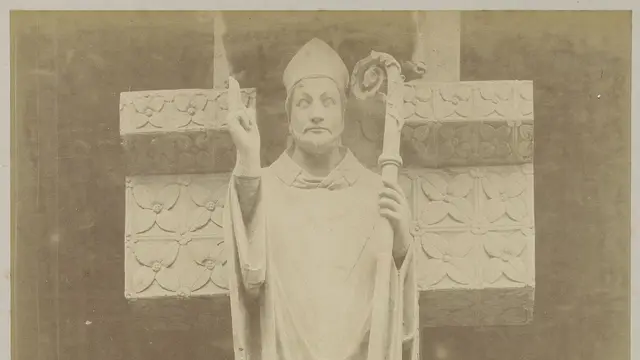
St. Denis was a missionary bishop sent from Rome around 250 to preach in Gaul. He became the first bishop of Paris and was martyred with his companions, the priest Rusticus and the deacon Eleutherius, probably during the persecution of Decius or Valerian. Tradition says they were beheaded on Montmartre, "the mount of martyrs." The Basilica of Saint-Denis, burial place of the kings of France, stands over his tomb. He is a patron of France. His feast is October 9.
Key takeaways
- St. Gregory of Tours wrote that Denis was one of seven bishops sent to Gaul around 250.
- He was martyred with Rusticus and Eleutherius.
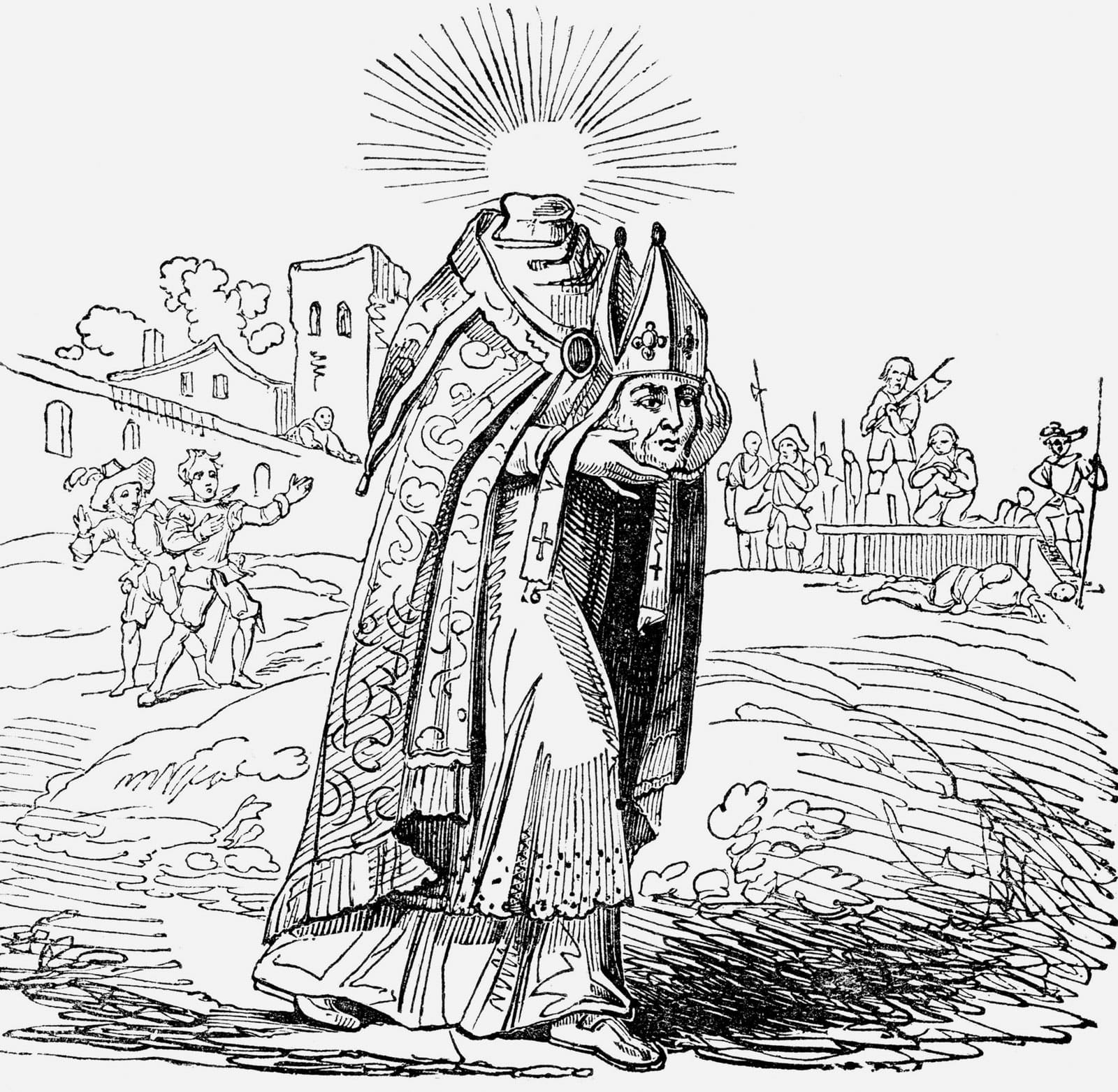
- A legend says he walked several miles carrying his head after he was beheaded.
- Medieval writers wrongly confused him with Dionysius the Areopagite of Acts 17.
The Paris neighborhood of Montmartre takes its name, by tradition, from the martyrs who died there. The first of them was St. Denis, the city’s first bishop.
A Mission to Gaul
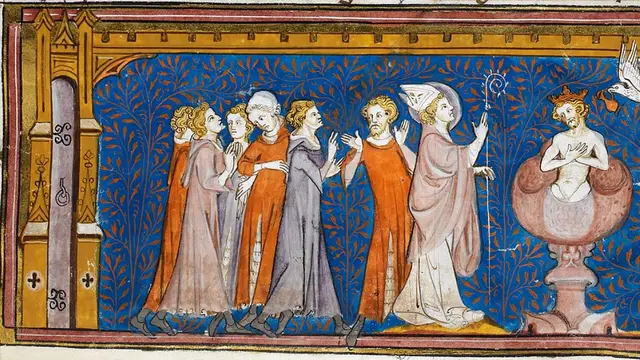
According to St. Gregory of Tours, writing in the sixth century, around the year 250 seven bishops were sent from Rome to bring the Gospel to the cities of Gaul. Among them was Dionysius, called Denis in French, who went to Lutetia, the Roman town that would become Paris. He preached, gathered a Christian community, and became its first bishop.
Martyrdom
During a time of persecution, probably under the emperors Decius or Valerian in the mid-third century, Denis was arrested with two companions, the priest Rusticus and the deacon Eleutherius. After imprisonment they were beheaded. Tradition places their death on the hill north of the city, which came to be called Montmartre, “mount of the martyrs.”
The Head-Carrying Saint
A later legend tells that after his beheading, Denis rose, picked up his head, and walked several miles north, preaching a sermon all the way, until he reached the place where he wished to be buried. For this reason art shows him holding his own head. Such legends were a vivid way of saying that the martyr’s witness could not be silenced.
The Basilica of Saint-Denis
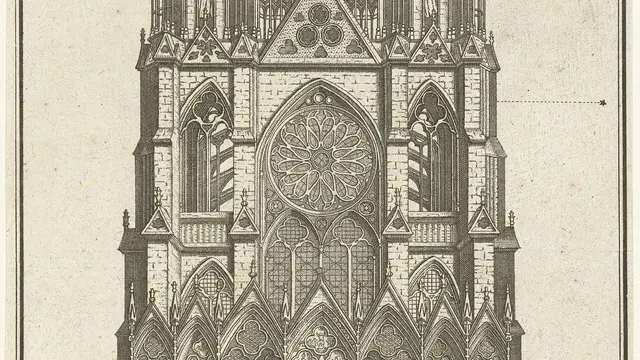
A pious woman named Catulla, tradition says, buried the martyrs. A chapel was built over their tomb, and St. Genevieve had a church built there in the fifth century. It grew into the great Abbey of Saint-Denis. In the twelfth century Abbot Suger rebuilt its church in a new style, full of light and height, which is often called the birth of Gothic architecture. The kings and queens of France were buried there for centuries.
A Confusion of Names
In the ninth century, writers confused Denis of Paris with Dionysius the Areopagite, the Athenian converted by St. Paul (Acts 17:34), and with an anonymous mystical writer of around 500 who wrote under that name. Historians today recognize them as three different men.
Patron of France
Denis became a patron of France, and medieval French soldiers went into battle crying “Montjoie Saint-Denis!” He is one of the Fourteen Holy Helpers, invoked against headaches.
A Prayer for the Church in France (Original Prayer)
St. Denis, you brought the Gospel to Paris and gave your life for Christ. Pray for the Church in France and in all of Europe, that faith may be renewed. Amen.
Continue Reading
Read about St. Genevieve, patroness of Paris, St. Remigius, or St. Martin of Tours.
Frequently asked questions
When is the feast of St. Denis?
October 9.
Why is St. Denis shown holding his head?
A medieval legend says that after his beheading he picked up his head and walked to the place where he wished to be buried, preaching as he went. Such saints are called "cephalophores," head-carriers.
Is St. Denis one of the Fourteen Holy Helpers?
Yes. He is invoked against headaches and is one of the Fourteen Holy Helpers venerated especially in Germany.
Sources
- St. Gregory of Tours, History of the Franks I.30
- Roman Martyrology, October 9
- Basilica of Saint-Denis