St. Bernard of Clairvaux: Abbot, Mystic and Doctor of the Church
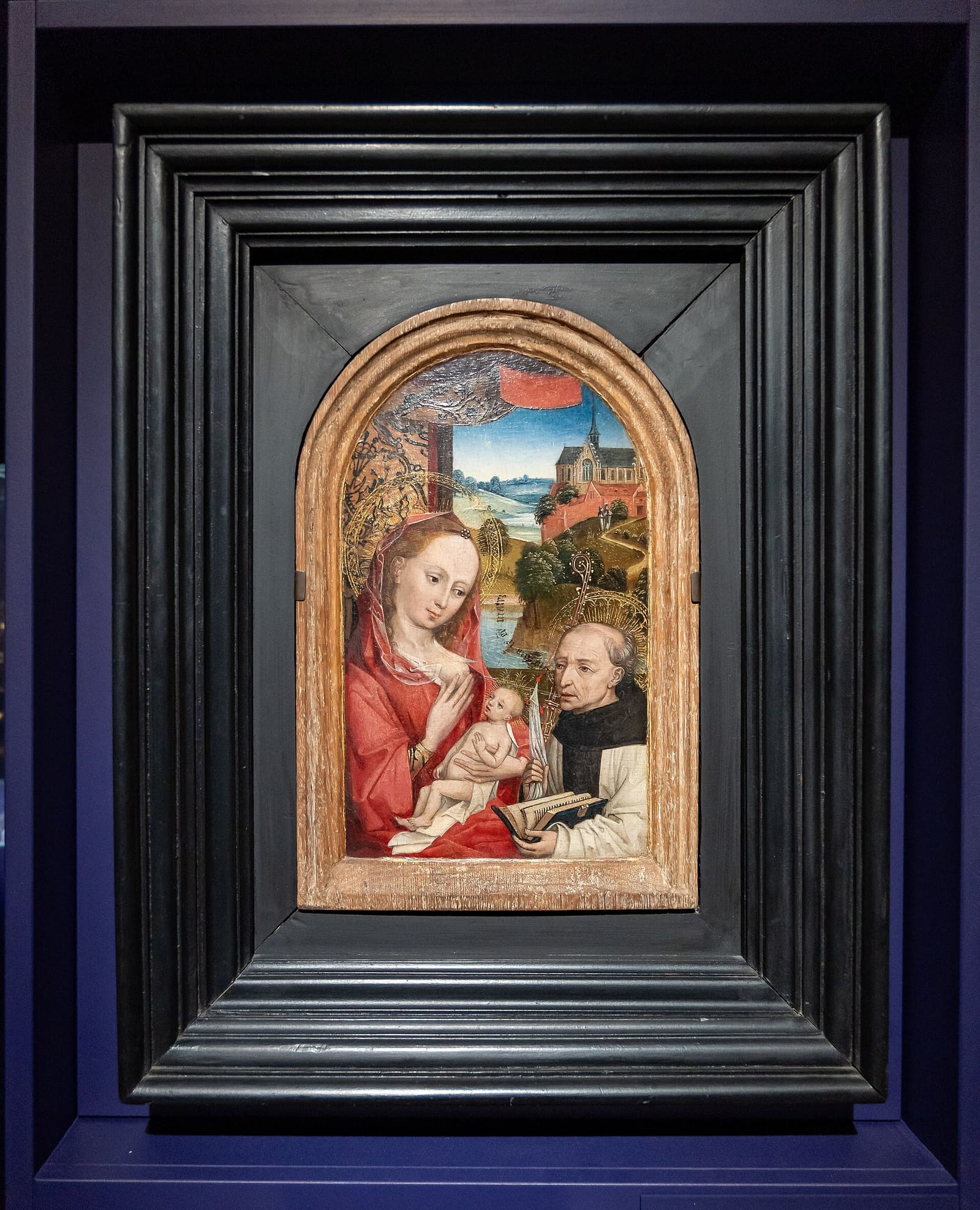
Quick answer
St. Bernard of Clairvaux (1090–1153) was a French Cistercian monk and abbot. He entered the struggling monastery of Cîteaux with about thirty relatives and friends, then founded the abbey of Clairvaux, which became a center of Christian renewal. He counseled popes, preached throughout Europe, and wrote beautifully on the love of God and the Virgin Mary. He is called the Mellifluous Doctor. His feast is August 20.
Key takeaways
- He brought about thirty companions, including his brothers, with him to Cîteaux in 1113.
- In 1115 he founded Clairvaux, from which about seventy monasteries were founded in his lifetime.
- His sermons on the Song of Songs and his treatise On Loving God are spiritual classics.
- The Memorare is often attributed to him, though it was written later in his spirit.
When St. Bernard decided to become a monk, he did not go alone. He brought his brothers, an uncle and a crowd of friends with him. That gift for drawing others to God marked his whole life.
A Young Nobleman
Bernard was born in 1090 at Fontaines, near Dijon, in Burgundy, France, into a noble family. His mother, Aleth, was a devout woman who raised her children in faith. After her death, Bernard felt drawn to the religious life.
In 1113, at twenty-two, he arrived at the poor and struggling abbey of Cîteaux, which followed the Rule of St. Benedict strictly. With him came about thirty relatives and friends, including four of his brothers. Their arrival saved the community.
Clairvaux
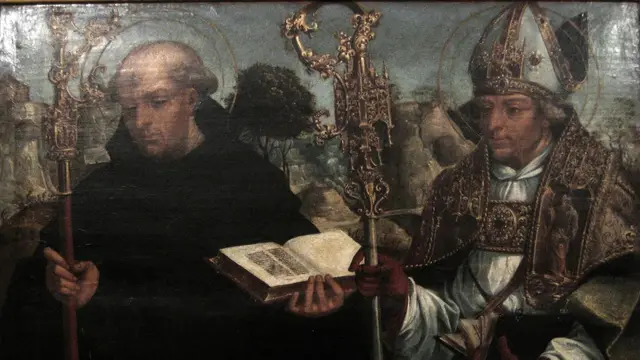
In 1115 Bernard was sent with twelve monks to found a new abbey in a wild valley. He named it Clairvaux, “valley of light.” The early years were hard and the food poor, but the community grew. Through Clairvaux and its daughter houses, the Cistercian order spread across Europe. About seventy monasteries were founded from Clairvaux during Bernard’s life.
Counselor of Popes
Though he wanted only to be a monk, Bernard was drawn into the great affairs of his time. He helped end a schism by supporting Pope Innocent II. When one of his own monks became Pope Eugene III, Bernard wrote him a book, On Consideration, warning him not to let business crowd out prayer. At the pope’s request he preached the Second Crusade in 1146. Its failure grieved him deeply. He also spoke out to protect Jewish communities in the Rhineland from violent preachers.
The Mellifluous Doctor
Bernard’s writings are full of love. In On Loving God he taught that the measure of loving God is to love Him without measure. His sermons on the Song of Songs describe the soul’s union with Christ. He wrote tenderly of Mary, urging Christians in every danger to “look to the star, call upon Mary.”
He died at Clairvaux on August 20, 1153, was canonized in 1174, and was named a Doctor of the Church in 1830.
The Memorare (Traditional Prayer)
Remember, O most gracious Virgin Mary, that never was it known that anyone who fled to thy protection, implored thy help, or sought thine intercession was left unaided. Inspired by this confidence, I fly unto thee, O Virgin of virgins, my mother; to thee do I come, before thee I stand, sinful and sorrowful. O Mother of the Word Incarnate, despise not my petitions, but in thy mercy hear and answer me. Amen.
Continue Reading
Read about St. Benedict, whose Rule Bernard followed, St. Scholastica, or why Catholics pray to Mary.
Frequently asked questions
When is the feast of St. Bernard of Clairvaux?
August 20.
Why is he called the Mellifluous Doctor?
Mellifluous means "flowing with honey." His writing was so sweet and eloquent that the title stuck. He was declared a Doctor of the Church in 1830.
Did St. Bernard write the Memorare?
The prayer is often attributed to him, but in its present form it dates from the fifteenth century. It was made popular by Fr. Claude Bernard, a seventeenth-century French priest, and it reflects St. Bernard's deep trust in Mary.
Sources
- St. Bernard of Clairvaux, On Loving God; Sermons on the Song of Songs; Homilies in Praise of the Virgin Mother
- William of St. Thierry, Life of St. Bernard
- Pope Pius XII, Encyclical Doctor Mellifluus (1953)