La Compañía: The Great Jesuit Churches of Latin America
Quick answer
Across Latin America, the Jesuit church in a colonial city is usually called simply "La Compañía." Among the most famous are La Compañía de Jesús in Quito, Ecuador, whose interior is covered in gold leaf; the Church of the Company in Arequipa, Peru, completed in 1698, a masterpiece of the "mestizo" style that blends European forms with Andean plants, animals and symbols; and La Compañía in Cusco, built on the foundations of the Inca palace of Huayna Capac. They reflect the Jesuit tradition of using beauty to proclaim the faith.
Key takeaways
- Jesuit churches in Latin American cities are commonly called "La Compañía."
- Quito's Compañía de Jesús is famous for its gilded Baroque interior.
- Arequipa's Compañía (façade finished 1698) is a key example of the mestizo style.
- Cusco's Compañía stands on the site of an Inca palace on the main square.
- These churches blend European and indigenous art in praise of God.
Walk into the main square of almost any old city in Spanish America and you will find, near the cathedral, another great church. Ask its name and you will hear: La Compañía, the church of the Company of Jesus. These Jesuit churches are among the most beautiful buildings in the Americas, and Company magazine visited several of them.
Quito: A Church of Gold
The Iglesia de la Compañía de Jesús in Quito, Ecuador, was built between 1605 and 1765. Its sober volcanic stone façade gives no warning of the interior: walls, altars, columns and vaults are covered in carved wood and gold leaf, so that the whole church seems to glow. Moorish geometric patterns, Baroque twisting columns and paintings by artists of the Quito School combine into one of the most dazzling interiors in the world. The historic center of Quito was among the first places named a UNESCO World Heritage Site, in 1978.
Jesuits have worked in Quito since 1586. Their high school, Colegio San Gabriel, founded in the 19th century, has educated several presidents of Ecuador and, as Company described, sends its students to tutor children of imprisoned women and teach health care in rural villages.
Arequipa: Embroidery in Stone
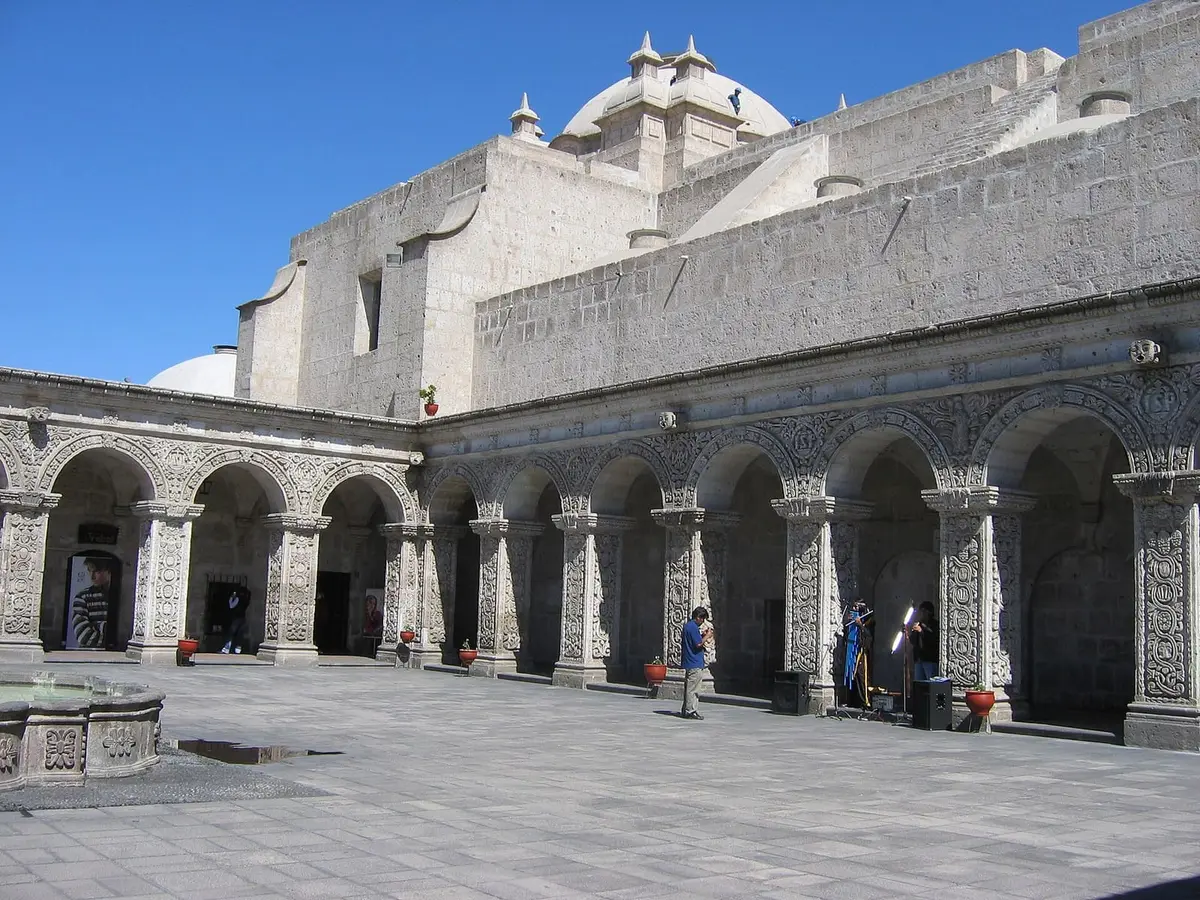
Arequipa, the “White City” of southern Peru, is built of white volcanic stone called sillar. Art historian Gauvin Alexander Bailey wrote in Company that its carved façades look “more like needlework tapestries than stone carvings.”
The Jesuits arrived in Arequipa in 1577. Earthquakes destroyed their first churches, and the present Church of the Company (Santiago) was completed with its carved façade in 1698. It is one of the earliest and finest examples of the mestizo style: European columns and scrolls surrounded by vines, flowers, birds, jungle animals and figures drawn from Andean tradition, carved in flat, lace-like relief. The adjoining cloisters and the Chapel of St. Ignatius, painted with tropical plants and birds, are treasures in their own right. Arequipa’s historic center is a UNESCO World Heritage Site.
Cusco: On an Inca Palace
In Cusco, the ancient Inca capital, the Jesuit Iglesia de la Compañía de Jesús stands on the Plaza de Armas, built on the site of the palace of the Inca ruler Huayna Capac. Rebuilt after the earthquake of 1650 and finished in the 1660s, its towering Baroque façade rivals the cathedral next door. Inside, a famous painting shows the marriage of Martín García de Loyola, a relative of St. Ignatius, to the Inca princess Beatriz Clara Coya, a symbol of the meeting of two worlds.
Faith Expressed in Beauty
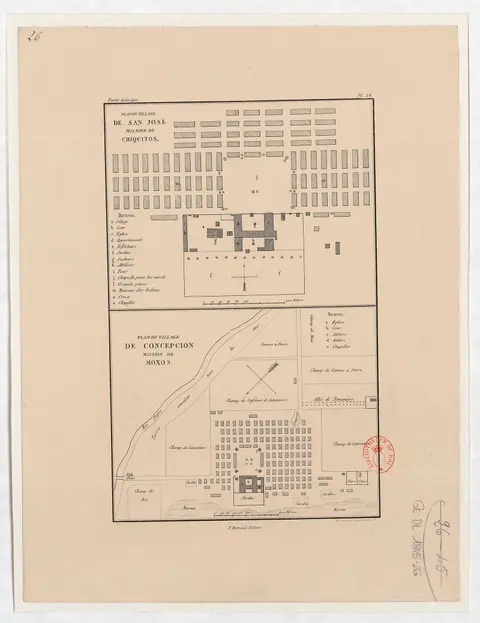
These churches reflect the Jesuit conviction, seen also in the missions of Chiquitos and in Jesuit mission art everywhere, that beauty can lead hearts to God and that every culture can contribute to praising Him. The Catechism teaches that the church building is “the house of prayer” where the Eucharist is celebrated and the faithful gather (CCC 1181), and that sacred art should lead to adoration (CCC 2502). Read about the mother church of the Jesuits, the Gesù in Rome, which inspired many of them.
Prayer in a Beautiful Church (Psalm 84:1–2, 4)
How lovely is your dwelling place, O Lord of hosts! My soul longs, indeed it faints, for the courts of the Lord; my heart and flesh sing for joy to the living God. Blessed are those who dwell in your house, ever singing your praise!
Continue Reading
Read about the Church of the Gesù, the Jesuit missions of Chiquitos, or Jesuit mission art.
Frequently asked questions
Why are Jesuit churches called La Compañía?
Because the Jesuits' official name in Spanish is the Compañía de Jesús, the Company of Jesus. The church of the Jesuit college was naturally called "the church of the Company."
What is the mestizo style?
A style of architectural carving in the southern Andes in the late 17th and 18th centuries, in which European designs are combined with local flora, fauna and pre-Hispanic motifs, carved in shallow relief like embroidery.
Sources
- Gauvin Alexander Bailey, "Embroidery in Stone," Company magazine (Winter 2003–2004)
- "At the Center of the World," Company magazine (Spring 1998)
- UNESCO World Heritage Centre, City of Quito; Historical Centre of the City of Arequipa