St. Cyril of Jerusalem: Bishop and Teacher of the Catechumens
Quick answer
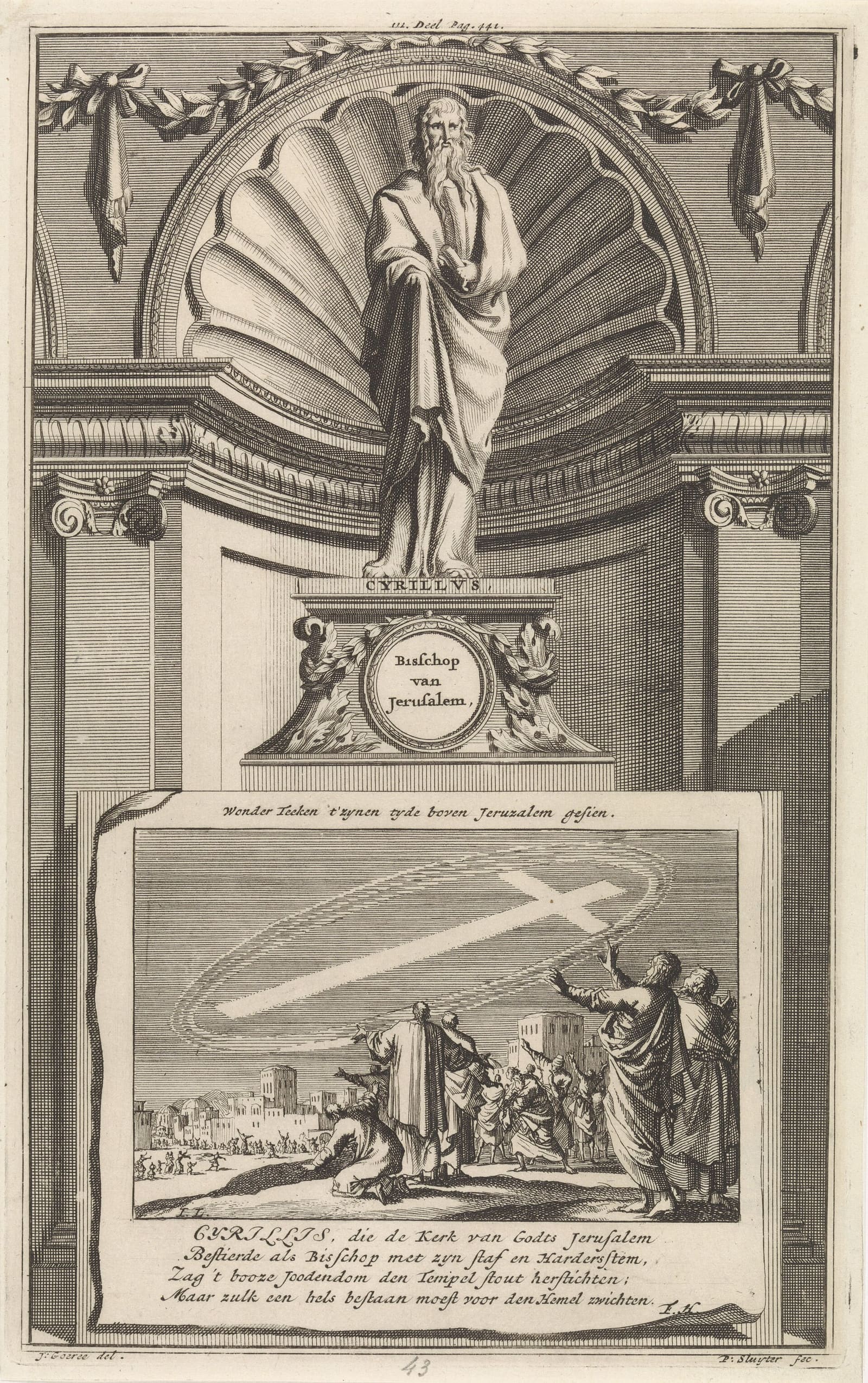
St. Cyril (about 313–386) was bishop of Jerusalem in the fourth century. He is best known for his Catechetical Lectures, a series of talks given to adults preparing for baptism at Easter and to the newly baptized. They explain the Creed and the sacraments of Baptism, Confirmation and the Eucharist, and clearly teach the Real Presence of Christ. Exiled three times during the Arian controversies, he took part in the Council of Constantinople in 381. He is a Doctor of the Church. His feast is March 18.
Key takeaways
- He became bishop of Jerusalem around 350.
- His lectures were delivered in the Church of the Holy Sepulchre.
- He taught that the bread and wine become the Body and Blood of Christ.
- He spent about sixteen years in exile.
If you want to know what the early Christians believed about baptism and the Eucharist, read St. Cyril of Jerusalem. His instructions to new Christians in the fourth century still speak to us with warmth and clarity.
Bishop of Jerusalem
Cyril was born around 313, probably in or near Jerusalem. He was ordained a priest and given the task of preparing catechumens for baptism. Around 350 he became bishop of Jerusalem.
His years as bishop were stormy. The Arian controversy divided the Church, and Cyril was caught up in disputes with the archbishop of Caesarea. He was exiled three times, for a total of about sixteen years. During a famine he sold church goods to feed the poor, which his enemies used against him.
He took part in the Council of Constantinople in 381, which confirmed the full divinity of Christ and the Holy Spirit, and he died around 386.
The Catechetical Lectures
During Lent, adults preparing for baptism gathered in the great Church of the Holy Sepulchre, built by Constantine over the place of Christ’s death and Resurrection. Cyril taught them the faith, article by article, through the Creed. He reminded them that they were standing at the very place where Christ was crucified and rose.
After their baptism at the Easter Vigil, during Easter week, he explained the “mysteries,” the sacraments they had just received: Baptism, Confirmation (chrismation) and the Eucharist.
On the Eucharist
Cyril’s teaching on the Eucharist is especially clear. He told the newly baptized not to judge by taste but by faith, for what seems to be bread is the Body of Christ, and what seems to be wine is His Blood.
He also gave practical advice on receiving Communion, which the Church still treasures. He told the faithful to approach with reverence, making the left hand a throne for the right, which receives the King, and to take care not to lose even a crumb.
Why He Matters
Cyril shows that the Church’s faith in the sacraments goes back to the earliest centuries. The Catechism cites him, and his lectures are read in the Office of Readings during Easter week.
He was declared a Doctor of the Church in 1882.
A Prayer Before Holy Communion (Original Prayer)
Lord Jesus, You are truly present in the Eucharist. Help me receive You with faith and reverence, as St. Cyril taught, and let my life be changed by Your Body and Blood. Amen.
Continue Reading
Read about St. Justin Martyr and the early Mass, early Christian writings, or St. Basil the Great.
Frequently asked questions
When is the feast of St. Cyril of Jerusalem?
March 18.
What are the Catechetical Lectures?
Twenty-three talks, eighteen to catechumens during Lent on the faith and the Creed, and five "mystagogical" talks to the newly baptized during Easter week on the sacraments they had received.
What did St. Cyril teach about Holy Communion?
He taught that what seems bread is not bread but the Body of Christ, and he gave beautiful advice about receiving Communion reverently, making the left hand a throne for the right.
Sources
- St. Cyril of Jerusalem, Catechetical Lectures and Mystagogical Catecheses
- Catechism of the Catholic Church, nos. 1331, 1381
- Pope Leo XIII, Declaration as Doctor of the Church (1882)