St. Brigid of Ireland: Abbess of Kildare and Mary of the Gael
Quick answer
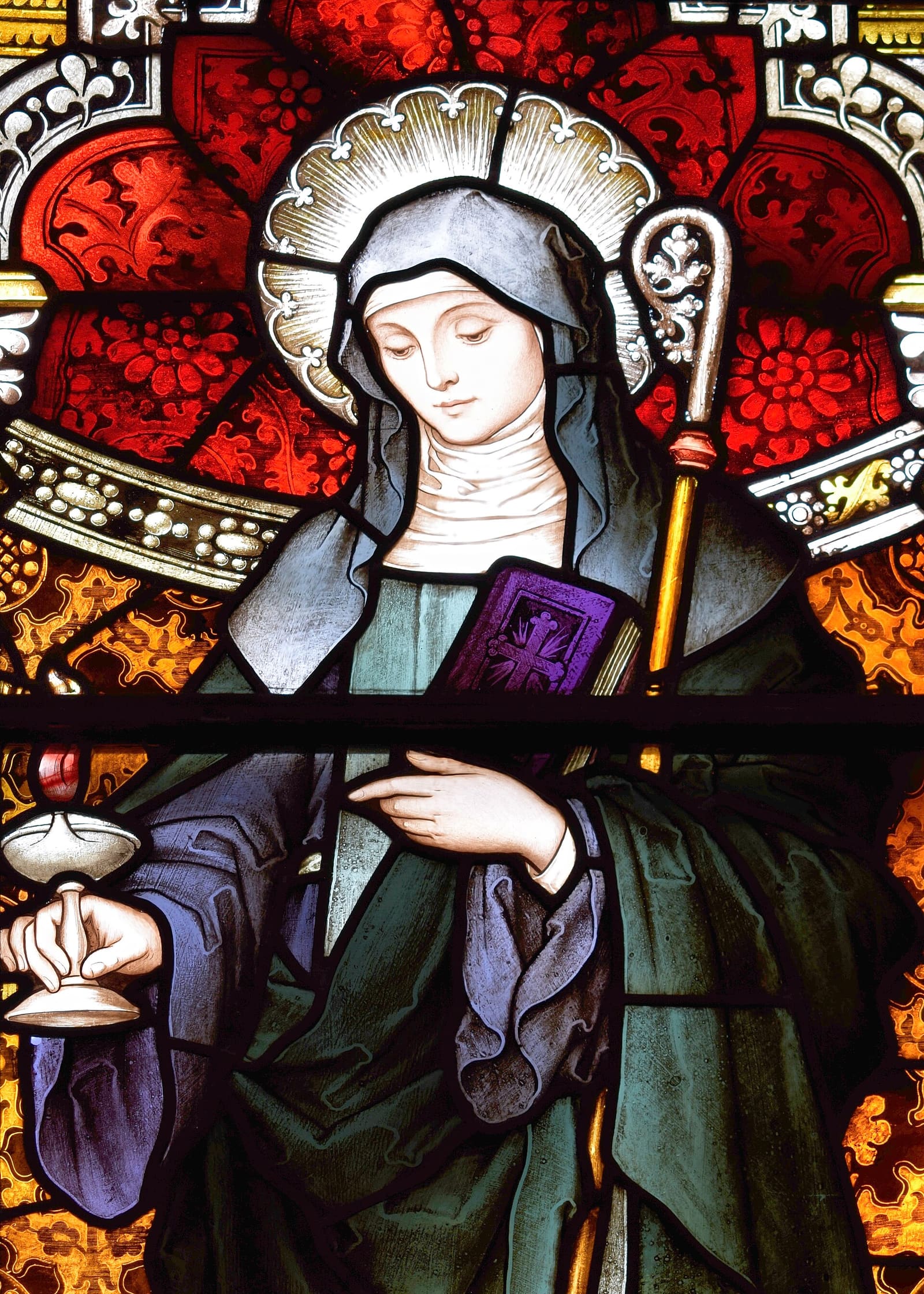
St. Brigid (about 451–525) was an Irish abbess who founded a double monastery at Kildare, one of the great centers of early Irish Christianity. Stories about her, written within about 150 years of her death, describe a woman of boundless generosity and hospitality. She is a patron of Ireland, along with St. Patrick and St. Columba. Her feast, February 1, is now a public holiday in Ireland, and families weave St. Brigid's crosses from rushes.
Key takeaways
- Her earliest life was written by Cogitosus, a monk of Kildare, in the seventh century.
- She founded a monastery for women and men at Kildare.
- She was famous for giving away everything, even her father's sword.
- The St. Brigid's cross is woven from rushes and hung in homes for protection.
In Ireland, St. Brigid is loved almost as much as St. Patrick. Her stories are full of warmth, hospitality and a generosity that drove her family to distraction.
What We Know
Brigid was born around 451, probably in what is now County Louth, not long after St. Patrick began his mission. Her father was a chieftain and, according to the early accounts, her mother was a slave. She was raised a Christian.
Our earliest source, the Life written by Cogitosus, a monk of Kildare, dates from the seventh century. It is more a collection of wonders than a modern biography, but it shows how the Irish remembered her: as a woman who could not bear to see anyone go hungry.
A Generous Daughter
Many stories tell of Brigid giving away her father’s butter, food and goods to the poor. Exasperated, her father took her to the king to sell her, and left his jeweled sword in the chariot. While he was inside, Brigid gave the sword to a leper. The king, the story goes, told her father to let her be, for her merit before God was greater than theirs.
The Abbess of Kildare
Brigid received the veil and gathered other women. Around 480 she founded a monastery at Kildare, Cill Dara, “the church of the oak.” It became a double monastery for women and men, a center of learning and art, and one of the most important churches in Ireland. A sacred fire was kept burning there for centuries. Her monastery welcomed travelers and the poor.
Brigid died around 525. Tradition says she was later buried at Downpatrick with St. Patrick and St. Columba.
The St. Brigid’s Cross
A well-known tradition says Brigid sat by a dying pagan chieftain and, while explaining the faith, picked up rushes from the floor and wove them into a cross. He asked to be baptized before he died. On the eve of her feast, Irish families still weave these crosses and hang them by the door, asking God’s protection on the home.
Mary of the Gael
Brigid was so beloved that she was called Muire na nGael, “Mary of the Gael.” Her feast on February 1 was the traditional first day of spring in Ireland.
A Prayer to St. Brigid (Original Prayer)
St. Brigid, you welcomed everyone in Christ’s name. Bless our home and all who enter it. Make me generous to the poor, and keep our families safe in God’s care. Amen.
Continue Reading
Read about St. Patrick, St. Columba and St. Brendan the Navigator.
Frequently asked questions
When is the feast of St. Brigid?
February 1. Since 2023 the first Monday of February (or February 1 when it is a Friday) is a public holiday in Ireland in her honor.
What is the St. Brigid's cross?
A small cross woven from rushes, with a square center and four arms. Tradition says Brigid wove one while explaining the faith to a dying man. Irish families hang them in their homes.
Is St. Brigid the same as St. Bridget of Sweden?
No. Brigid of Kildare lived in Ireland in the fifth and sixth centuries. Bridget of Sweden was a mystic of the fourteenth century.
Sources
- Cogitosus, Life of St. Brigid (seventh century)
- Bethu Brigte (Old Irish Life, ninth century)
- Roman Martyrology, February 1