Padre Pio: Full Biography of St. Pio of Pietrelcina, Stigmata and Feast Day
Quick answer
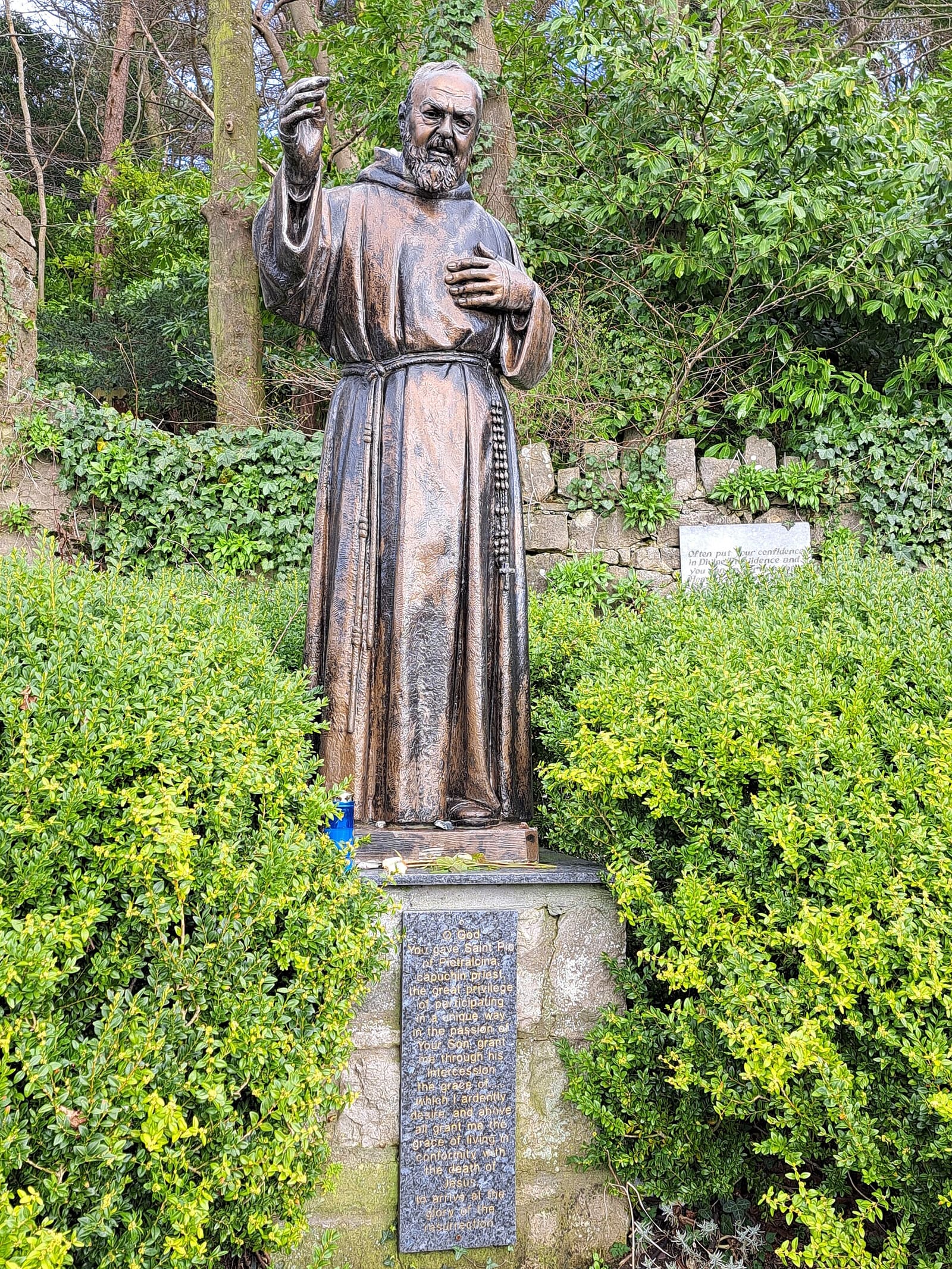
St. Pio of Pietrelcina (1887–1968), known as Padre Pio, was an Italian Capuchin priest who lived for fifty years at San Giovanni Rotondo. He bore visible wounds like those of Christ from 1918 until shortly before his death, spent long hours hearing confessions, and founded a major hospital. St. John Paul II canonized him on June 16, 2002. His feast is September 23.
Key takeaways
- Padre Pio was born Francesco Forgione on May 25, 1887, to a poor farming family in Pietrelcina, southern Italy.
- He joined the Capuchins in 1903, was ordained on August 10, 1910, and arrived at San Giovanni Rotondo in 1916, where he stayed for the rest of his life.
- From September 20, 1918, he bore visible wounds in his hands, feet and side.
- The Holy See restricted his ministry for a time while it investigated him, and he obeyed without complaint.
- His hospital, the Casa Sollievo della Sofferenza, opened on May 5, 1956, and he died on September 23, 1968.
For fifty years, people crossed oceans to kneel in a small confessional in southern Italy. The man inside was a Capuchin friar in poor health who rarely left his friary. He was gruff at times and funny at others, and he cared about one thing above all: bringing people back to God.
A Farm Boy from Pietrelcina
Francesco Forgione was born on May 25, 1887, in Pietrelcina, a poor farming village near Benevento. He was baptized the next day. His parents, Grazio Forgione and Maria Giuseppa De Nunzio, had little money but a deep faith.
Grazio even traveled to America to work and earn the money for his son’s education. Francesco was a sickly, quiet boy who loved to pray. From his early years he felt drawn to give his life to God.
A Capuchin Vocation
On January 6, 1903, at just fifteen, he entered the novitiate of the Capuchin friars at Morcone. On January 22 he received the habit and the name Brother Pio. He made his solemn profession on January 27, 1907.
Ill health followed him throughout his studies. He had frequent fevers and stomach trouble, and his superiors often sent him home to recover. He was ordained a priest in the cathedral of Benevento on August 10, 1910, and for several more years he remained at home with his family because of his health.
During the First World War he was called up for military service and assigned to a medical unit, but he was soon sent home again because of his poor condition.
San Giovanni Rotondo
In September 1916, Padre Pio was sent to the friary of Our Lady of Grace at San Giovanni Rotondo, a remote town on the Gargano peninsula. He expected to stay a short while. He remained there for fifty-two years.
The Wounds of Christ
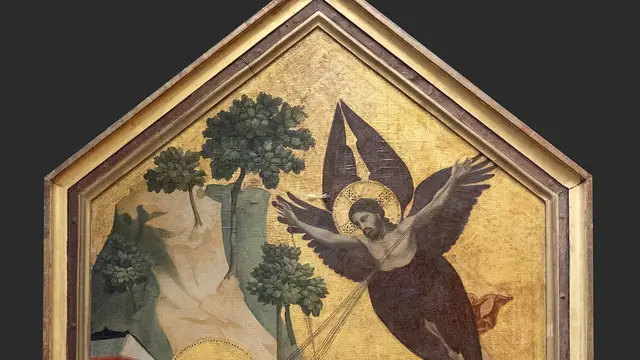
On September 20, 1918, while he was praying before a crucifix in the friary choir, wounds appeared in his hands, feet and side. They remained for half a century, and they brought him great pain and embarrassment. He covered his hands with brown half-gloves and was reluctant to speak of them.
News spread rapidly, especially after the war, and crowds began to arrive. Doctors examined him. Their reports differed. Some people believed in the wounds, others doubted, and Padre Pio asked only to be left to pray.
The stigmata were never the center of his life, and they are not why the Church declared him a saint. They are best understood as a sign of the thing he cared about most: sharing in the suffering of Christ for the salvation of others.
Trials and Obedience
The attention soon brought trouble. Some priests and physicians, among them the prominent Franciscan scholar Father Agostino Gemelli, were skeptical. Complaints reached Rome. The Holy Office investigated, and over the following years it placed restrictions on him.
From 1931 to 1933 he was forbidden to exercise his public ministry. He could celebrate Mass only in private and could not hear confessions. Those were painful years for him, and he did not protest. When Pope Pius XI lifted the restrictions in 1933, he simply went back to work. Further investigations came in the last decade of his life, and he met these with the same patience.
His response may be the most convincing part of his story. He obeyed his superiors and the Church, even when he had been treated unfairly.
Confessor to the World
Padre Pio’s great work was hearing confessions, often for many hours a day. People waited days for their turn. He could be stern, and he sometimes sent a person away to prepare better, yet many who met him said they had never felt so deeply known or so deeply forgiven.
The Church teaches that through this sacrament Christ himself forgives us and restores us to His grace (CCC 1441-1442). A young Polish priest named Karol Wojtyła, the future St. John Paul II, traveled to San Giovanni Rotondo in 1948 and made his confession to him.
His daily Mass could last a very long time, because he prayed it so intensely, and people came from afar simply to attend it.
The House for the Relief of Suffering
Padre Pio could not see suffering without wanting to do something about it. In 1956, after years of work and with donations from around the world, he opened the Casa Sollievo della Sofferenza, the “House for the Relief of Suffering,” on May 5. It remains one of the most important hospitals in southern Italy.
He also encouraged prayer groups, in response to the call of Pope Pius XII for people to pray together. These groups continue today in many countries.
His Last Days and Canonization
By 1968 he was frail and needed a wheelchair. He celebrated his last Mass on September 22. In the early hours of September 23, 1968, he died at the age of 81, saying the names of Jesus and Mary. Those who prepared his body reported that the wounds had vanished.
St. John Paul II beatified him on May 2, 1999, and canonized him on June 16, 2002, before an enormous crowd in St. Peter’s Square.
What We Can Learn from Padre Pio
- Go to confession often. It was the heart of his ministry. Our guide on how to go to confession can help.
- Unite your suffering with Christ. Illness and pain can be joined to His saving work (CCC 1521).
- Obey with peace. Unfair treatment did not make him bitter.
- Pray, hope and don’t worry. Four words that many of us need each day.
A Prayer to St. Pio (Original Prayer)
St. Pio, faithful friar and tireless confessor, you carried the Cross with patience and love. Pray for those who are sick and those who are afraid. Help me to make a good confession, to bear my sufferings with Jesus, and to pray, to hope and not to worry. Amen.
For more devotions, read how to pray the Padre Pio prayer. You may also like the life of his fellow son of St. Francis, St. Francis of Assisi.
Frequently asked questions
When is the feast day of Padre Pio?
His memorial is September 23, the day he died in 1968.
Did the Church confirm that Padre Pio's stigmata were miraculous?
The Church did not need to rule on the wounds in order to canonize him. Canonization recognizes heroic virtue and requires miracles obtained through the saint's intercession. Doctors examined the wounds during his life and did not reach one agreed explanation, and some people, including Church officials, were skeptical at the time.
What miracles were approved for Padre Pio's canonization?
For his beatification the Church approved the healing of Consiglia De Martino of Salerno. For his canonization it approved the recovery of a young boy, Matteo Pio Colella, who was gravely ill in the hospital Padre Pio founded.
What did Padre Pio say about prayer?
His best-known advice is short and simple. "Pray, hope and don't worry."
Where is Padre Pio buried?
His body is at San Giovanni Rotondo in the province of Foggia, Italy, which receives pilgrims from all over the world.
Sources
- Biography of Padre Pio (Vatican biography, published by EWTN)
- Franciscan Media, Saint Pio of Pietrelcina
- Catechism of the Catholic Church 1441-1442, 1458, 1508, 1521