The Vatican Observatory: The Pope's Jesuit Astronomers
Quick answer
Pope Leo XIII refounded the Vatican Observatory (Specola Vaticana) in 1891 to show that the Church supports true science. Its Jesuit staff moved from the Vatican to the papal summer residence at Castel Gandolfo in the 1930s, and in 1981 they opened a research group at the University of Arizona in Tucson. In 1993 the Vatican Advanced Technology Telescope began operating on Mount Graham in Arizona, where its innovative mirror served as a testbed for larger telescopes. Jesuit astronomers such as George Coyne and Guy Consolmagno have studied galaxies, stars and meteorites and written widely on faith and science.
Key takeaways
- The Vatican Observatory was refounded by Pope Leo XIII in 1891.
- It is staffed mainly by Jesuit priests and brothers.
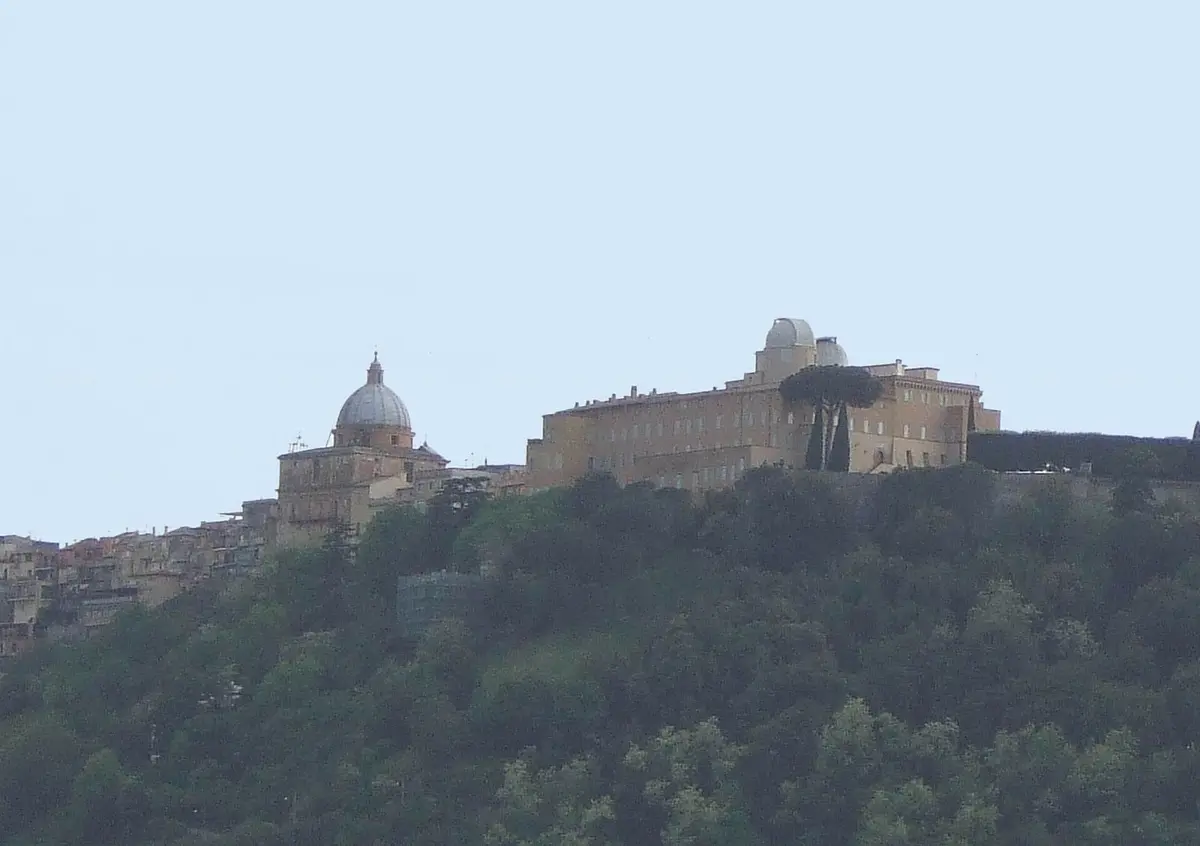
- Its headquarters are at Castel Gandolfo, near Rome.
- The Vatican Advanced Technology Telescope on Mount Graham, Arizona, has operated since 1993.
- Br. Guy Consolmagno hunted meteorites in Antarctica and became director in 2015.
This article contains affiliate links: we may earn a commission if you buy through them, at no extra cost to you. As an Amazon Associate I earn from qualifying purchases.
On a mountaintop in southeastern Arizona, among the most powerful telescopes in the world, stands one that belongs to the Pope. It is run by Jesuits, and it is part of one of the oldest astronomical research institutes on earth: the Vatican Observatory.
From the Calendar to Leo XIII
The Church’s interest in the stars is ancient. The reform of the calendar in 1582 relied on the work of the Jesuit mathematician Christopher Clavius, and Jesuit colleges across Europe had observatories. In the 19th century the Jesuit Angelo Secchi pioneered the classification of stars by their spectra at the Roman College.
In 1891 Pope Leo XIII formally refounded the Specola Vaticana. He wrote that he wanted everyone to see that the Church and her pastors are not opposed to true and solid science, but embrace and encourage it.
Castel Gandolfo and Tucson
At first the observatory stood on the walls of Vatican City. As the lights of Rome grew brighter, Pope Pius XI moved it in the 1930s to the papal summer residence at Castel Gandolfo in the Alban Hills. Its directors have been Jesuits since the early 20th century. Its astronomers helped produce a great international star catalog, the Carte du Ciel.
Even Castel Gandolfo eventually became too bright. In 1981 the observatory opened the Vatican Observatory Research Group at the University of Arizona in Tucson.
The Vatican Advanced Technology Telescope
In 1993 the Vatican Advanced Technology Telescope (VATT) was dedicated on Mount Graham, considered one of the best astronomical sites in the continental United States. Company magazine described its 1.8-meter mirror, the first large spin-cast mirror of its kind, and its computer-controlled mount, which served as a testbed for the giant Large Binocular Telescope built nearby.
Jesuit astronomers such as Fr. Richard Boyle and Fr. Chris Corbally told Company that daily life at the telescope was “one of ladders and slides,” solving one technical glitch after another. Their work produced studies of galaxies, the stars of the Milky Way and the moons of Saturn.
A Jesuit in Antarctica
In 1996 Br. Guy Consolmagno, SJ, joined a six-week expedition of the Antarctic Search for Meteorites. In Company he described a tiny camp of six scientists, wind chills of 70 below, and nearly 400 meteorites collected from the blue ice, including a rare one from the Moon. Stripped of his usual paths to God, he was thrown back on prayer, keeping his Bible and breviary in a red tote bag beside his pillow.
Consolmagno became director of the Vatican Observatory in 2015. He received the Carl Sagan Medal for public communication of planetary science, and an asteroid is named after him.
Faith and Science
The Vatican Observatory exists to show that faith and reason are friends. The Catechism teaches that “methodical research in all branches of knowledge” can never truly conflict with faith, “because the things of the world and the things of faith derive from the same God” (CCC 159). For the Jesuit astronomers, studying the universe is a way of finding God in all things.
Read More
- Would You Baptize an Extraterrestrial? by Guy Consolmagno and Paul Mueller
- God’s Mechanics by Guy Consolmagno
Prayer of an Astronomer (Original Prayer)
When I look at Your heavens, the work of Your fingers, the moon and the stars that You have established, I praise You, Lord, Creator of all. Give wisdom to all who study Your universe, humility before its mysteries, and joy in discovering Your glory in every star. Amen.
Continue Reading
Read about other Jesuit astronomers, Christopher Clavius and the Gregorian calendar, or Teilhard de Chardin.
Frequently asked questions
Why does the Vatican have an observatory?
Pope Leo XIII refounded it in 1891 so that "everyone might see clearly that the Church and her Pastors are not opposed to true and solid science." It continues a tradition going back to the Gregorian calendar reform of 1582.
Where is the Vatican Observatory?
Its headquarters are at Castel Gandolfo, near Rome. Because the skies there are now too bright, its main research telescope is the Vatican Advanced Technology Telescope on Mount Graham in southeastern Arizona, operated with the University of Arizona.
Who runs the Vatican Observatory?
The Society of Jesus. Its directors have included Fr. George Coyne, SJ (1978–2006), Fr. José Funes, SJ, and Br. Guy Consolmagno, SJ, appointed in 2015.
Sources
- "Stargate," Company magazine (Fall 1997)
- Guy Consolmagno, SJ, "Midnight Sun," Company magazine (Spring 1999)
- Pope Leo XIII, Motu proprio Ut mysticam (1891)
- Catechism of the Catholic Church, nos. 159, 283