The Gregorian Calendar and Christopher Clavius, the Jesuit Behind It
Quick answer
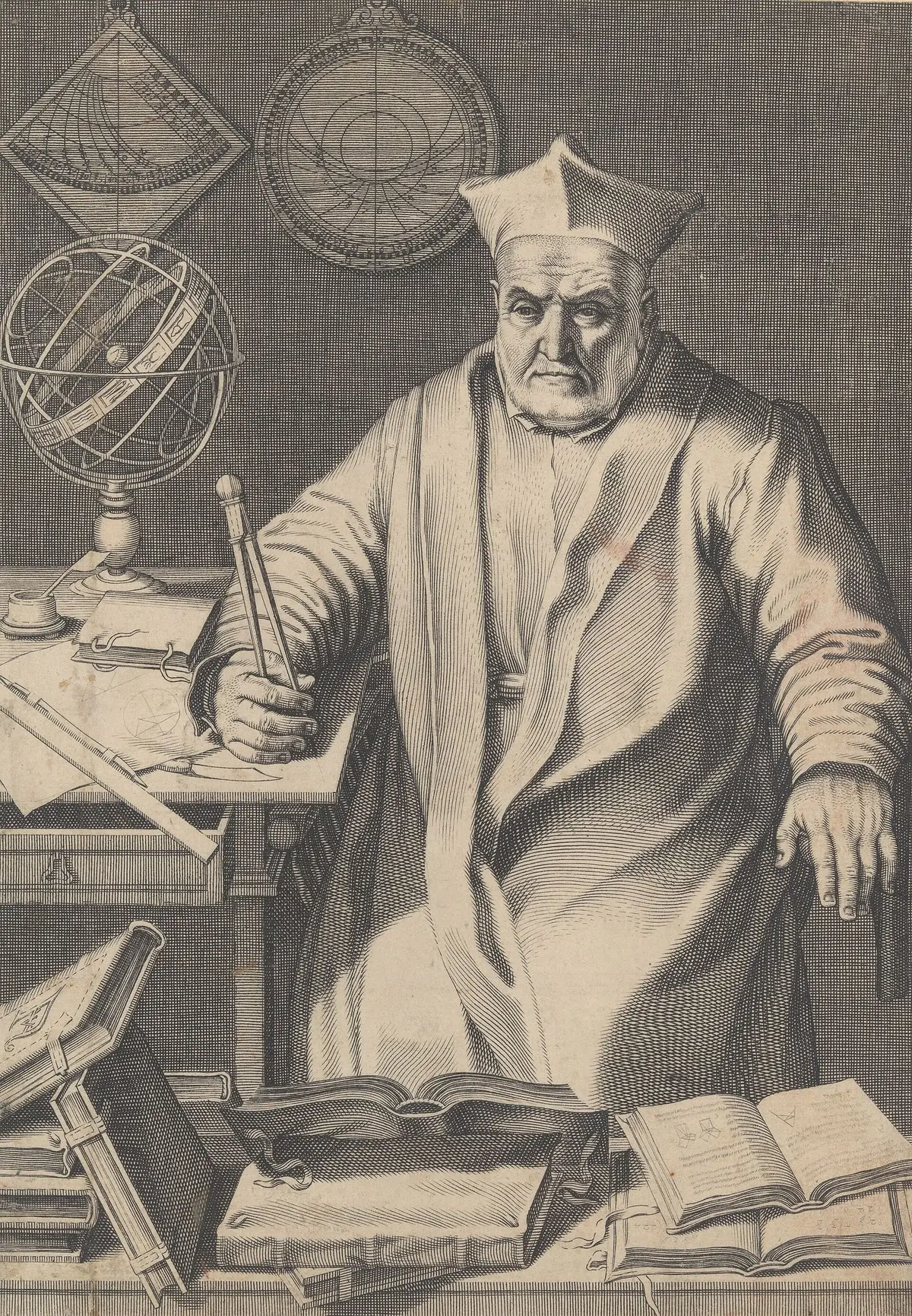
The calendar most of the world uses today was introduced by Pope Gregory XIII in 1582 to correct the Julian calendar, which ran about eleven minutes longer than the solar year and had drifted ten days off. The reform, based on a plan by Aloysius Lilius, was refined and defended by the German Jesuit mathematician Christopher Clavius (1538–1612) of the Roman College. Ten days were dropped, so Thursday, October 4, 1582, was followed by Friday, October 15, and new leap-year rules were adopted to keep Easter and the seasons in place.
Key takeaways
- The Julian calendar's year was about 11 minutes too long, so it drifted one day every 128 years.
- Pope Gregory XIII issued the bull Inter gravissimas on February 24, 1582.
- October 4, 1582, was followed by October 15 in Catholic countries.
- Century years are leap years only if divisible by 400 (so 2000 was, 1900 was not).
- Jesuit Christopher Clavius explained and defended the reform in several books.
Every time you check the date, you are using a Catholic invention. The Gregorian calendar, now used almost everywhere on earth, was introduced by Pope Gregory XIII in 1582. Behind it stood a German Jesuit mathematician whom history has nearly forgotten: Christopher Clavius. As writer David Ewing Duncan put it in Company magazine, today’s calendar “owes a debt to a Jesuit.”
The Problem With Julius Caesar’s Calendar
In 46–45 BC, Julius Caesar introduced the Julian calendar: 365 days, with a leap day every four years, for an average year of 365.25 days. It was a great improvement, but the true solar year is about 365.2422 days. Caesar’s year was roughly eleven minutes too long.
Eleven minutes does not sound like much, but it adds up to about one day every 128 years. By the 13th century, the English Franciscan Roger Bacon warned Pope Clement IV that the calendar had drifted many days and would eventually move the seasons. By the 1500s, the spring equinox, which the Church had placed on March 21 since the Council of Nicaea in 325, was arriving around March 11.
Why It Mattered: Easter
The main reason for reform was Easter. The date of Easter is set as the first Sunday after the first full moon on or after the spring equinox, which the Church fixes on March 21. If the calendar drifted, Easter would gradually wander away from spring and from the season of Christ’s Passion and Resurrection. Reforming the calendar was a pastoral necessity.
The Reform of 1582
Popes and councils had discussed reform for centuries. Finally, Pope Gregory XIII appointed a commission in the 1570s. It adopted a plan by the Italian physician and astronomer Aloysius Lilius, and Christopher Clavius played a leading role in examining and refining it.
On February 24, 1582, Gregory issued the bull Inter gravissimas. It made two changes:
- Ten days were dropped. In Catholic countries, Thursday, October 4, 1582, was followed by Friday, October 15. (St. Teresa of Ávila famously died on the night between October 4 and October 15, 1582.)
- The leap-year rule was refined. Years divisible by 4 remain leap years, except century years, which are leap years only if divisible by 400. So 1600 and 2000 were leap years, but 1700, 1800 and 1900 were not. This brings the average year to 365.2425 days, very close to the solar year.
A new method of calculating the date of Easter, with improved lunar tables, came with it.
Christopher Clavius, “The Euclid of His Time”
Christopher Clavius was born in Bamberg, Germany, in 1538. He joined the Jesuits in Rome in 1555, studied at Coimbra in Portugal, and spent most of his life teaching mathematics at the Jesuits’ Roman College. His edition of Euclid’s Elements was so widely used that contemporaries called him “the Euclid of his time.”
Clavius made mathematics a core subject in Jesuit schools, training generations of missionaries who carried astronomy to China, India and Latin America. Matteo Ricci was one of his students. After 1582, Clavius wrote several books explaining and defending the new calendar against its many critics, among them some of the leading scientists of Europe. He died in Rome in 1612. A large crater on the Moon bears his name.
A Slow Adoption
Catholic countries such as Spain, Portugal, Italy and Poland adopted the calendar immediately. Protestant lands resisted a “papist” calendar for a long time. Great Britain and its American colonies switched only in 1752, dropping eleven days. Russia adopted it after the Revolution in 1918. Today it is the civil calendar of nearly the whole world, while many Orthodox Churches still use the Julian calendar for their liturgy.
Faith and Science Together
The Gregorian reform is a good example of the Church’s long support for science. The Catechism teaches that “methodical research in all branches of knowledge, provided it is carried out in a truly scientific manner and does not override moral laws, can never conflict with the faith” (CCC 159). Read about other Jesuit astronomers and the polymath Athanasius Kircher.
Prayer for the Gift of Time (Original Prayer)
Lord of the ages, You made the sun to rule the day and the moon and stars to mark the seasons. Teach us to number our days aright, to use each hour for Your glory, and to keep holy the feasts that tell of Your love, until we come to the eternal day that has no evening. Amen.
Continue Reading
See this year’s Catholic feast days, read about the Jesuit astronomers, or learn who the Jesuits are.
Frequently asked questions
Why did the Church reform the calendar?
Mainly to keep Easter in its proper place. The Council of Nicaea (325) linked Easter to the spring equinox, which had drifted from March 21 to around March 11 in the Julian calendar.
When did England and America adopt the Gregorian calendar?
In 1752. By then eleven days had to be dropped, so Wednesday, September 2, 1752, was followed by Thursday, September 14. Russia adopted it only in 1918, and Greece in 1923.
Why do Orthodox Christians celebrate Easter on a different date?
Most Orthodox Churches still calculate Easter with the Julian calendar, which is now 13 days behind the Gregorian, so their Easter often falls later.
Sources
- Pope Gregory XIII, bull Inter gravissimas (February 24, 1582)
- David Ewing Duncan, "On Time: Today's Calendar and the Jesuits," Company magazine (Winter 1999–2000)
- G. V. Coyne, SJ, M. A. Hoskin and O. Pedersen, eds., Gregorian Reform of the Calendar (Vatican Observatory, 1983)