Juana of Austria: The Only Woman Jesuit
Quick answer
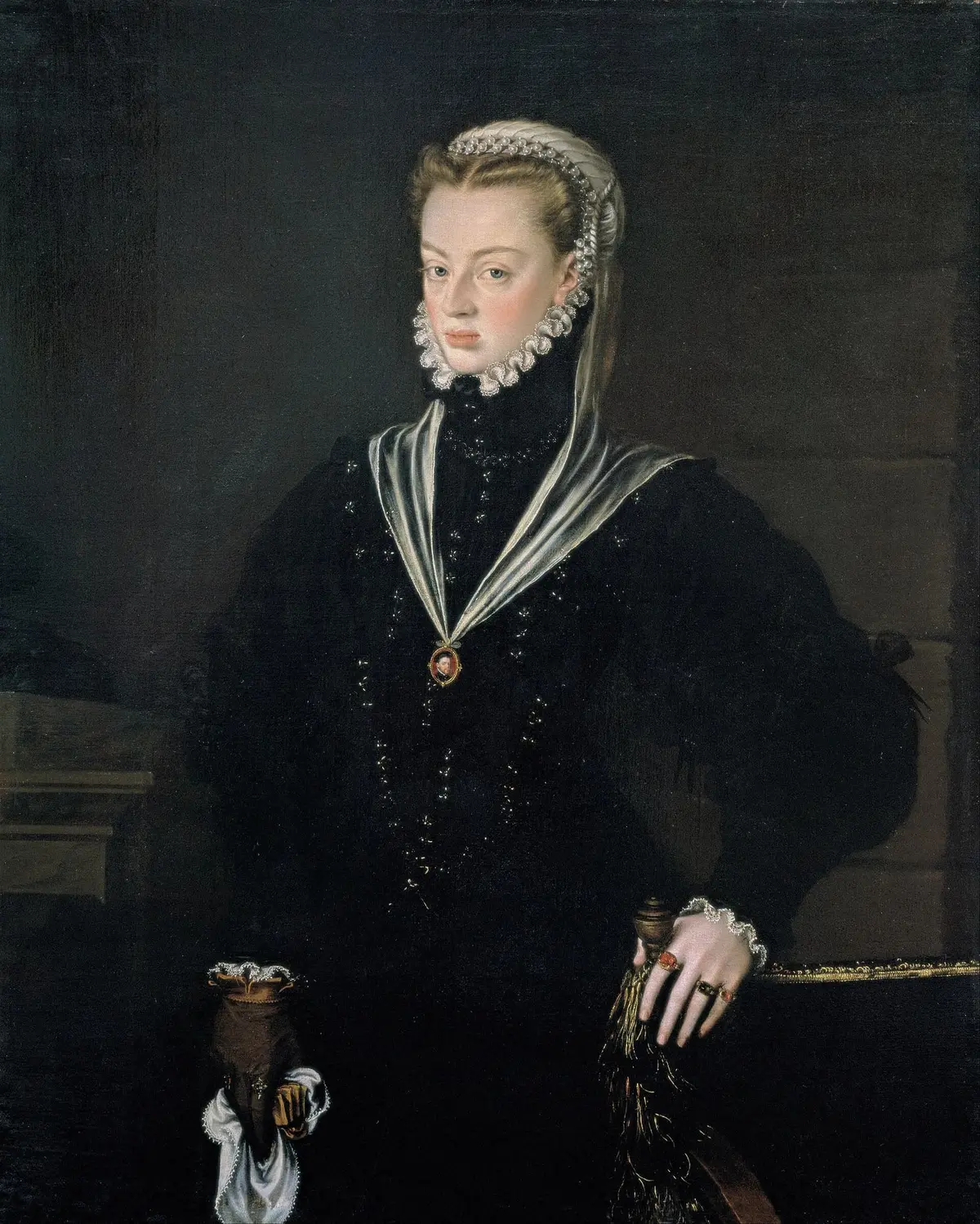
Juana of Austria (1535–1573), daughter of Emperor Charles V and sister of King Philip II of Spain, was widowed at 19 and ruled Spain as regent from 1554 to 1559. She asked to join the Society of Jesus, and after much hesitation St. Ignatius and his advisers secretly admitted her under a male pseudonym, as a scholastic with simple vows. She remained a Jesuit until her death, the only woman ever to do so. She also founded the convent of the Descalzas Reales in Madrid.
Key takeaways
- Juana was a Habsburg princess, daughter of Charles V and sister of Philip II.
- Widowed at 19, she governed Spain as regent from 1554 to 1559.
- She was secretly admitted to the Society of Jesus in 1554 under a male pseudonym.
- She kept her vows until her death in 1573, the only woman Jesuit.
- An earlier attempt by Isabel Roser to found a women's branch had ended in 1547.
The Jesuits are an order of men. Yet for nearly twenty years in the 16th century, one member of the Society of Jesus was a woman, and not just any woman: a Habsburg princess who governed Spain. Jesuit historian Fr. John Padberg called it a “secret, perilous project” in a Company magazine article. Here is the story of Juana of Austria.
An Earlier Experiment: Isabel Roser
St. Ignatius had many devoted women friends and benefactors. One of the most important was Isabel Roser, a noblewoman of Barcelona who had supported him when he was a poor student. After her husband died, she came to Rome and asked to make vows under his direction. In 1545, at the direction of Pope Paul III, Roser and two companions pronounced vows as something like a women’s branch of the Society.
It did not work. Ignatius found that the spiritual direction of the women consumed too much of the small Society’s time, and disputes arose over money. In 1547 he asked the pope to release them and to exempt the Society from ever having to govern communities of women.
A Princess With an Ambition
Juana of Austria was born in Madrid in 1535, daughter of Emperor Charles V and Empress Isabella of Portugal. In 1552, at 17, she married João Manuel, heir to the throne of Portugal. Within two years he was dead. Weeks later she gave birth to their son, the future King Sebastian of Portugal.
Back in Spain, Juana had a gift for governing. When her brother Philip II went to England to marry Queen Mary Tudor, he named her regent of Spain. From 1554 to 1559 she ruled the country.
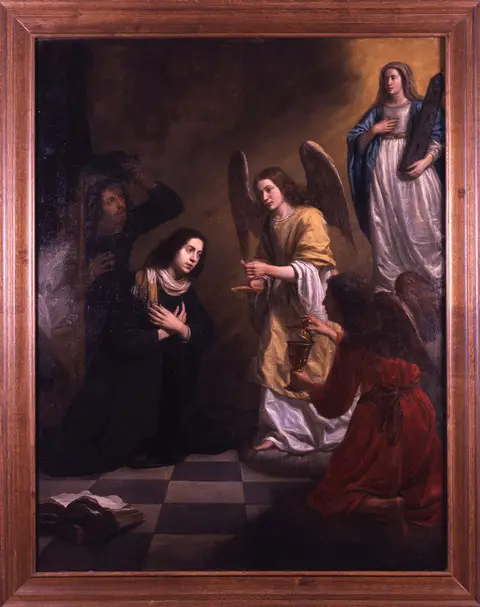
Juana had another ambition: she wanted to be a Jesuit. Telling none of her family, she confided in St. Francis Borgia, a former duke who had become one of the leading Jesuits in Spain.
A Dangerous Request
The idea was full of danger for the young Society. Her father the emperor and her brother the king might be furious. The pope had already freed the Jesuits from responsibility for women. Yet refusing the regent of Spain was hardly safer, and her devotion was sincere.
Ignatius and his closest advisers in Rome discussed it at length. In 1554 they found a solution: Juana would be admitted as a scholastic, with the simple vows that young Jesuits took, which could be dispensed if necessary. Her membership would be kept absolutely secret. In the correspondence she was referred to by a male pseudonym, Mateo Sánchez, and other code names.
A Jesuit Until Death
Juana kept her vows faithfully for the rest of her life. She supported the Jesuits generously and remained their protector at court. In 1559 she founded the monastery of the Descalzas Reales in Madrid for Poor Clare nuns, where she lived for many years in prayer. She died in 1573, aged 38, and is buried there.
She remains the only woman ever to die a member of the Society of Jesus.
What Her Story Shows
Juana’s story reveals the deep friendships between the early Jesuits and remarkable women, and how much the Society owed to their support. Centuries later, the Jesuits’ General Congregation 34 in 1995 issued a decree on the situation of women in Church and society, asking Jesuits to listen to women and to stand with them. Many women today share in the Jesuit mission as colleagues, spiritual directors and leaders of Ignatian ministries.
Prayer of Self-Offering (Suscipe of St. Ignatius)
Take, Lord, and receive all my liberty, my memory, my understanding, and my entire will, all I have and call my own. You have given all to me. To you, Lord, I return it. Everything is yours; do with it what you will. Give me only your love and your grace. That is enough for me. Amen.
Continue Reading
Read the life of St. Ignatius of Loyola, learn who the Jesuits are, or explore Ignatian spirituality.
Frequently asked questions
Were there ever women Jesuits?
The Society of Jesus is an order of men. Two exceptions occurred in its first years. Isabel Roser and two companions made vows in 1545, but Ignatius had them released in 1547. Juana of Austria was secretly admitted in 1554 and remained a Jesuit until her death.
Why was Juana's membership kept secret?
Admitting a woman, and a royal one, was dangerous for the young Society. Her father and brother might have objected, and the Constitutions did not provide for women. Only a few Jesuits knew.
What is the Descalzas Reales?
A monastery of Poor Clare nuns in Madrid founded by Juana in 1559, where she lived and is buried. Its museum holds a famous collection of religious art.
Sources
- John W. Padberg, SJ, "Secret, Perilous Project: A Woman Jesuit," Company magazine (Fall 1999)
- Hugo Rahner, SJ, Saint Ignatius Loyola, Letters to Women (1960)
- John W. O'Malley, SJ, The First Jesuits (1993)