Fr. Frank Browne: The Jesuit Who Photographed the Titanic
Quick answer
Fr. Francis (Frank) Browne, SJ (1880–1960), was an Irish Jesuit and photographer. As a Jesuit student in April 1912, he sailed on the Titanic's first leg from Southampton via Cherbourg to Queenstown (Cobh), taking many of the last photographs of the ship and its passengers. Offered a paid passage to New York, he asked his superior's permission and was told to get off the ship. He later served as a decorated army chaplain in World War I and left some 42,000 photographs, now recognized as a remarkable record of Ireland and beyond.
Key takeaways
- Browne sailed on the Titanic from Southampton to Queenstown, Ireland, on April 10–11, 1912.
- His photographs are among the last taken aboard the ship.
- His Jesuit superior refused permission for him to continue to New York.
- He served as a chaplain in World War I and was decorated for bravery.
- His archive of about 42,000 negatives was rediscovered in 1985.
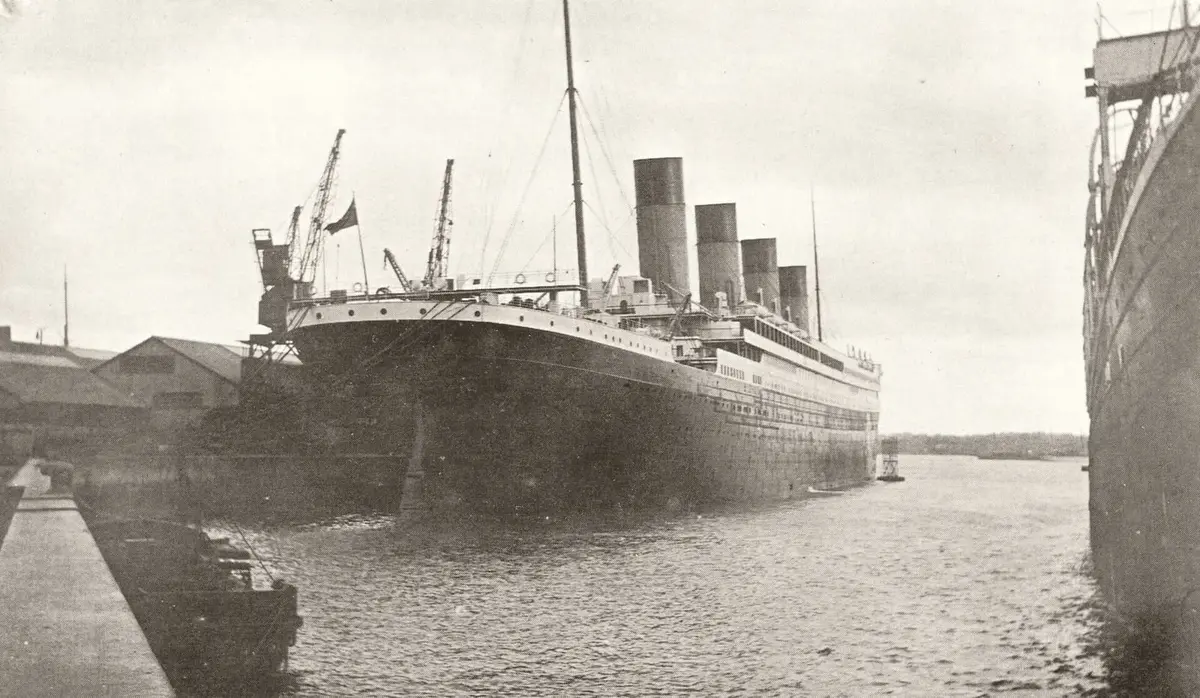
Some of the most famous photographs of the Titanic were taken by a young Irish Jesuit: children playing on deck, passengers strolling the promenade, the gymnasium, the reading room, and the last picture of Captain Edward Smith looking down from the bridge. Their photographer, Frank Browne, left the ship the day before she sailed into the Atlantic. Company magazine called his escape a lesson in obedience.
A Ticket From His Uncle
Francis Browne was born in Cork in 1880, the youngest of eight children. His mother died a few days after his birth and his father when he was a boy, so his uncle, Robert Browne, Bishop of Cloyne, became his guardian. After school with the Jesuits, he entered the Society in 1897.
In April 1912, while teaching at Belvedere College in Dublin, the young Jesuit received an unusual gift from his uncle: a ticket for the first leg of the maiden voyage of the RMS Titanic, from Southampton to Cherbourg, France, and on to Queenstown (Cobh), Ireland.
Aboard the Titanic
On April 10, 1912, Browne boarded with his camera. Over the next day he photographed everything he could: the decks, the dining saloon, his own cabin, crew members and fellow passengers. Many of these are the only photographs ever taken of the ship’s interior and passengers at sea.
He became friendly with a wealthy American couple, who offered to pay for him to continue the voyage to New York. Browne telegraphed his Jesuit provincial in Dublin to ask permission. The reply, as the story is told, was short: “GET OFF THAT SHIP — PROVINCIAL.” He disembarked at Queenstown on April 11.
Three days later, on the night of April 14–15, the Titanic struck an iceberg and sank. More than 1,500 people died. Browne later called it “the only time holy obedience saved a man’s life.” His photographs appeared in newspapers around the world.
Chaplain in the Great War
Browne was ordained a priest in 1915 and became a chaplain with the Irish Guards in World War I. He served at the Somme and in Flanders, was wounded several times and was decorated with the Military Cross and the Croix de Guerre. One of his friends at the front was Fr. Willie Doyle, SJ, a heroic chaplain killed in 1917 while helping wounded soldiers.
42,000 Photographs
After the war Browne worked in parishes and gave retreats and parish missions across Ireland, always with his camera. He photographed cottages and castles, farmers and fishermen, churches and schools, as well as his travels to Australia and elsewhere. He left about 42,000 negatives. He died in 1960.
His photographs lay forgotten in a trunk until 1985, when Fr. Eddie O’Donnell, SJ, discovered them. Restored and published, they have been shown in major exhibitions in Paris, Tokyo and Melbourne and are now considered one of the great documentary archives of 20th-century Ireland, including the life of the Irish Jesuits themselves, from novices at Emo Court to the old boys of Clongowes Wood College.
Obedience and Providence
The vow of obedience is central to Jesuit life (see How to Become a Jesuit). Browne’s story is a vivid, if unusual, illustration of a truth Christians have always believed: that God’s providence works through ordinary circumstances, even an inconvenient telegram (Romans 8:28).
Prayer for Those Lost at Sea (Original Prayer)
Lord Jesus, You calmed the storm on the Sea of Galilee. Remember all who have perished at sea, and those who mourn them. Grant them eternal rest, protect all who travel and work on the waters, and bring us safely to the harbor of heaven. Amen.
Continue Reading
Read about famous Jesuit alumni, the Jesuits of Hiroshima, or who the Jesuits are.
Frequently asked questions
Why did Fr. Browne get off the Titanic?
An American couple offered to pay for him to sail on to New York. He telegraphed his provincial superior for permission, and the reply came back, as the story is told, "Get off that ship." He disembarked at Queenstown, the ship's last stop before the disaster.
Where are Fr. Browne's photographs?
The negatives are held by the Irish Jesuits. They were found in a trunk in 1985 by Fr. Eddie O'Donnell, SJ, who restored and published them in many books.
Was Fr. Browne a priest when he sailed on the Titanic?
No. He was a Jesuit seminarian teaching at Belvedere College. He was ordained in 1915.
Sources
- "Fr. Browne's Jesuit Ireland," Company magazine (Winter 2007–2008)
- E. E. O'Donnell, SJ, Father Browne's Titanic Album (Wolfhound Press, 1997)
- Father Browne Collection