Sacrosanctum Concilium: What Vatican II Really Said About the Liturgy
Quick answer
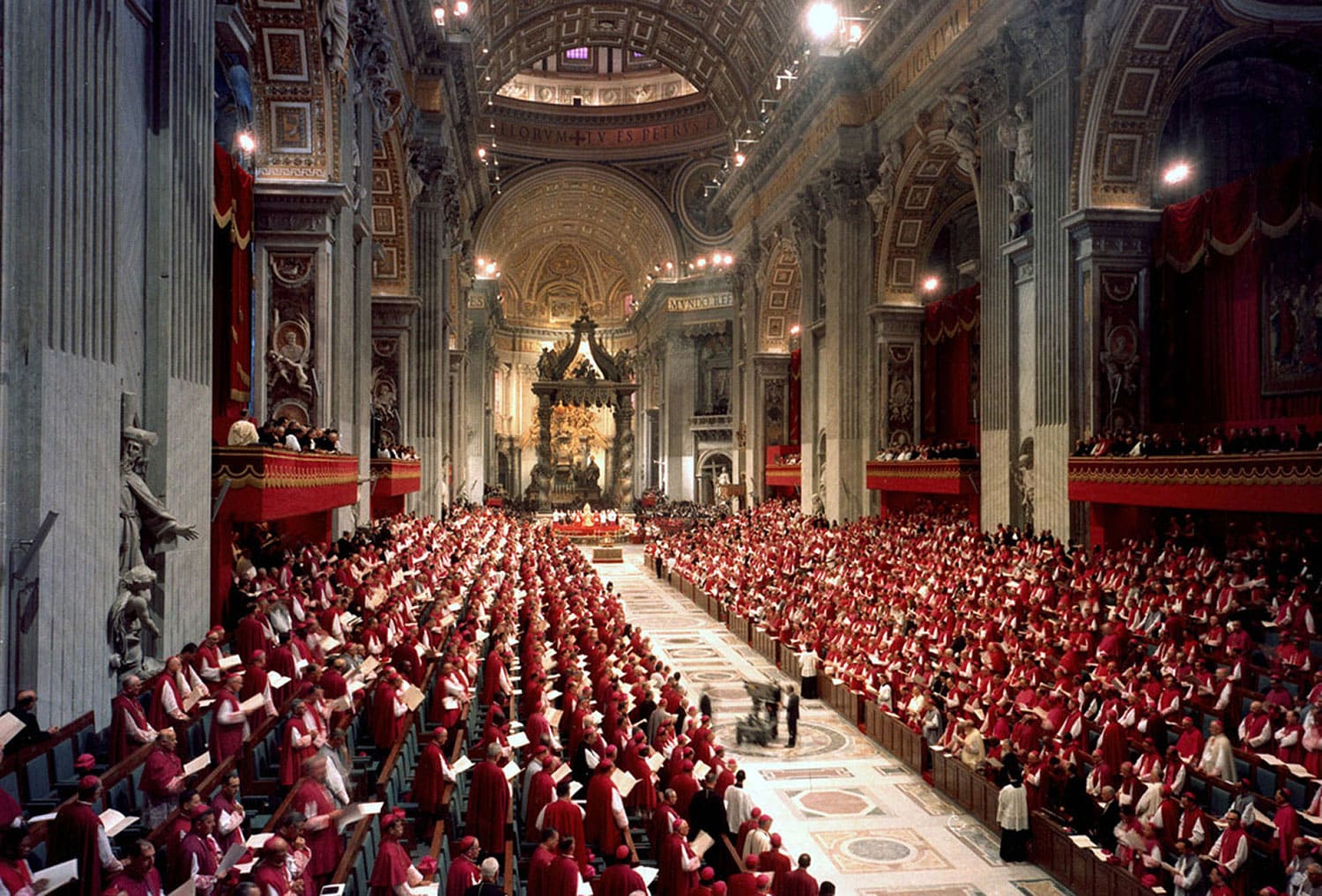
Sacrosanctum Concilium, approved on December 4, 1963, was the first document of the Second Vatican Council. It calls the liturgy the summit and source of the Church's life and asks for the full, conscious and active participation of the faithful. It opened the Scriptures more richly, allowed wider use of the vernacular, and asked that Latin be preserved and Gregorian chant given pride of place.
Key takeaways
- It was approved by the bishops 2,147 votes to 4 and promulgated by Pope St. Paul VI on December 4, 1963.
- It describes the liturgy as the summit toward which the Church's activity is directed and the fount from which her power flows (no. 10).
- Its key aim was the full, conscious and active participation of all the faithful (no. 14).
- It allowed the local language while asking that Latin be kept and chant have pride of place (nos. 36, 54, 116).
Many debates about the Mass come back to one document: the Second Vatican Council’s constitution on the liturgy. Few people have read it. It is shorter, and more balanced, than many expect.
The Council’s First Document
The bishops of the world approved Sacrosanctum Concilium (“This Sacred Council”) by a vote of 2,147 to 4, and Pope St. Paul VI promulgated it on December 4, 1963. It was the first of the Council’s sixteen documents.
Why the Liturgy Matters
The Council teaches that Christ is present in the liturgy in several ways: in the priest, in the Word proclaimed, in the assembly at prayer, and above all in the Eucharist (no. 7).
It calls the liturgy “the summit toward which the activity of the Church is directed” and “the font from which all her power flows” (no. 10). The Catechism repeats this teaching (CCC 1324).
Full, Conscious and Active Participation
The heart of the document is its desire that “all the faithful should be led to that fully conscious, and active participation in liturgical celebrations” which the liturgy itself demands (no. 14). To help this happen, it asked that:
- the rites be marked by noble simplicity and be easier to understand (no. 34);
- the people take part through responses, songs, actions, gestures and silence (no. 30);
- pastors teach the faithful about the liturgy (no. 19).
The Scriptures Opened
“The treasures of the bible are to be opened up more lavishly” (no. 51), the Council said. The result was the new Lectionary of 1969, with a three-year cycle of Sunday readings, so that Catholics would hear far more of the Bible at Mass. The Council also restored the homily as a part of the liturgy (no. 52) and the prayer of the faithful (no. 53).
Latin and the Vernacular
The document holds two things together:
- “The use of the Latin language is to be preserved in the Latin rites” (no. 36), and the faithful should be able to say or sing together in Latin the parts of the Mass that belong to them (no. 54).
- The local language may be given a wider place, especially in the readings and some prayers, with the approval of the bishops (nos. 36, 54).
Music and Art
The Council praised sacred music as a treasure of inestimable value (no. 112). It said that the Church acknowledges Gregorian chant as specially suited to the Roman liturgy, so that “other things being equal, it should be given pride of place” (no. 116). It encouraged choirs, the pipe organ, and sacred art that is noble and beautiful (nos. 114, 120, 122-124).
What Happened Next
A commission called the Consilium oversaw the implementation. The reformed Missal of St. Paul VI appeared in 1970, followed by the new Liturgy of the Hours. The reform brought great blessings, especially a greater love of Scripture, and also much debate about how faithfully the Council’s balanced vision was put into practice. Pope Benedict XVI often urged reading the Council in continuity with the Church’s tradition.
A Prayer for Active Participation (Original Prayer)
Lord, at every Mass let me not only watch, but pray. Open my ears to Your Word, my lips to sing Your praise, and my heart to offer myself with Christ. Amen.
Continue Reading
Read Pope Benedict XVI on the liturgy, the history of the Catholic Mass, and our guide to the Traditional Latin Mass.
Frequently asked questions
Did Vatican II abolish the Latin Mass?
No. Sacrosanctum Concilium said that the use of Latin was to be preserved in the Latin rites, while allowing a wider use of the vernacular. The reformed Missal of 1970 could itself be celebrated in Latin.
What does active participation mean?
It includes outward actions, such as responses, songs and gestures, and also inner attention and prayer. It does not mean that everyone must have a job, but that everyone prays the liturgy, not merely watches it.
Did the Council require Mass facing the people?
The constitution does not mention it. Celebration facing the people became widespread in the years after the Council.
Sources
- Second Vatican Council, Sacrosanctum Concilium (1963)
- Catechism of the Catholic Church 1066-1075, 1088, 1324