Jesse Tree: 24 Daily Readings and Symbols for Advent (2026 Guide)
Quick answer
A Jesse Tree is a Catholic Advent devotion that walks through salvation history with one Bible reading and one symbol each day, from Creation to the birth of Jesus. It is named after Jesse, father of King David, from Isaiah 11:1. Families usually begin on December 1 and hang the last ornament on Christmas Eve.
Key takeaways
- The Jesse Tree takes its name from Isaiah 11:1, the shoot that sprouts from the stump of Jesse, fulfilled in Jesus, the Son of David.
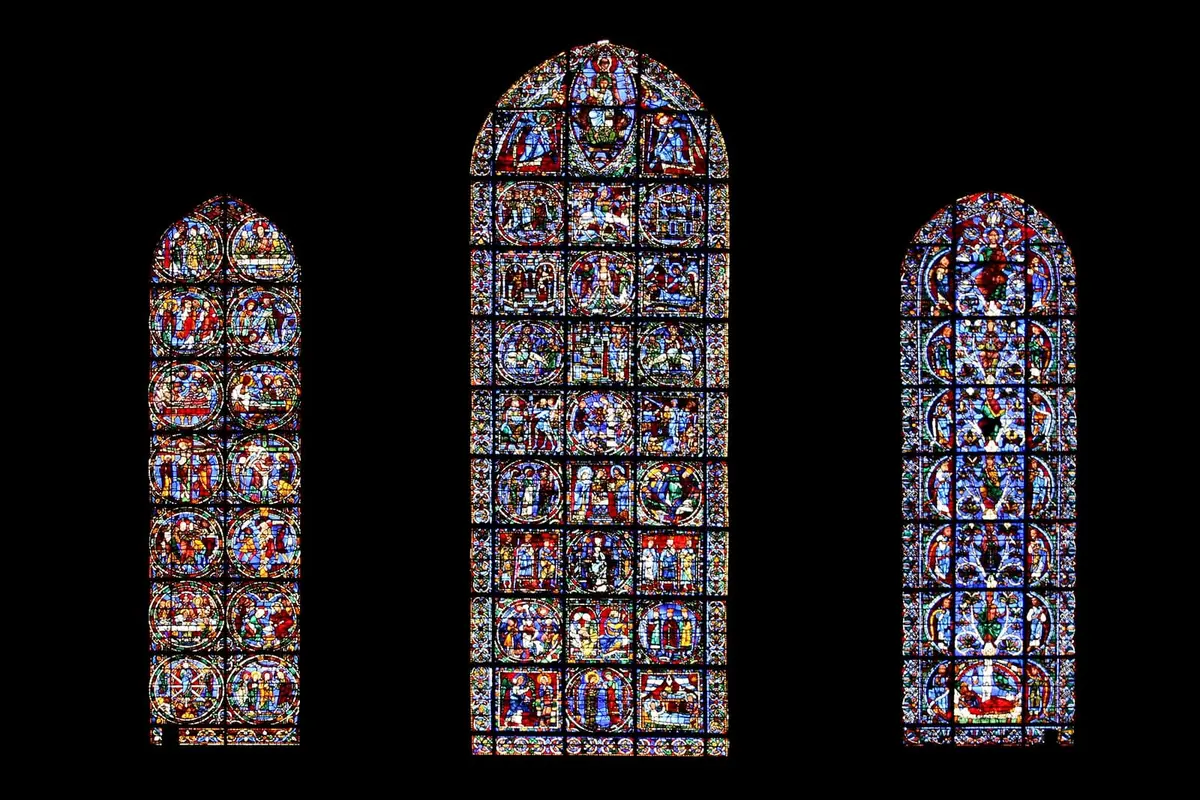
- It grew from the medieval Tree of Jesse in art and stained glass, such as the twelfth-century window at Chartres Cathedral.
- It is a private devotion, so reading lists vary; one common sequence has 24 readings from December 1 to Christmas Eve.
- Each evening: read the passage, hang the ornament, and pray a short prayer; it takes about ten minutes.
- It suits families, grandparents praying with grandchildren by phone, and adults praying alone as an Advent Scripture plan.
A Jesse Tree is an Advent devotion that tells the story of salvation, from Creation to the birth of Christ, through a short Bible reading and a simple symbol each day. Families hang one ornament a day on a small tree or branch, and by Christmas Eve the tree holds the whole family line of Jesus. The name comes from Jesse, the father of King David.
It is one of the easiest ways to keep Advent prayerful at home. It takes about ten minutes a day, needs no special training, and works as well for a grandparent praying alone as for a table full of children.
What Is a Jesse Tree?
The devotion takes its name from a prophecy of Isaiah: “But a shoot shall sprout from the stump of Jesse, and from his roots a bud shall blossom” (Isaiah 11:1). Jesse was the father of David (1 Samuel 16). By the prophet’s time, David’s royal family looked like a tree cut down to a stump. Isaiah promised that God would bring new life from it.
Christians have always read this promise as fulfilled in Jesus, the Son of David. St. Matthew opens his Gospel with “the book of the genealogy of Jesus Christ, the son of David, the son of Abraham” (Matthew 1:1), and St. Luke traces the line back to Adam (Luke 3:23-38). St. Paul quotes Isaiah’s “root of Jesse” in Romans 15:12, and in Revelation 22:16 Jesus calls himself “the root and offspring of David.”
The Catechism explains why this long preparation matters. God prepared the coming of his Son over centuries, and in Advent the Church makes present that ancient expectation of the Messiah (CCC 522, 524). The Jesse Tree lets a family walk through those centuries in four weeks.
Where the Jesse Tree Comes From
Long before anyone hung ornaments, artists drew the “Tree of Jesse.” Medieval painters, illuminators and glassmakers showed Jesse lying asleep, with a vine or tree rising from him. Kings and prophets sit in its branches, and at the top are the Virgin Mary and Christ. One of the best-known examples is the twelfth-century Jesse window at Chartres Cathedral in France.
The home Advent devotion is much newer. It grew popular in the twentieth century, especially in parishes, schools and Catholic homes. It is a private devotion, not part of the liturgy, so there is no single official list of readings or symbols.
The liturgy itself keeps the image alive. On December 19 the Church sings the O Antiphon “O Root of Jesse,” one of the seven great antiphons of the last days of Advent.
How to Make a Jesse Tree at Home
You don’t need anything expensive. Choose what suits your home:
- Pick a tree. A small artificial tree, a bare branch in a vase or jar of stones, or a tree drawn on poster paper all work.
- Make the ornaments. Draw or print each symbol on a paper circle, or use felt, wood or clay. Write the Bible reference on the back.
- Set a time. After supper or at bedtime works well. Light the Advent wreath first if you have one.
- Read, hang, pray. Read the passage (or tell the story in your own words for small children), hang the ornament, and close with the short prayer below.
- Catch up gently. If you miss a day, read two stories the next evening. The point is prayer, not perfection.
Advent 2026 begins on Sunday, November 29 (see when Advent starts in 2026). Many families begin the Jesse Tree on December 1 so the 24 readings end on Christmas Eve. Others start on the First Sunday of Advent and double up a day or two.
Jesse Tree Readings and Symbols: 24 Days of Advent
Sequences vary from book to book and parish to parish. Here is one common sequence, following the history of salvation in order. Read the whole passage with older readers, or just a few verses with children.
| Day | Story | Reading | Symbol |
|---|---|---|---|
| 1 | Creation | Genesis 1:1–2:3 | Sun and earth |
| 2 | Adam and Eve | Genesis 3 | Apple and serpent |
| 3 | Noah | Genesis 6–9 | Ark and rainbow |
| 4 | Abraham | Genesis 12:1-7; 15:1-6 | Stars in the sky |
| 5 | Isaac | Genesis 22:1-19 | Ram |
| 6 | Jacob | Genesis 28:10-22 | Ladder |
| 7 | Joseph and his brothers | Genesis 37; 45 | Colored coat |
| 8 | Moses | Exodus 3:1-15 | Burning bush |
| 9 | The Ten Commandments | Exodus 20:1-17 | Two stone tablets |
| 10 | Ruth | Ruth 1–4 | Sheaf of wheat |
| 11 | Jesse | Isaiah 11:1-10 | Stump with a green shoot |
| 12 | David | 1 Samuel 16:1-13 | Shepherd’s harp |
| 13 | Solomon | 1 Kings 3:5-14 | Temple |
| 14 | Elijah | 1 Kings 18:20-39 | Altar with fire |
| 15 | Isaiah | Isaiah 6:1-8 | Burning coal |
| 16 | Jonah | Jonah 1–3 | Great fish |
| 17 | Daniel | Daniel 6 | Lion |
| 18 | Micah | Micah 5 | Little town of Bethlehem |
| 19 | Zechariah and Elizabeth | Luke 1:5-25 | Incense burner |
| 20 | John the Baptist | Luke 1:57-80 | Shell for baptism |
| 21 | The Annunciation | Luke 1:26-38 | White lily |
| 22 | The Visitation | Luke 1:39-56 | Two hands joined |
| 23 | St. Joseph’s dream | Matthew 1:18-25 | Carpenter’s square |
| 24 | The Nativity | Luke 2:1-20 | Manger and star |
A few notes help the stories hang together. Ruth was David’s great-grandmother (Ruth 4:17), so day 10 leads straight into Jesse and David. Jesus himself pointed to Jonah as a sign of his rising from the dead (Matthew 12:40). Micah named Bethlehem, David’s town, as the birthplace of the coming ruler (Matthew 2:6 quotes him). For more on day 12, see our article on King David in the Bible.
A Short Prayer to Close Each Day
Pray this after hanging each ornament. Children can learn it by heart within a week.
Daily Jesse Tree Prayer (Original Prayer)
Lord God, you kept your promises
through every age and every family.
As we remember today’s story,
make our hearts ready for Jesus,
the shoot from the stump of Jesse.
Come, Lord Jesus, do not delay.
Amen.
Prayer on the Day of Jesse (Original Prayer)
Faithful God,
when your people’s hopes looked like a dead stump,
you made new life grow from Jesse’s root.
Where my life feels bare and cut down,
let your Son take root and blossom.
Amen.
O Root of Jesse (December 19 Gospel Acclamation)
O Root of Jesse’s stem,
sign of God’s love for all his people:
come to save us without delay!
Amen.
Tips for Praying the Jesse Tree with Children and Grandchildren
- Let them hang the ornament. Rotate the job so each child has a turn.
- Ask one question. “Who trusted God today?” or “What did God promise?” keeps it simple.
- Retell, don’t lecture. For little ones, tell the story in three or four sentences and save the full reading for adults.
- Mail it. Grandparents who live far away can send the ornaments ahead and pray by phone or video call each evening.
- Join it to other prayers. The Jesse Tree pairs well with Advent wreath prayers, our Advent prayers for each day, and from November 30 the St. Andrew Christmas novena.
The Catechism calls the Christian family “the first place of education in prayer” (CCC 2685). A few minutes around a little tree each night can be exactly that.
Praying the Jesse Tree Alone
The Jesse Tree is not only for children. Many older Catholics pray it on their own as a simple Advent Scripture plan. Read the full passage slowly, sit quietly for a minute, and ask: “Where is God keeping his promise to me?” Write one line in a notebook. By Christmas you will have walked the whole Old Testament road to Bethlehem.
For more ideas on keeping faith alive at home this season, see family faith at home.
Frequently asked questions
When do you start the Jesse Tree?
Most families start on December 1 so that the 24 readings end on Christmas Eve. Others begin on the First Sunday of Advent, which in 2026 is November 29, and either add two extra readings or double up on a couple of evenings. Either way is fine, because the Jesse Tree is a private devotion with no fixed calendar.
Is the Jesse Tree Catholic?
Yes. Catholics, Anglicans and many Protestants use it. It is not part of the official liturgy, but it rests on Scripture (Isaiah 11:1, Matthew 1) and on a long Christian tradition of the Tree of Jesse in art. The Church's own Advent liturgy sings 'O Root of Jesse' on December 19, so the devotion fits Advent well.
What do you put on a Jesse Tree?
You hang one ornament a day, each with a symbol of the day's Bible story: a rainbow for Noah, a ladder for Jacob, a harp for David, a lily for the Annunciation and a manger for the Nativity. Ornaments can be paper circles, felt, wood or clay, with the Scripture reference written on the back.
What is the difference between a Jesse Tree and an Advent wreath?
The Advent wreath marks the four Sundays of Advent with candles, one lit each week. The Jesse Tree marks each day with a Bible story and an ornament. They work well together: many families light the wreath first, then read the day's Jesse Tree story and hang its symbol.
Sources
- Isaiah 11:1-10 (NABRE)
- Matthew 1:1-25 (NABRE)
- Luke 1-3 (NABRE)
- Catechism of the Catholic Church 522, 524, 2685