The Ratio Studiorum: The Jesuit Plan of Studies of 1599
Quick answer
The Ratio Studiorum, in full Ratio atque Institutio Studiorum Societatis Iesu, was the plan of studies the Jesuits published in 1599 after fifteen years of drafts and testing under Superior General Claudio Acquaviva. It organized Jesuit schools around the classical languages and literature, followed by philosophy and theology, and set out methods such as the prelection, repetition, disputation and friendly competition. It guided hundreds of Jesuit schools for two centuries and still shapes classical and Jesuit education.
Key takeaways
- The Ratio Studiorum was published in 1599 under Superior General Claudio Acquaviva.
- It was tested in drafts of 1586 and 1591 before the final version.
- The lower school taught grammar, humanities and rhetoric in Latin and Greek.
- Its methods included the prelection, repetition, disputation and emulation.
- It aimed at eloquentia perfecta, wisdom joined to virtuous, persuasive speech.
When Jesuit Fr. Claude Pavur entered Jesuit High School in New Orleans in 1965, he felt a thrill reading the course catalog: Latin, Greek, English, algebra and religion, laid out in progressive order. Years later he translated the document behind that order, the Ratio Studiorum. In Company magazine he joked that he might have had an “inborn disposition” toward it. The 1599 plan of studies is one of the most influential documents in the history of education.
Why the Jesuits Needed a Plan
After the first Jesuit school opened in Messina in 1548, the Society spread rapidly. Within fifty years it ran hundreds of schools from Portugal to Poland, India and Peru. Each school was improvising. Superiors General wanted a common standard of excellence, so that a student in Vienna and one in Lima would receive the same solid formation. (Read the full story of Jesuit education.)
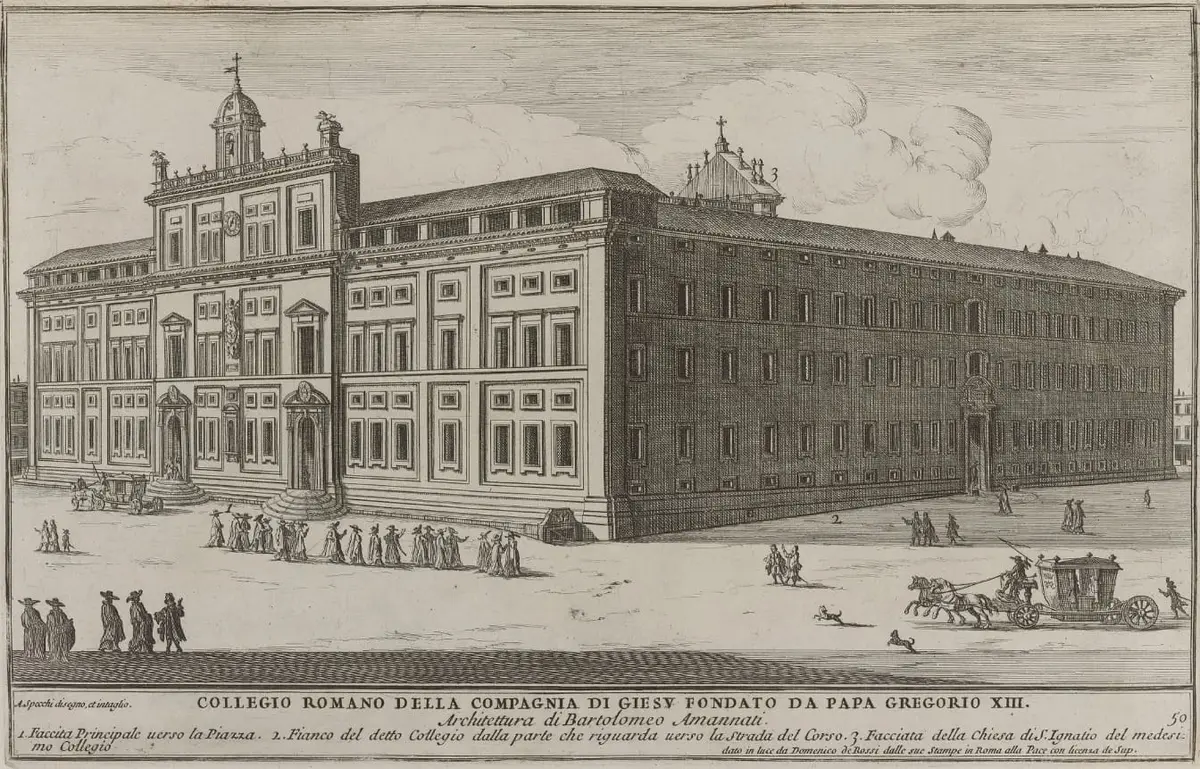
Under Fr. Claudio Acquaviva, the fifth Superior General, committees drew on the experience of the best schools, especially the Roman College. Drafts were sent to provinces for testing in 1586 and 1591, and the final Ratio atque Institutio Studiorum Societatis Iesu was published in 1599.
What It Contained
The Ratio is not a philosophy of education but a practical handbook. It contains rules for every role: the provincial, the rector, the prefect of studies, and the teachers of each class.
The Lower Studies
The heart of a Jesuit college was the study of the classics, in roughly five classes:
- Lower grammar
- Middle grammar
- Upper grammar
- Humanities, reading Cicero, Virgil, Horace and the Greek authors.
- Rhetoric, learning to write and speak with power and grace.
The goal was eloquentia perfecta: a person of learning and virtue who could speak and write well for the good of the Church and society.
The Higher Studies
Students who continued studied philosophy, including logic, natural science, mathematics and ethics, following Aristotle, and then theology, following St. Thomas Aquinas, with Scripture and Hebrew.
Teaching Methods
The Ratio’s methods were ahead of their time:
- The prelection. The teacher previewed each new text, explaining its meaning, background and difficulties before students studied it.
- Repetition and review. Daily, weekly and monthly reviews fixed learning in memory.
- Disputation. Students defended and attacked propositions, learning to reason.
- Emulation. Classes were divided into rival teams, sometimes called “Romans” and “Carthaginians,” competing in friendly contests.
- Theater. Jesuit schools staged plays and pageants, forming confidence and eloquence.
- Care for the student. Teachers were to know their students, pray for them and lead them to virtue as well as learning.
Faith and Learning Together
The Ratio opens with a reminder that Jesuit schools exist to lead students to know and love God. Teachers were to pray for their pupils, encourage the sacraments and devotion to Mary, and give an example of a good life. Learning was never separated from faith.
Its Legacy
The Ratio guided Jesuit schools until the Suppression of 1773. A revised version appeared in 1832 after the restoration. Many of its features, a sequenced curriculum, regular review, class competitions and the school play, became normal in schools everywhere. Today, many classical Catholic schools draw on it again. The Jesuits’ own 1993 document, Ignatian Pedagogy, translates its spirit into five steps: context, experience, reflection, action and evaluation.
Prayer Before Study (Traditional, attributed to St. Thomas Aquinas)
Creator of all things, true source of light and wisdom, graciously let a ray of Your brilliance penetrate into the darkness of my understanding. Give me a sharp sense of understanding, a retentive memory, and the ability to grasp things correctly and fundamentally. Through Christ our Lord. Amen.
Continue Reading
Read about Jesuit education, the Jesuit astronomers, or the life of St. Robert Bellarmine, who taught at the Roman College.
Frequently asked questions
What does Ratio Studiorum mean?
Latin for "Plan of Studies." The full title means "The Plan and Method of Studies of the Society of Jesus."
Is the Ratio Studiorum still used?
Not as a rulebook, since modern schools follow national curricula, but its principles, careful sequence, active learning, review and care for each student, still inspire Jesuit and classical schools. A 1993 document, Ignatian Pedagogy, adapts them for today.
Who wrote the Ratio Studiorum?
It was the work of committees of Jesuit teachers from many countries, based on decades of experience in schools such as the Roman College, and approved by Fr. Claudio Acquaviva.
Sources
- The Ratio Studiorum: The Official Plan for Jesuit Education, trans. Claude Pavur, SJ (Institute of Jesuit Sources, 2005)
- John W. O'Malley, SJ, The First Jesuits (1993)
- Ignatian Pedagogy, A Practical Approach (International Commission on the Apostolate of Jesuit Education, 1993)
- Claude Pavur, SJ, "A Masterful Plan," Company magazine (Fall 2005)