The Jesuits in Colonial Maryland: The Ark, the Dove and St. Mary's City
Quick answer
In March 1634 about 150 English settlers arrived in Maryland aboard the Ark and the Dove, sent by Cecil Calvert, Lord Baltimore, a Catholic. With them came two Jesuits, Fr. Andrew White and Fr. John Altham, who celebrated Mass on St. Clement's Island and helped found St. Mary's City. Maryland offered liberty of conscience to Christians at a time when Catholicism was outlawed in England. The Jesuits built the first Catholic chapel in English America and evangelized Native peoples. A brick Jesuit church built around 1667 at St. Mary's City has been excavated and reconstructed by archaeologists.
Key takeaways
- The Ark and the Dove reached Maryland in 1634 with two Jesuits aboard.
- Fr. Andrew White celebrated the first Mass in the English colonies on March 25, 1634.
- Lord Baltimore promised liberty of conscience to all Christians in Maryland.
- The Maryland Toleration Act of 1649 put religious freedom into law, though it was later repealed.
- Archaeologists have uncovered and rebuilt the 17th-century brick Jesuit chapel at St. Mary's City.
The year was 1634. Two small ships, the Ark and the Dove, sailed into the Chesapeake Bay after three stormy months on the Atlantic. On board were about 150 English settlers and two Jesuit priests. Their arrival would make Maryland, in the words of Company magazine, “the birthplace of the modern Catholic Church in the United States.”
A Refuge for Catholics
In England, Catholics could not vote, hold office or worship in public. Priests risked prison or execution, and several Jesuits had been martyred, among them St. Edmund Campion.
George Calvert, the first Lord Baltimore, was a Catholic convert who dreamed of a colony where Catholics could live in peace. His son Cecil Calvert received the charter for Maryland and sent the first expedition under his brother Leonard Calvert as governor. English Jesuits had supported the plan since 1629, hoping to minister to Catholic settlers and to evangelize Native Americans.
The First Mass
The Jesuits on board were Fr. Andrew White and Fr. John Altham, with a lay brother. On March 25, 1634, the feast of the Annunciation, the settlers landed on St. Clement’s Island in the Potomac River. Fr. White celebrated Mass, and they raised a large wooden cross. His account, the Relation of the Voyage unto Maryland, describes the journey and the first weeks of the colony.
Governor Calvert chose a site near a village of the Yaocomaco people, who agreed to share their homes and lands. The settlers named it St. Mary’s City.
Liberty of Conscience
Maryland was never a Catholic colony in the sense of Catholic rule. Most settlers were Protestants: Anglicans, Puritans and later Quakers. Lord Baltimore ordered that religion be a private matter and that all Christians be free to worship. In 1649 the colonial assembly passed the Maryland Toleration Act, one of the first laws in the English-speaking world protecting freedom of religion for Christians.
Missionaries to the Native Peoples
Fr. White learned the language of the Piscataway and wrote a catechism and grammar in it. In 1640 he baptized the Piscataway chief Kittamaquund and his family. In 1645, during the English Civil War, Protestant forces attacked St. Mary’s. Fr. White was sent back to England in chains and tried for being a priest. He was banished and died in England in 1656.
Later the Toleration Act was repealed, and Catholics in Maryland lost their rights. The Jesuits kept the faith alive on their farms and manors, celebrating Mass in private chapels, until the American Revolution brought religious freedom. One of their students, John Carroll, became the first Catholic bishop in the United States.
The Brick Chapel of St. Mary’s City
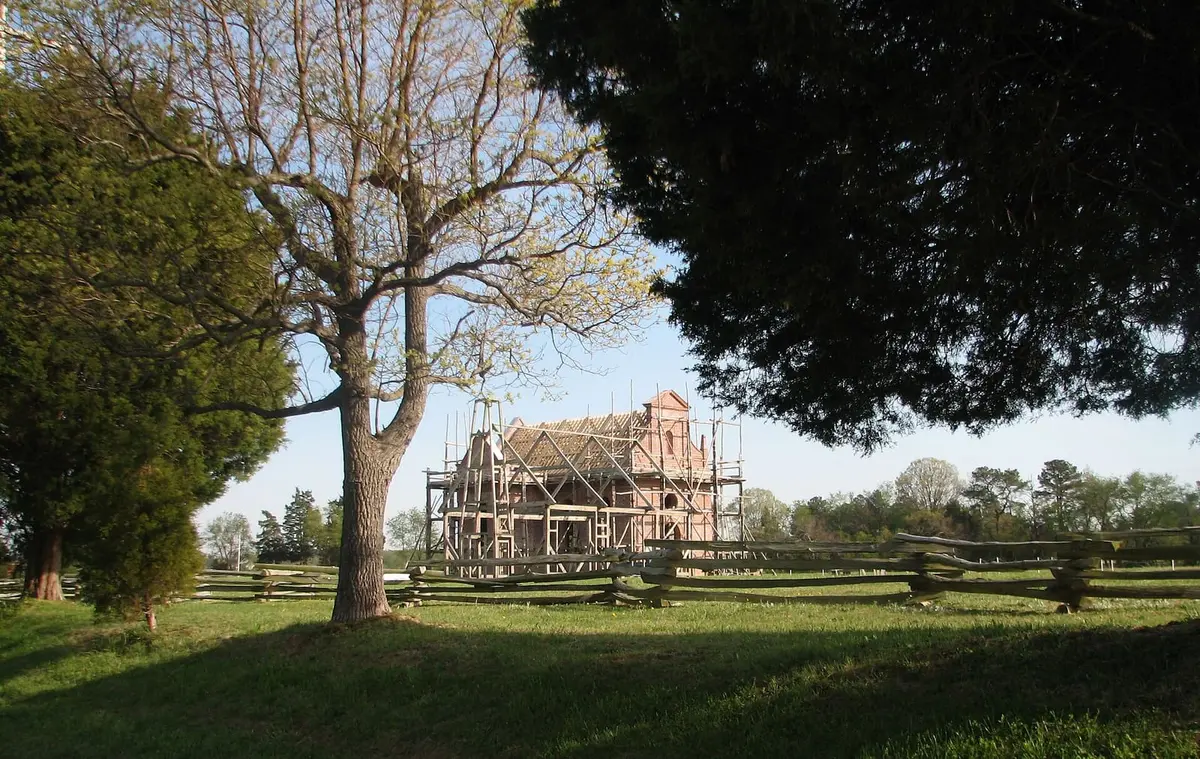
Around 1667 the Jesuits built a large brick chapel at St. Mary’s City, the first major Catholic church in English America. In 1704 the royal governor ordered it locked, and the Jesuits dismantled it. For centuries only its foundations lay hidden in a field.
Archaeologists at Historic St. Mary’s City uncovered those foundations in the 1980s and 1990s, finding pottery, buttons, religious medals and three lead coffins believed to hold members of the Calvert family. The chapel has since been reconstructed on its original site and can be visited today.
Prayer for Religious Freedom (Original Prayer)
Lord God, You gave us the freedom to seek You and to love You. We thank You for those who crossed the sea so that they might worship You in peace. Protect the freedom of conscience of every person, strengthen persecuted Christians throughout the world, and make us faithful witnesses to the Gospel. Amen.
Continue Reading
Read the story of the Jesuits in the United States, the life of St. Isaac Jogues, or Jesuit missions in the American West.
Frequently asked questions
Where was the first Catholic Mass in the English colonies?
On St. Clement's Island in the Potomac River, Maryland, on March 25, 1634, the feast of the Annunciation, celebrated by Jesuit Fr. Andrew White.
Was Maryland a Catholic colony?
It was founded by a Catholic proprietor as a refuge for English Catholics, but from the start most settlers were Protestants. Its founding principle was toleration for all Christians, not Catholic rule.
Who was Andrew White?
An English Jesuit (1579–1656), sometimes called the Apostle of Maryland. He wrote an account of the voyage, worked among the Piscataway people and composed a catechism in their language before being sent back to England in chains in 1645.
Sources
- "A Church's Foundation," Company magazine (Fall 1999)
- Andrew White, SJ, A Briefe Relation of the Voyage unto Maryland (1634)
- Historic St. Mary's City, archaeological reports on the Brick Chapel