The Chinese Rites Controversy Explained
Quick answer
The Chinese Rites controversy was a long dispute in the 17th and 18th centuries over whether Chinese converts could take part in traditional ceremonies honoring Confucius and their ancestors, and which Chinese words could be used for God. Jesuits following Matteo Ricci judged the rites to be civil and family customs compatible with the faith; Dominicans, Franciscans and others saw them as superstitious. Popes Clement XI (1715) and Benedict XIV (1742) forbade the rites, which badly harmed the China mission. In 1939 Pope Pius XII, after new study, allowed Catholics to take part in them as civil ceremonies.
Key takeaways
- The dispute began with Matteo Ricci's approach of adapting the Gospel to Chinese culture.
- It concerned ceremonies for Confucius and ancestors, and the Chinese names for God.
- Jesuits saw the rites as civil customs; other orders saw them as idolatry.
- Rome banned the rites in 1715 and 1742; the Kangxi Emperor then restricted missionaries.
- Pius XII permitted the rites as civil ceremonies in 1939.
Historian Liam Brockey wrote in Company magazine that Jesuits are “no strangers to controversy.” Over the centuries they argued about free will, poverty and politics. But apart from the events that led to their suppression, their bitterest struggle in early modern times was the Chinese Rites controversy, a debate that began in China and ended up involving popes, emperors and the leading philosophers of Europe.
How It Began
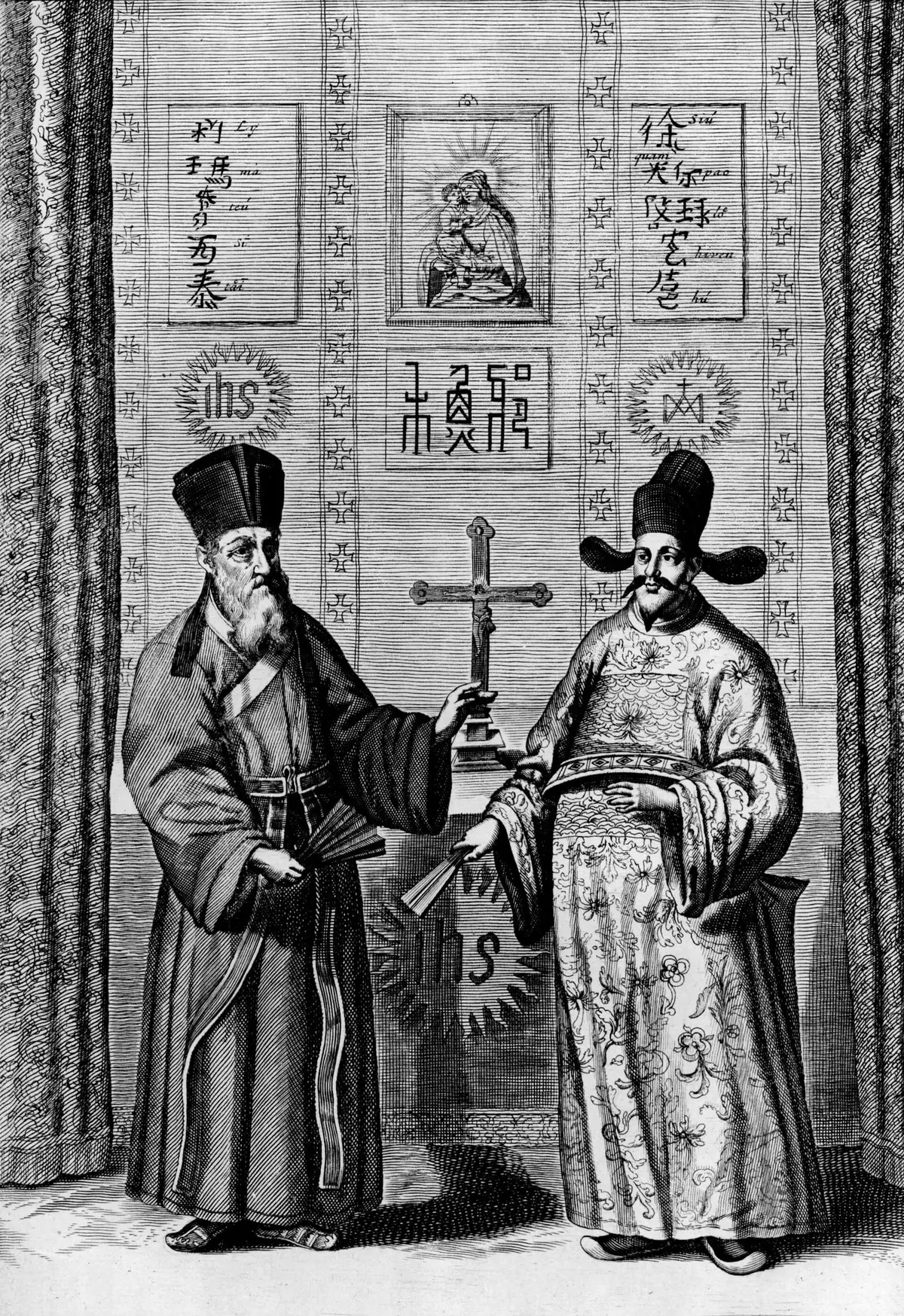
When Matteo Ricci entered China in 1583, he set out to win the respect of the mandarins, the educated ruling class. He studied the Confucian classics deeply and became convinced that ancient Chinese thought had known the one God and a high moral law. Christianity, he argued, could fulfill Confucian wisdom rather than destroy it.
That approach raised two practical questions:
- Words. Which Chinese terms could name God? Ricci used Tianzhu (“Lord of Heaven”) and also classical terms like Shangdi (“Lord on High”) and Tian (“Heaven”).
- Rites. Could converts keep taking part in ceremonies honoring Confucius and their ancestors, with bows, incense and offerings before ancestral tablets?
Ricci judged these rites to be civil and family customs, expressions of respect and gratitude, not worship of false gods. Forbidding them would cut converts off from their families and make it impossible for scholars to hold office.
The Opposition
Not everyone agreed. Some Jesuits had doubts, and Dominican and Franciscan missionaries who arrived in the 1630s, many working among poorer Chinese who practiced the rites with more popular religious beliefs, saw them as superstition and idolatry. They appealed to Rome.
Over the next century, Rome issued decisions that seemed to contradict one another, depending on how the question was presented. The dispute spread to Europe, where Jansenists and enemies of the Jesuits used it to attack them, and philosophers such as Leibniz and Voltaire joined the debate about Chinese thought.
The Papal Bans
In 1704 and again in 1715, with the bull Ex illa die, Pope Clement XI forbade the rites and the use of Tian and Shangdi for God. Missionaries had to swear an oath to obey. The Kangxi Emperor, who had issued an edict of toleration for Christianity in 1692 and admired the Jesuit scientists at his court, was offended that a foreign ruler presumed to judge Chinese customs. He restricted the missionaries, and his successors persecuted the Church.
In 1742 Pope Benedict XIV, in Ex quo singulari, confirmed the ban and forbade further discussion. The China mission, already weakened, declined, and the Suppression of the Jesuits in 1773 dealt it another blow.
The Reversal of 1939
Two centuries later, the situation had changed. Governments in Asia declared that honoring Confucius and ancestors were civil, patriotic ceremonies. On December 8, 1939, with the approval of Pope Pius XII, the Congregation for the Propagation of the Faith issued Plane compertum est, allowing Catholics to take part in ceremonies honoring Confucius and in ancestral customs as civil acts, and lifting the oath. In effect, Rome accepted what Ricci had proposed.
Lessons for Today
The controversy is a landmark in the Church’s thinking about inculturation, how the Gospel can take flesh in a culture. The Catechism teaches that the Church welcomes what is true and good in every people, while purifying it (CCC 1204–1206). The Fourth Commandment, which asks us to honor our parents, finds a natural echo in Asian respect for ancestors (CCC 2197–2200). Today many Chinese, Korean and Vietnamese Catholics honor their ancestors especially at Lunar New Year, with prayers for the dead.
Read the life of Matteo Ricci, whose approach began the debate, and about Jesuit mission art in Asia.
Prayer for Our Ancestors (Original Prayer)
Lord God, from whom every family in heaven and on earth is named, we thank You for those who came before us, for the life and faith they handed on. Grant eternal rest to our ancestors, and let perpetual light shine upon them. Help us honor them by living as Your children. Amen.
Continue Reading
Read about Matteo Ricci, the true story behind Silence, or who the Jesuits are.
Frequently asked questions
What were the Chinese rites?
Traditional ceremonies in which Chinese scholars honored Confucius and families honored their deceased ancestors with bows, offerings of food and incense, and tablets bearing the ancestors' names.
Why did the Jesuits allow the rites?
Matteo Ricci and his successors studied the Confucian classics and concluded that the rites expressed respect and gratitude, not worship of gods. Forbidding them would have cut converts off from their families and from public life.
Is the controversy still relevant?
Yes. It is a classic case in the question of inculturation, how the Gospel can take root in a culture without losing its integrity, a question the Church still faces in every land.
Sources
- Liam Brockey, "Of Rites and Wrongs," Company magazine (Spring 2007)
- Pope Clement XI, Ex illa die (1715); Pope Benedict XIV, Ex quo singulari (1742)
- Sacred Congregation for the Propagation of the Faith, Plane compertum est (December 8, 1939)
- Liam Matthew Brockey, Journey to the East, The Jesuit Mission to China, 1579–1724 (Harvard University Press, 2007)