The Imitation of Christ by Thomas à Kempis: A Reader's Guide
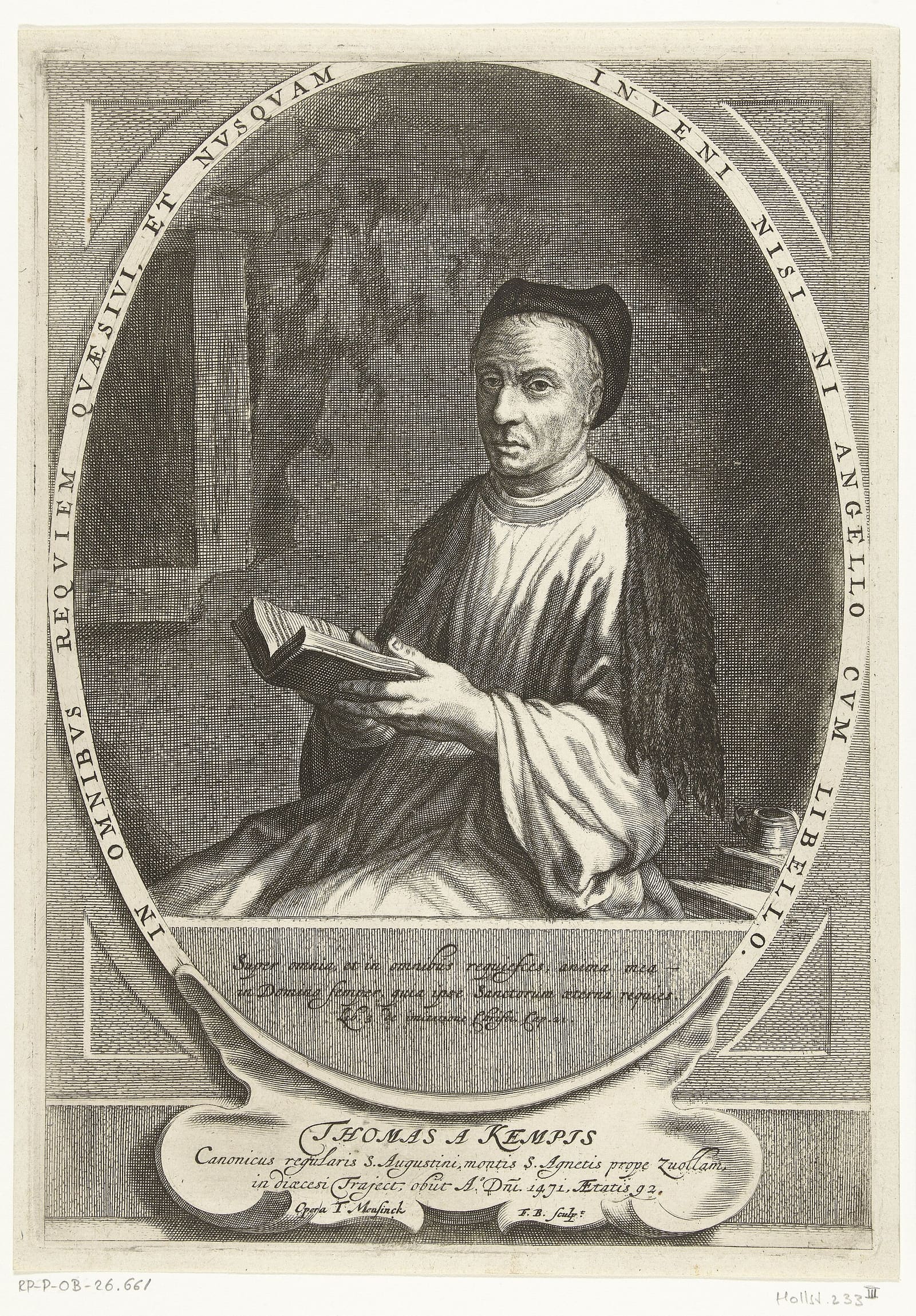
Quick answer
The Imitation of Christ is a devotional book written in Latin in the early fifteenth century and traditionally credited to Thomas à Kempis. Divided into four books, it teaches humility, interior peace, friendship with Jesus and devotion to the Eucharist. It has been one of the most widely read Christian books for six centuries.
Key takeaways
- The book came from the Devotio Moderna, a movement of spiritual renewal in the Low Countries.
- Thomas à Kempis (around 1380–1471) was an Augustinian canon near Zwolle, in the present-day Netherlands.
- It has four books, ending with a dialogue on Holy Communion.
- St. Thérèse of Lisieux is said to have known it nearly by heart.
Few books apart from the Bible have touched so many Christian lives. Saints and sinners alike have kept The Imitation of Christ at their bedside for six hundred years.
Who Wrote It?
The book emerged in the early fifteenth century from the Devotio Moderna, or “Modern Devotion,” a movement in the Low Countries that encouraged an inward, practical faith.
It is usually credited to Thomas à Kempis (around 1380–1471), a canon regular of the monastery of Mount St. Agnes near Zwolle. He spent almost his whole life there, praying, copying manuscripts and guiding novices. Other authors have been proposed, but none has displaced him.
The Four Books
- Helpful Counsels for the Spiritual Life. Humility, avoiding idle curiosity and thinking about the end of life.
- The Interior Life. Peace of heart and friendship with Jesus. The book describes “the royal road of the Holy Cross.”
- Interior Consolation. The longest book. It is a dialogue between Christ and the disciple.
- The Blessed Sacrament. A devout preparation for receiving Holy Communion.
Its Main Teachings
- Humility above learning. The book asks what good it does to dispute deeply about the Trinity if you lack the humility that pleases the Trinity. It would rather feel sorrow for sin than know how to define it.
- Daily renewal. It urges us to begin afresh every day, however often we fall.
- Carrying the Cross. Everyone has a cross. It is lighter when carried willingly with Jesus.
- Mindfulness of death. Remembering the end of life puts daily concerns in perspective.
- Friendship with Jesus. The goal of all this is closeness to Him.
Who Has Loved It?
St. Ignatius of Loyola read it daily and recommended it to others. St. Thomas More praised it. St. Thérèse of Lisieux knew much of it by heart.
How to Read It Today
Written largely for those in religious life, the Imitation can sound stern. Read it with that in mind. Take it a chapter at a time, as a prayer. Pair it with the Gospels, since imitating Christ begins with knowing Him.
A Prayer Inspired by the Imitation (Original Prayer)
Lord Jesus, teach me to follow You. Give me humility rather than cleverness, peace rather than restlessness, and the courage to carry my cross with You. Let me begin again today. Amen.
Continue Reading
See our list of 10 classic Catholic books, or read about St. Thérèse of Lisieux.
Frequently asked questions
Who wrote The Imitation of Christ?
It is traditionally and most commonly credited to Thomas à Kempis. Other authors have been proposed over the centuries.
How should I read The Imitation of Christ?
Slowly. Read a single short chapter a day and stop when something strikes you. It is a book for prayer more than for study.
Is The Imitation of Christ too negative about the world?
It was written for people in religious life, and some of its language about the world can seem severe. Lay readers can take in its deeper point, which is to put God first.
Sources
- Thomas à Kempis, The Imitation of Christ
- Catholic Encyclopedia (1910), Imitation of Christ