Joshua in the Bible: The Leader Who Brought Israel into the Promised Land
Quick answer
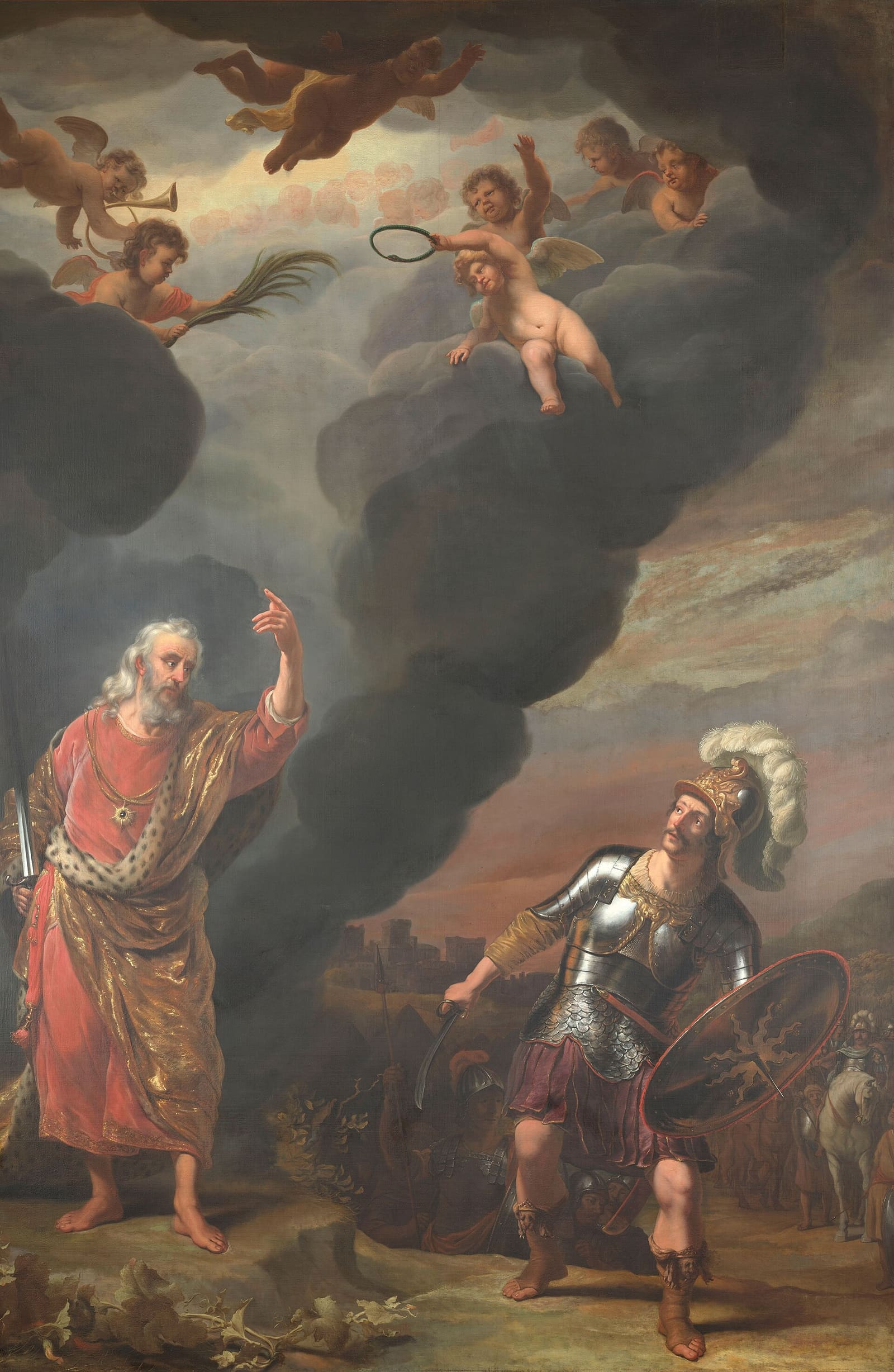
Joshua, son of Nun, was Moses' assistant during the Exodus and his successor as leader of Israel. He led the people across the Jordan River into the land of Canaan, where the walls of Jericho fell, and he divided the land among the twelve tribes. Before his death he called the people to renew their covenant, saying, "As for me and my house, we will serve the Lord." His name, Yehoshua, is the same as Jesus.
Key takeaways
- He was one of the two spies, with Caleb, who trusted that God would give Israel the land.
- God told him, "Be strong and of good courage" (Joshua 1:9).
- The Jordan parted and the walls of Jericho fell by God's power.
- His name means "the Lord saves," the same name as Jesus.
Moses led Israel out of Egypt, but it was Joshua who led them into the Promised Land. His story is about courage, obedience and trusting God when the task ahead seems impossible.
Moses’ Assistant
Joshua first appears in Exodus, leading Israel’s fighters against the Amalekites while Moses prayed with raised hands (Exodus 17). He went with Moses partway up Mount Sinai and stayed near the Tent of Meeting.
When Moses sent twelve spies into Canaan, ten came back afraid, saying the people there were giants. Only Joshua and Caleb said that with God’s help Israel could take the land (Numbers 14). Because of the people’s lack of faith, Israel wandered forty years in the desert. Of that generation, only Joshua and Caleb would enter the land.
“Be Strong and of Good Courage”
Before his death, Moses laid his hands on Joshua. After Moses died, God spoke to Joshua:
Behold I command thee, take courage, and be strong. Fear not and be not dismayed: because the Lord thy God is with thee in all things whatsoever thou shalt go to. (Joshua 1:9, Douay-Rheims Josue 1:9)
These words have encouraged believers facing hard tasks ever since.
Crossing the Jordan
When the priests carrying the Ark of the Covenant stepped into the Jordan, the river stopped flowing, and the people crossed on dry ground, as their parents had crossed the Red Sea (Joshua 3). They set up twelve stones as a memorial.
The Walls of Jericho
God told Joshua to have the people march around Jericho once a day for six days, with priests carrying the Ark and blowing trumpets. On the seventh day they marched around seven times, the priests blew the trumpets, the people shouted, and the walls fell (Joshua 6). The victory belonged to God, not to the strength of Israel.
Hard Passages
The Book of Joshua describes wars of conquest, and some passages are painful to read. The Church teaches that the Old Testament must be read in the light of Christ, and contains “matters imperfect and provisional” (Dei Verbum 15). The Fathers of the Church often read these battles spiritually, as the Christian’s struggle against sin and evil.
“As for Me and My House”
When he was old, Joshua gathered the tribes at Shechem and reminded them of all God had done. He challenged them to choose whom they would serve:
But as for me and my house we will serve the Lord. (Joshua 24:15, Douay-Rheims Josue 24:15)
The people renewed their covenant. Joshua died at 110 and was buried in his own land.
A Figure of Jesus
Joshua’s Hebrew name, Yehoshua, means “the Lord saves.” It is the same as the name Jesus. The early Christians saw Joshua as a figure of Christ, who leads His people through the waters of baptism into the true Promised Land of heaven.
A Prayer for Courage (Original Prayer)
Lord, You told Joshua to be strong and courageous. Be with me in the task before me. Help me trust You when I am afraid, and lead my family to serve You always. Amen.
Continue Reading
Read about King David, the Book of Leviticus, or our guide to the Catholic Bible.
Frequently asked questions
What does the name Joshua mean?
It means "the Lord saves" or "the Lord is salvation." In Greek it is Iesous, the same name as Jesus. The Douay-Rheims calls him Josue.
How should Catholics read the violent passages in Joshua?
The Church reads them in the light of Christ and of the whole of Scripture. The Old Testament contains things that are "imperfect and provisional" (Dei Verbum 15), and the conquest is often read spiritually as the soul's struggle against sin.
Is Joshua a saint?
Yes. The Church honors him among the holy men of the Old Testament, and he is commemorated on September 1 in the Roman Martyrology.
Sources
- Book of Joshua (Douay-Rheims, Josue); Exodus 17:8-14; Numbers 13–14
- Second Vatican Council, Dei Verbum, nos. 14–16
- Catechism of the Catholic Church, nos. 121–123, 128–130